
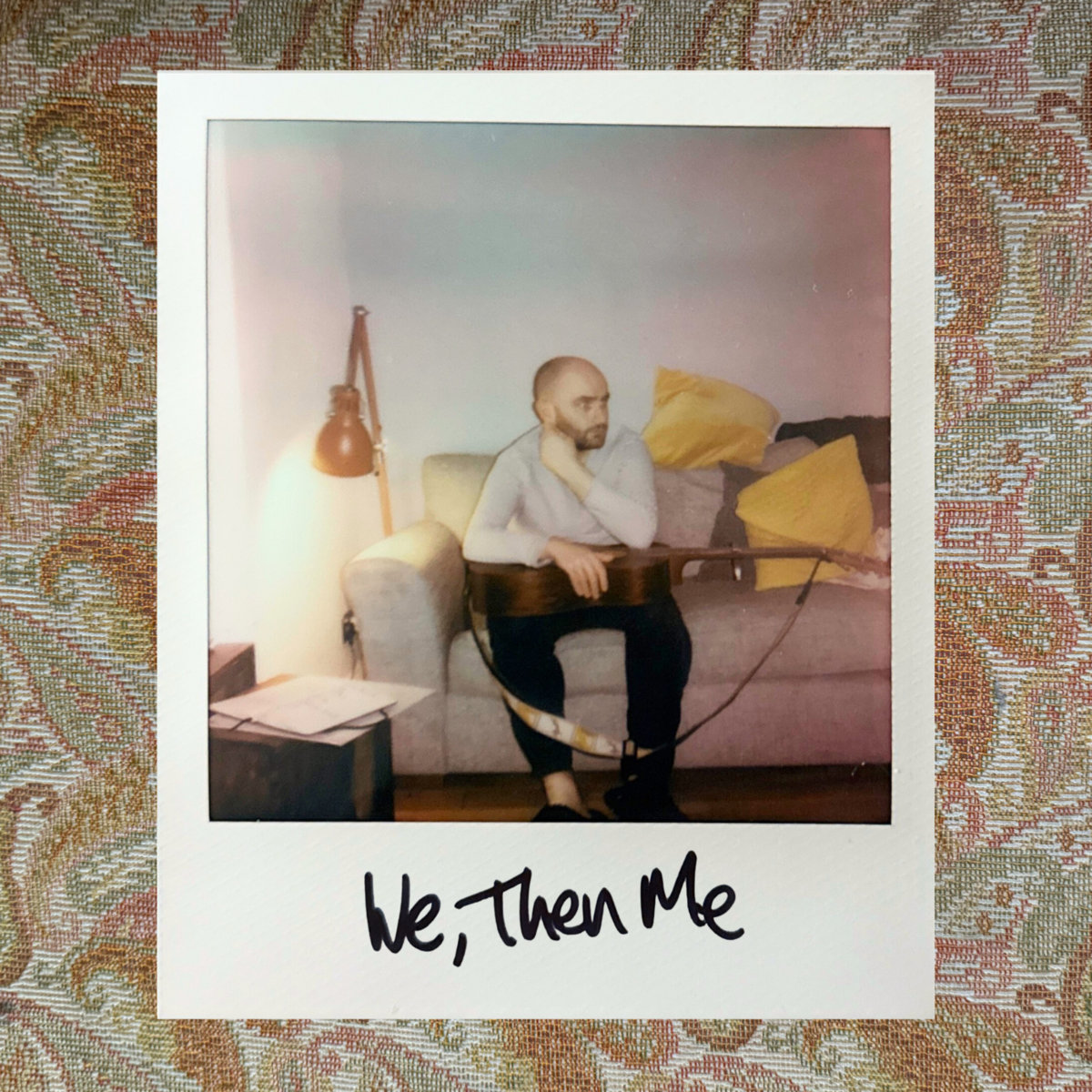
When an artist takes the time to dive into their emotional well, you know you’re in for something honest, raw, and real. David Laing’s sophomore album, We Then Me, does just that—serving up a powerful mix of heartbreak, healing, and self-discovery. After years of delays and personal battles, Laing has returned with a record that is more than just an album; it’s a testament to resilience, personal growth, and, ultimately, acceptance.
Laing’s journey to We Then Me wasn’t an easy one. Having faced a long stretch of physical and mental health struggles, including an overwhelming period of anxiety and OCD, it’s clear that these challenges shaped the music we hear today. This is an album steeped in a vulnerable honesty—about love, loss, and the complicated aftermath of relationships. The tracks resonate with those universal themes, but it’s Laing’s unique perspective and musical craft that really elevate this record into something special. His band on this album are Stuart Guffie (lead guitar/backing vocals, producer), Ryan Ballantyne (bass/piano), Ryan McCluckie (piano), Scott McCluckie (Drums) and Megan Quinn (backing vocals).
Laing had this to say on the journey so far.
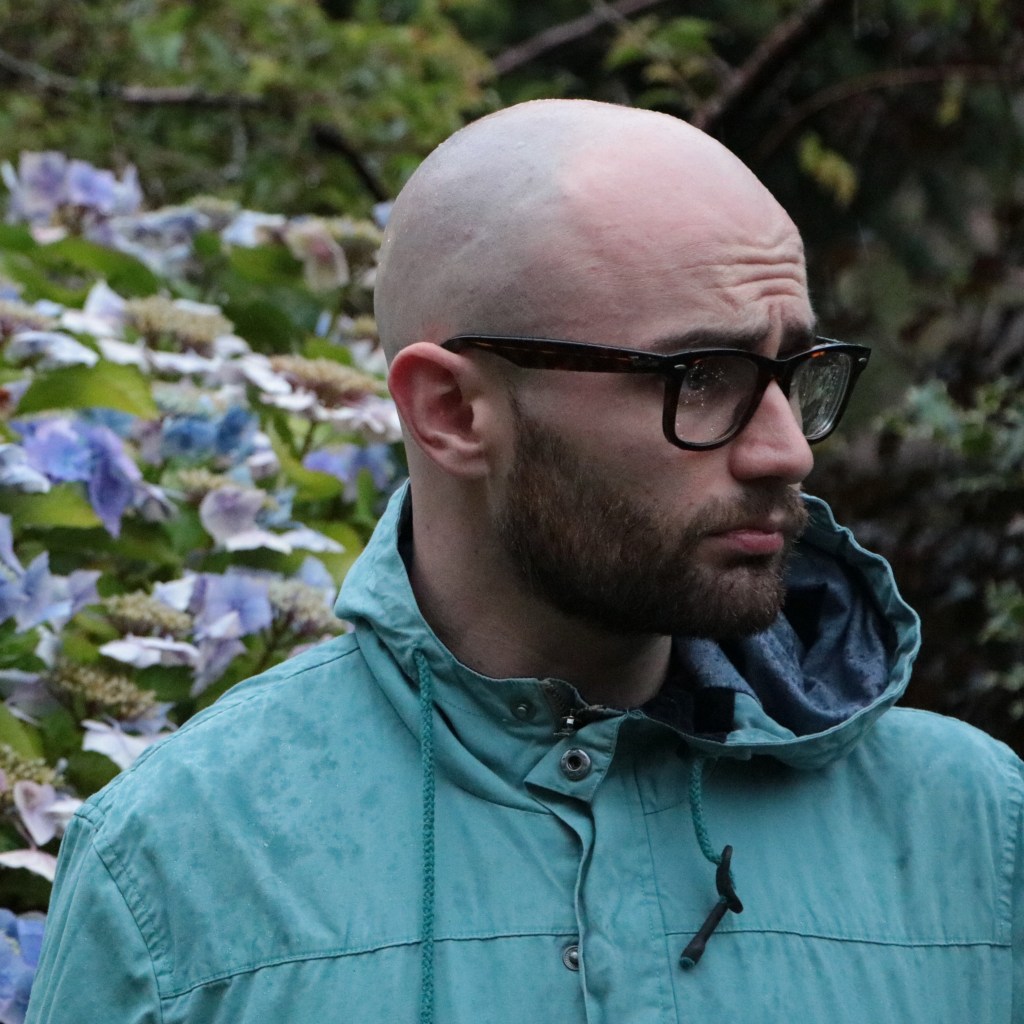
“The album’s been a long time coming. The vast majority of it, I wrote at a time when I was freshly out of a relationship and reeling in all the emotions that comes with it. For various reasons it was delayed and delayed until eventually coming to fruition over the last year or so.”
“From listening to the existing tracks, I was able to put myself back into those feelings and finish the album lyrically from more of a retrospective approach. I’m immensely proud of the work my band mates and I have put in and achieved in the finished product”.

Let’s drop the needle and see where the music takes us.
The album opens with ‘The First Time That We Met’, the intro stripped-back and vulnerable. The band slowly joins in the throng, tiptoeing around David Laing’s hushed vocal like they’re entering a room still echoing with ghosts. There’s something quietly cinematic about the build here—the way each instrument arrives with patience, not drama. The song feels like it’s unfolding in real time, drawing the listener into a memory as it’s being relived. What’s most striking is how this track acts as the emotional fuse for everything that follows. It’s the ignition point. You feel the tremble of something new beginning, even if you sense it won’t last forever. As the band settles into a subtle rhythm—restrained drums, low-mixed slide guitar, and a quietly humming bass—you get the sense that this isn’t just a story about love; it’s the prelude to a much bigger emotional journey. And just like that, We Then Me sets its tone: honest, reflective, and at its core, human.
Up next is the cautious optimism of ‘Best Thing’. The tone is immediately brighter and the pace quickens. There’s a bounce in the rhythm section, and the guitar work shimmers with just a hint of jangle, giving the whole thing a sense of forward motion, as though Laing is finally allowing himself to hope again. But this isn’t head-over-heels romance—it’s a slow thaw. Laing doesn’t give himself over completely; instead, there’s a gentle hesitation in the lyrics, like someone testing the water with their toes before diving in. He’s aware of how fleeting joy can be, how easily love can slip through your fingers, and it’s that awareness that gives the song its emotional weight. Lines land with bittersweet precision, hinting at the knowledge that even the “best thing” might be temporary.
‘Maybe Maybe’ has a folksy charm that immediately makes it leap out the speakers. The rolling piano and locked-in-the-pocket drums drive the whole song forward like a train that doesn’t quite know its destination but can’t afford to stop. It’s warm, rootsy, and rhythmically alive—one of the album’s most instantly engaging tracks. There’s a looseness to the performance here that adds to its charm, like the band hit record mid-rehearsal and captured lightning in a jar. But while the instrumentation dances with an almost carefree energy, the lyrics tell a more complicated story. For the first time, we can start to hear the doubt starting to creep in. The repeated “maybe” of the title becomes a sort of emotional seesaw—hope on one side, uncertainty on the other. Laing masterfully uses this lyrical indecision to mirror that stage in a relationship where you begin to second-guess the things you were once so sure of. What’s so effective here is that duality—this is a song that could soundtrack a road trip or a breakdown, depending on your emotional state. It captures the essence of romantic limbo: not quite in, not quite out, holding your breath and hoping it all makes sense tomorrow.
The piano motif evolves further on ‘If You Want Me To’. This time it’s looser, more questioning. It tumbles gently around the spaces, hesitant and searching. It’s another slow burner, opening on the sparsest soundstage so far, and you can practically hear the air between the notes. There’s bravery in that emptiness. Laing trusts the listener to lean in. Lyrically Laing sounds like he’s asking a question he already knows the answer to, but needs to ask anyway—because not asking would hurt more. The band slowly arrives, but they don’t fill the space—they colour it in soft hues: brushes of percussion, subtle swells of strings, a bassline that barely breathes. It’s a beautifully restrained crescendo but there’s no resolution here, and that’s the point. ‘If You Want Me To’ doesn’t try to tidy up the mess—it just sits in it. And sometimes that’s the most honest thing a song can do.
The ‘We’ side of the album comes to a close with the finality of ‘We Lie’. In the tradition of all the great singer-songwriters—think Randy Newman with a broken heart or early John Lennon after a sleepless night—it opens on a rolling piano phrase and an almost conversational vocal, like we’ve walked in on a one-sided confession. Laing’s delivery is weary but direct, the kind of tone that only arrives after you’ve stopped trying to convince anyone, including yourself. It isn’t long before the band lift the song, and when they do, it’s like a dam giving way—not in a sudden rush, but in a controlled surge. The drums arrive with slow, pulsing intent, and the bass begins to boom like a warning signal. Guitars shimmer and swell around the edges, never overwhelming the central piano motif but building a tension that feels impossible to shake. It’s the sound of truths finally surfacing. As the final notes taper off, we’re left with the unmistakable sense that something has fractured. The intimacy that once felt so full of promise now feels performative, hollowed out by denial and routine. ‘We Lie’ is a devastating way to end the “We” side of We Then Me, and it sets the stage perfectly for the album’s turn inward.
Heading into the ‘Me’ side now, we open with a familiar and gut-wrenching favourite. Having been a standout on BBC Radio Scotland, ‘Something’s Gone’ is a song that many will recognize immediately—and not just from the airwaves. This is the kind of track that burrows under the skin. It’s a deep, aching piece that explores the moment when you realise something essential has quietly slipped away—not in a dramatic explosion, but in the subtle erosion of connection. There’s a stark vulnerability to the opening here. The instrumentation is restrained, skeletal even, giving Laing’s voice full command of the emotional terrain. He doesn’t overplay it—his vocal is measured, weary, but never self-pitying. It’s the sound of someone looking directly at the wreckage and, for the first time, admitting that the damage can’t be undone. Laing delivers some of his most devastating lines with near-deadpan clarity. It’s the absence that hits hardest, the space left behind.
‘Be There’ is a tender, hopeful plea—a soft exhale after the gut-punch of ‘Something’s Gone’. Where its predecessor deals in absence, this track gently asks for presence. The piano returns, delicate and deliberate, forming the spine of the song with a steady, calming pulse. It’s one of the more tender offerings on We Then Me, wrapped in a warmth that feels like an arm around the shoulder at just the right time. What’s striking is the emotional clarity Laing brings to this track. After the haze and confusion of earlier songs—where doubt crept in, where disconnection took root, ‘Be There’ feels like a turning point. It doesn’t deny the pain, but it doesn’t wallow either. It acknowledges the mess and still asks for connection. There’s a courage in that honesty.
One of the more unique tracks on We Then Me is the beautifully titled ‘The Time I Fell in Love With You for Half a Day’—and it’s a stunner. This is Laing at his most idiosyncratic, weaving whimsy and melancholy together with that trademark sleight-of-hand that somehow makes both feelings hit harder. It’s an idea that sounds throwaway at first—a fleeting love, gone as quickly as it arrived—but he doesn’t treat it as disposable. Instead, he honours the moment. The result is one of the most charming, and quietly affecting, tracks on the album. A gentle groove bounces underneath and a breezy guitar line that feels like a walk through golden-hour light. There’s even a twinkle of keys in the mix that evokes a kind of childlike wonder, like you’re rediscovering joy in a moment you didn’t expect to matter. Beneath it all, there’s a real sense of longing. Laing sings about this brief, beautiful connection with the same reverence someone might reserve for a lifelong love. It’s not ironic or flippant. It’s sincere. And that’s the magic trick—he takes something small and gives it weight, lets it linger in the listener’s memory with the same aching significance as any grand romantic gesture.
The title track is where the threads finally knot together—a summation of everything that has come before it, but also a stepping stone into something new. It’s a moment of deep reflection, a sonic exhale after the emotional tightrope Laing has walked so far. Fittingly, it doesn’t burst with resolution; instead, it unfolds gently, with quiet dignity and hard-earned acceptance. The arrangement is spacious and deliberate. The band gives Laing’s voice all the room it needs to tell the story. Soft guitar chords anchor the piece, while subtle ambient textures hum beneath, like echoes of the “we” that once was. You can hear a sense of distance, but not detachment—this is a goodbye with love, not bitterness. Laing captures the strange dissonance of post-relationship identity with painful clarity. “We” once defined the world, but now he’s learning to live in the singular. There’s sorrow in that, yes, but also strength. It’s not about erasing what was shared—it’s about acknowledging its impact and moving forward with its memory as part of you, not the whole of you. As the track draws to a close, the instrumentation becomes increasingly sparse, almost as if the song is evaporating, leaving only the self behind. It’s a subtle but masterful bit of production—mirroring the emotional arc from union to solitude with a natural grace. It leaves you feeling like something profound has ended, but something equally valuable has just begun.
‘Had It All’ takes the listener by the hand and walks them gently into the gloaming—into that hazy, golden-hour moment where memory and regret sit side by side. It’s a song steeped in introspection, but not indulgent. Instead, it’s measured and considered, like looking through an old photo album with equal parts love and longing. Of all the tracks this might be the one that hits closest to the bone for anyone who’s looked back and wondered: when did it all start to slip away? From the first few notes, there’s a noticeable shift in sonic palette. The track leans into a subtle country feel—not the rhinestone swagger of Nashville, but something more in line with the late-night, heart-on-sleeve vulnerability of artists like Gram Parsons or early Jayhawks. Fingerpicked acoustic guitar lays the foundation, warm and earthy, while slide guitar flourishes swell in and out of view like memories you can’t quite shake. The lyrics don’t reach for drama; they sit with the facts. “We had it all,” he sings, and the line lands not as a boast or even a lament, but as a plainspoken truth. There’s power in that kind of honesty. It doesn’t ask for sympathy—it asks for understanding.
The album comes to a close with the searing vulnerability of ‘To Whom This May Concern’—a track that strips everything back until there’s nowhere left to hide. Just Laing, a guitar, and a truth that’s been building quietly in the shadows across the entire record. It’s not just a song—it’s a reckoning. A final, unfiltered open letter to a former lover, delivered with such raw honesty that it almost feels intrusive to listen. But that’s precisely the point. We’re meant to feel it all. Where earlier tracks leaned on lush arrangements or band interplay, here Laing opts for complete exposure. The acoustic guitar is delicate and unadorned, every creak and slide of the fingers audible, grounding the performance in reality. There’s no reverb to hide behind, no layered harmonies to soften the blow—just one voice, wounded but resolute, laying everything out. That sparseness gives the song a gravity that’s hard to shake. It demands attention, and it rewards it with some of the most affecting lyrics Laing has ever penned. In many ways, this track completes the transformation hinted at in the title We Then Me. It’s the moment where Laing fully embraces the “me” side, not with bravado or self-help platitudes, but with a calm acceptance of everything that’s come before. It doesn’t reach for closure, but it does offer catharsis. And in that catharsis, there’s healing.
We Then Me is an album that reflects both the fragility and strength of the human experience. David Laing has poured his heart into these tracks, and the result is a deeply emotional and resonant record that will stick with you long after the final note fades. With its mix of introspective ballads, tender moments, and reflective songwriting, We Then Me is a triumph of vulnerability, a stunning piece of work that feels as much like a personal journey as it does a universal exploration of love and loss.
If you’ve ever been through a breakup, struggled with your own identity, or simply wondered about the nature of love, this album will speak to you. Laing’s ability to craft deeply emotional and relatable songs is what makes We Then Me such a standout release—both musically and lyrically. It’s an album that feels like a conversation, one where you can’t help but lean in and listen closely.
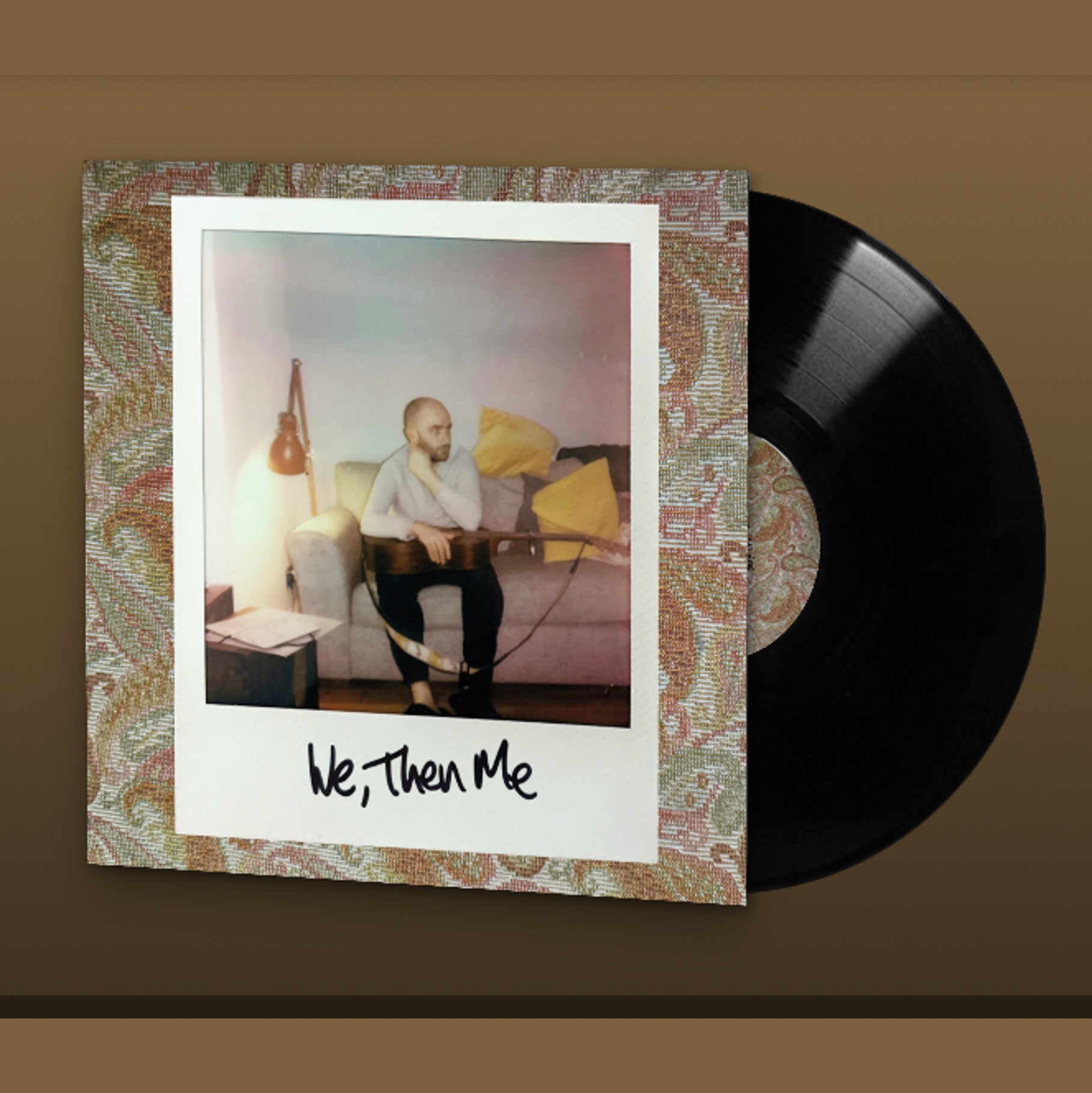
We Then Me is out now digitally via the I am David Laing Bandcamp page. Vinyl copies can be secured here.
Discover more from Static Sounds Club
Subscribe to get the latest posts sent to your email.
 Static Sounds Club