
After several years spent mapping the outer fringes of modern psychedelia, Los Angeles collective Hooveriii (pronounced “Hoover Three”) return with Manhunter — a rich and expansive fifth album that smartly ties together the raw urgency of their earlier work with the more cinematic ambitions they’ve been gradually embracing. If their self-titled debut in 2018 introduced a lo-fi garage-psych outfit with a taste for sci-fi aesthetics and fuzzy repetition, it was 2021’s Water for the Frogs that marked a pivot toward a broader, more kosmische-inflected sound.
That shift continued with A Round of Applause in 2022 — a bright, synth-heavy, glam-adjacent set that pushed the band’s melodic instincts to the fore — and again with Pointe in 2023, a somewhat more introspective affair that explored mood and atmosphere over immediacy. Each of these records showed a band in transition, growing more confident in their ability to fuse Motorik rhythms, space rock textures, and big pop hooks into something uniquely theirs.
Now, with Manhunter, have Hooveriii fully arrived — drawing together all those disparate threads into a coherent, fully-formed vision? A casual first listen tells me that it’s a record that reaches backward as much as it pushes forward, tapping into 70s prog, glam, krautrock, post-punk, and new age to build something dense but not impenetrable, ambitious but never overwrought. It’s also, at its core, a rock record — unafraid of riffage, melody, or swagger.
This newfound cohesion comes in part thanks to the band’s consistent core. Frontman Bert Hoover remains the gravitational centre, delivering vocals and guitar lines with an unmistakable sense of style and intent. He’s flanked by Kaz Mirblouk (bass, vocals, synth), Jon Modaff (drums, bongos, percussion), Paco Casanova (synth, organ, piano), and Matthew Zuk (guitars), a locked-in unit that gives the record its shape and pulse. Adding further texture are Gabriel “Baby Gabe” Salomon on saxophone and Anna Wallace on backing vocals, both of whom lend key moments a deeper emotional resonance. And there’s even a cameo from Kyle Seely, who drops in a scorching guitar solo on ‘Heaven at the Gates’.
My whistle has been well and truly whetted, let’s drop the needle and dig in.
The album opens with ‘Melody’, a glam stomp that sets a frantic pace right out the gate. It arrives with a strut and a snarl — sharp-edged and swaggering. The beat hits hard and deliberate, a kind of locomotive groove that feels both mechanical and sleazy, while the guitars jangle and screech in wiry bursts, leaning into the friction with glee. There’s an urgency here that’s impossible to ignore — a manic pulse that pushes the track forward without giving you time to settle. The vocals come in hot, clipped and rhythmic, all dramatic flair and icy detachment, while the bass coils and pivots underneath like a rattlesnake on amphetamines. Everything about the arrangement is tight, a perfectly poised chaos. As an opening salvo, ‘Melody’ throws the doors wide open. It’s loud, fast, and thrillingly disorienting. But more than that, it sets the tone for an album that’s not content to settle into one gear.
‘Tin Lips’ is next and immediately it hits like a lost Stranglers track. It’s got that same paranoid pulse, that itchy, neurotic twitch — all clipped, tense verses that feel like they’re constantly on the verge of snapping. There’s a simmering sense of control in the rhythm section, almost mechanical in its precision, but there’s also something deeply human in the way it resists the rigidity, pulling at the seams with every bar. The track builds like a pressure cooker, verses hissing with compressed menace before exploding into those expansive choruses. It’s a brilliant sleight of hand — one moment you’re boxed in by post-punk claustrophobia, the next you’re launched into something sweeping and sky-bound. It’s bold, tightly wound and deceptively emotional.
‘In The Rain’ delivers a surprise — an almost blink-and-you-miss-it haunted psych-folk ballad that conjures Gene Clark wandering through a nuclear wasteland. It’s a sudden drop in tempo and tone, a moment of eerie stillness in the midst of the album’s otherwise pulsing momentum. Everything feels stripped back, spectral. The instrumentation is minimal but laced with texture — distant reverb-drenched guitar lines hang in the air like radioactive mist, while a gently crumbling rhythm moves just slow enough to make you lean in closer. The vocals are hushed and slightly decayed, almost murmured like a secret over the wreckage. There’s a fragility to the delivery, like the song might disintegrate if you breathe on it too hard. That melancholic shimmer gives the track a distinctly after the fall feeling — the kind of song you imagine playing from a dusty jukebox in a derelict roadhouse at the end of the world.
It’s no sooner over than we’re off at full pelt into ‘Westside Pavilion of Dreams’. Like Bryan Ferry fronting the band for a moment, this track feels positively opulent in its swagger — all art-school gloss and metropolitan cool, but shot through with a pulse that’s pure motorik momentum. It’s a dramatic gear shift from the last track and that contrast is what makes it land so hard. The pace is breathless — drums pushing things forward with insistent propulsion while synths swirl and shimmer. There’s an almost cinematic sleaze to the whole thing, the kind of louche, forward-glancing energy that Roxy Music mastered in their imperial phase, repurposed here into something spacier and more hypnotic. Guitar riffs come in bursts — flickering, tasteful, restrained — giving the track a glittering polish without tipping into indulgence. And the vocals, smooth and arch, ride just above the mix, delivering lines with the kind of detached cool that suggests menace dressed as charm.
The band tap into that kosmische sound next with ‘Heaven at the Gates’. Bass and drums locked in and keeping us in focus, it’s one of those tracks where the rhythm section isn’t just holding it down — it is the engine room. There’s an unmistakable motorik heartbeat here, a hypnotic groove that brings to mind Neu! or Harmonia at their most mesmeric — but with a distinctly modern shimmer. The guitar work is restrained but expressive, adding texture more than riffs, until it suddenly lets loose with a soaring solo courtesy of Seely — a moment of unguarded ecstasy that cuts through the repetition like a lightning strike. There’s a sense of control here, but not confinement. The band stretch out and explore without ever losing the thread — each looped phrase subtly shifting, evolving, tightening. What’s striking is how cosmic it feels without ever tipping into cliché. This isn’t a retro-futurist nod or a throwback — it’s kosmische reinterpreted through the Hooveriii lens: taut, deliberate, deeply felt.
‘Cul-De-Sac’ next is a short intermission, a tone poem of experimental cosmic noise and degenerating static. It’s less a song in the traditional sense and more a transmission — intercepted rather than performed. Clocking in under a minute, it functions like a torn page from a notebook full of half-remembered dreams and decaying analogue tape. Sonic detritus drifts through the speakers — warbling frequencies, bent tones, fractured echoes — as if someone accidentally tuned into a lost space station’s dying signal.
That leads us nicely into the psychedelic riff storm that is ‘The Fly’. The glam stomp returns in fine fashion, but this time it’s more feral, untamed. The track charges in like a bolt of lightning — all shredded guitars, booming drums, and a tempo that seems determined to burn itself out before the track finishes. It’s a reinvention of the swaggering glam energy that kicked off the album, but with a harder edge, a scuzzier, more untethered feel. The riff is a beast, a slithering, repetitive groove that threatens to fall apart but never quite does. The rhythm section kicks in with a frenetic energy, bass lines growling just beneath the surface, pushing everything forward with force. There’s a moment of blissful abandon midway through, where the track falls into a swirling, phased-out breakdown, letting the rhythm section lead the charge while the guitars spiral into a dizzying crescendo. It proves once again that Hooveriii are masters at fusing both chaos and precision in a way that’s utterly irresistible.
Time slows next with the synth-led mood piece ‘Night Walks in Montreux’. This slowly pulsing instrumental is barely a whisper in the roar of the overall album — but it’s a whisper that lingers, drawing you in with its quiet, persistent shimmer. The band dial everything back here, not just in volume but in intent. Gone are the glam riffs and chaotic stomp; in their place, a muted, late-night drift that feels like ambient moonlight music beamed in from a parallel dimension. Placed here in the running order, it acts as a sort of psychic breather — a calm harbour after the storm, a quiet triumph of tone and space.
Here comes the bruiser. ‘Isolation’ brings with it a snarling energy, echoing early King Gizzard or even Thee Oh Sees with its psych-punk punch. But Hooveriii don’t just bash things out — they modulate it with bursts of synth and off-kilter rhythm, turning what could be a straightforward rager into something far more interesting and strangely cerebral. The guitars are gritty and serrated, biting through the mix with a garage-born rawness. But beneath the fuzz and fury, there’s a complex machine at work — one built on a groovy lick that catches your ear every time. There’s a sense of barely controlled mania here. It’s a song that seems to be gritting its teeth as it barrels forward, pulsing with nervous energy. Think frantic house party in a collapsing warehouse — walls shaking, strobes flashing, everyone losing their minds but somehow still in sync. ‘Isolation’ captures a very specific kind of anxious euphoria — it’s adrenalised, paranoid, and exhilarating.
‘Manhunter’ sets the bass front and centre, driving this mellow instrumental with a steady, head-nodding pulse that feels both grounded and exploratory. It’s a track that moves with quiet assurance, guided by groove rather than force, giving the rest of the band space to sketch out a dreamscape that’s as expansive as it is understated. This is the sound of Hooveriii fully leaning into their cosmic side. Guitars drift in and out of focus, treated with layers of delay and reverb, more texture than riff. They shimmer like starlight across a vast and unknowable void, never dominating but always colouring the space. Synth pads hover above the mix like clouds of interstellar dust, creating a deep, spacious atmosphere that invites you to simply float along. As a title track, it’s a bold choice — not a climax, but a centre of gravity. It doesn’t shout for your attention, but slowly pulls you into its orbit.
Angular, twitchy, and straight-up weird. ‘Tarantula Eye’ is the sonic equivalent of a spider scuttling across your ceiling at 3am — disorienting, unpredictable, and impossible to ignore. Built on a gnarly, looping groove that feels like it’s chewing its own tail, this track veers hard into the experimental zone, with synths that squeal and spiral like malfunctioning machinery and a rhythm section that seems to lurch just slightly out of step on purpose. There’s an unsettling, insectoid energy to it — appropriate given the title. Everything here is skittering, agitated, constantly shifting. The drums jab rather than groove, the synths chirp and divebomb like vintage arcade hardware possessed by ghosts, and the guitars chop at the edges like they’re trying to cut their way out of the mix. It’s manic and minimal all at once, built on repetition but never quite settling. In the context of Manhunter, ‘Tarantula Eye’ is a crucial curveball — a reminder that beneath all the spacey grooves and glam stomps lies a band with a taste for the truly strange. It’s confrontational, abrasive, and more than a little demented. And yet, somehow, it still grooves.
The riffs are back with a vengeance on ‘Question’. The guitars dominate here, drenched in phased-out psych fuzz, drawing clear influence from the late-period Spirit albums and that unmistakable Randy California tone: liquid, expressive, and just a little unhinged. There’s a swagger to this track, a kind of sneering playfulness in the way it unfolds. It’s not a song in a hurry — it knows it sounds good, and it lets that groove stretch and breathe. The riff loops like a mantra, thick with attitude but never overbearing. It feels like a jam that’s been shaved down just enough to keep it tight, but still rough around the edges in all the right ways. What’s striking is how the band manage to make something so riff-forward feel so psychedelic. It’s heady stuff, rooted in the 70s but presented with a modern, nervy energy that keeps it from falling into retro cosplay. It’s groove, grit, mood, and mystery, all wrapped around a riff that feels like it’s been unearthed from some forgotten crate of proto-psych gold. One of the most straight-up satisfying moments on the record, and a late-album standout that proves they’ve still got plenty of fuel in the tank.
There’s a deliberate, more measured pace to ‘Me King’. After the riff-heavy propulsion of ‘Question’, this track feels like the band stepping back to let things breathe — but that doesn’t mean it’s lacking in power. Quite the opposite. The restraint here is its strength, and it’s all the more affecting for it. The bass locks in on a monotone pulse, holding the track steady like a tightrope wire. It’s minimalist, almost robotic, but that flatline groove becomes the bedrock for everything else to rise and fall. The drums are equally patient — not flashy, but perfectly placed — allowing the track to simmer, smoulder and bloom in just the right moments. That contrast between the steady, grounding rhythm section and the soaring choruses is what gives the song its emotional weight. The vocals are melancholic but clear-eyed, rising in those big, echo-laden refrains with a quiet desperation that sticks with you. When the guitars enter full bloom in the chorus, they shimmer with a kind of bittersweet grandeur — psychedelic, yes, but rooted in something deeply human. There’s a feeling of trying to reach for something just out of grasp. A longing threaded through the noise.
We are treated to another woozy, spacey moment with ‘Awful Planet’, a late-album curveball that dials things back into minimalism just when you think the band might be ready to rev things up again. There’s no fanfare here, no big dramatic push — instead, it arrives like a fog, slow and deliberate, casting long shadows and shifting the tone with quiet force. Every note played feels essential. There’s no fat here, no clutter — just a slow, deliberate progression where space is as important as sound. What makes ‘Awful Planet’ so affecting is its restraint. The textures are weightless, almost ambient at times, yet emotionally loaded. There’s a kind of cosmic loneliness baked into its DNA — a track that seems to hover between exhaustion and transcendence. A deep breath before the curtain falls.
The album comes to a close with the 60’s sway of ‘Stage’, and it’s a beautifully bruised finale. From the very first strum, the parallels to The Velvet Underground are undeniable — that chugging, melancholic chord progression, the unfussy rhythm guitar, and a vocal delivery that’s deadpan but deeply felt. There’s a simplicity here that feels almost confrontational in the context of the kaleidoscopic sprawl that came before. Gone are the synth freak-outs, the motorik grooves, the spiralling cosmic jams. What’s left is bare and human. A few chords, a steady beat, and a voice that seems to be taking stock of the wreckage — emotional, personal, maybe planetary. But don’t mistake it for slight. ‘Stage’ carries a weight precisely because of its restraint. It feels like the album looking itself in the mirror, asking what it all meant. The guitar tones are warm but slightly frayed, and the production leaves enough air in the mix to make each strum feel tactile. It feels like the band is walking off into the sunset with a shrug and a half-smile, knowing full well they’ve said everything they needed to — but not everything they could.
So, what exactly is Manhunter? Well for it’s not just Hooveriii’s most accomplished release to date — it’s a kaleidoscopic map of where psych-rock can go when you refuse to be hemmed in by nostalgia or genre convention. Across fifteen tracks, the band expertly balance grit with grace, pastiche with progression. It’s an album that knows its references — Bowie, The Velvets, Can, Spirit, Gene Clark — but never relies on them. Instead, it builds something new from the fragments of the old, each track its own world but still connected to a broader vision. The production is full of texture, but it never feels overworked. The performances are tight but raw where they need to be. And there’s a real sense of play running through it all — like a band that still gets a thrill from following their own curiosity into the unknown. In a time when so many psych and garage acts either chase fidelity to a bygone era or lean too heavily on fuzzed-out clichés, Manhunter feels like a breath of fresh air. It’s the sound of a band pushing themselves, trying things, stretching out, and — crucially — having fun doing it.
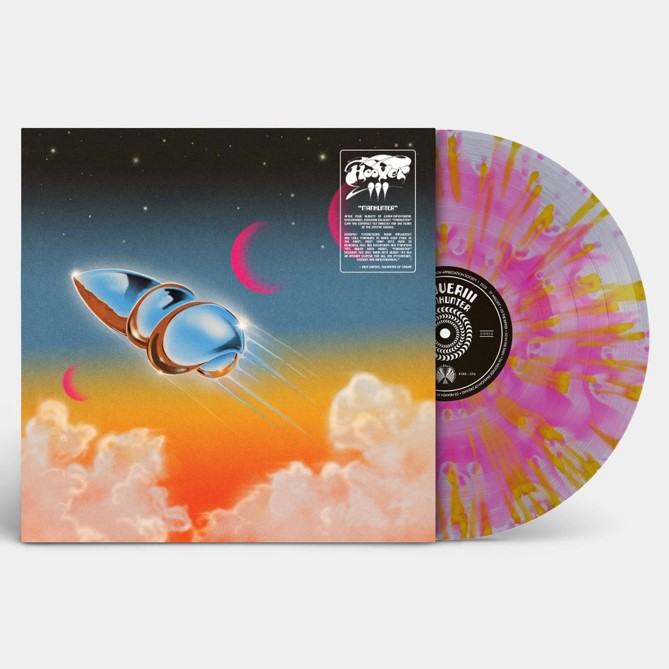
Manhunter is out now on vinyl via LEVITATION / Reverberation Appreciation Society and you can check it out over on the Hooveriii Bandcamp page.

You can follow Hooveriii on social media here….
Discover more from Static Sounds Club
Subscribe to get the latest posts sent to your email.
 Static Sounds Club