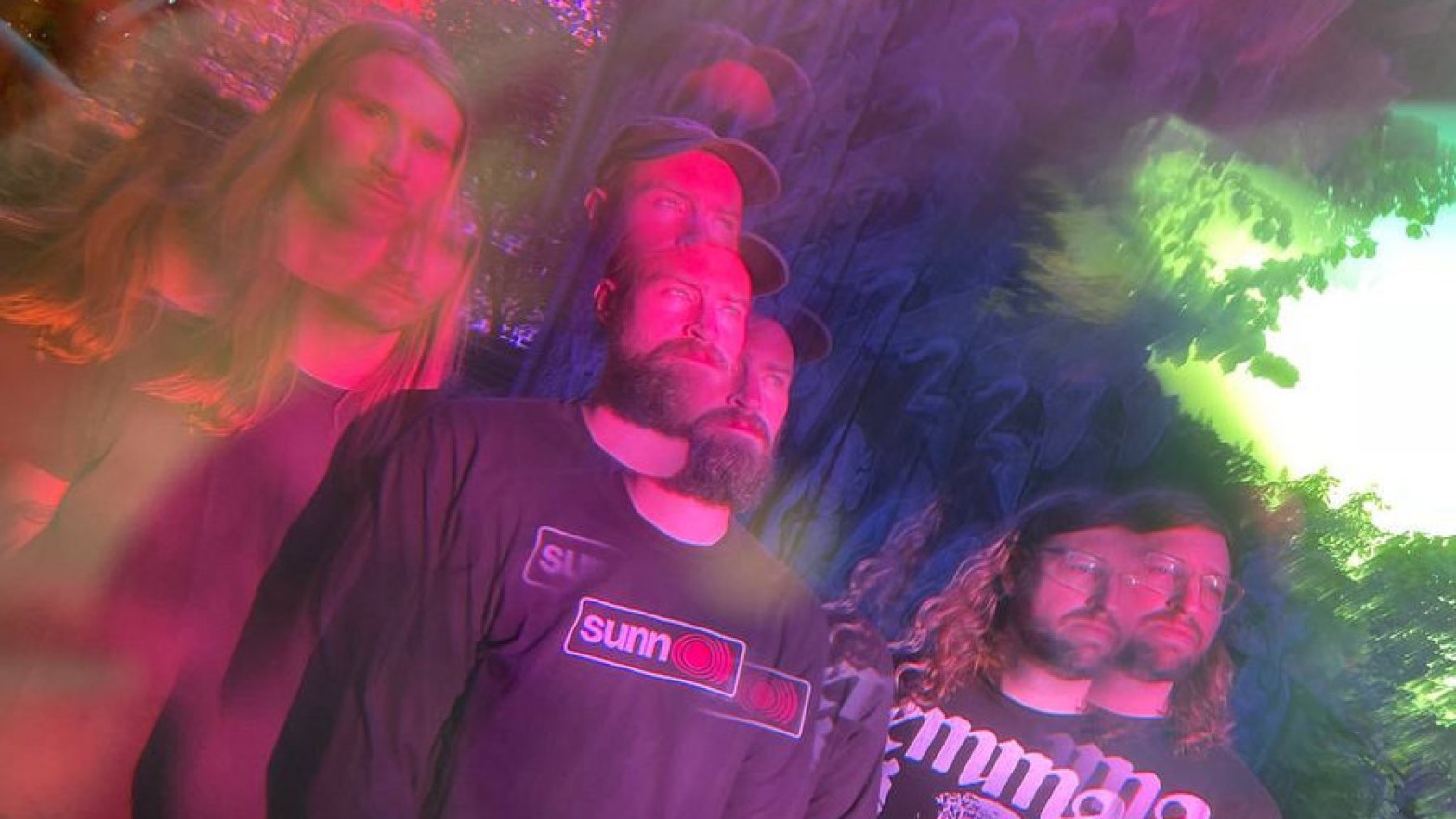
Kombynat Robotron have been a band I’ve been meaning to check out for months now. Like minded psych heads have been singing their praises to me long enough now it’s time I treated my ears. It just so happens the band are getting set to release a new album, this seems like fate.
Since 2018, the amazingly names Kombynat Robotron have built something compelling: a steady, slow-burn rise from the basements of Kiel in Northern Germany to the festival stages of Europe. Over six albums on esteemed labels like Tonzonen, Cardinal Fuzz and Clostridium, they’ve pushed repetition, raw fuzz and sprawling jams into something that feels communal and alive. Anyone who’s seen them live knows those sets aren’t recitals. They’re living, breathing noise rituals built on instinct and risk.
As the band get set to release their new album AANK they are keen to make us aware that it doesn’t abandon that spirit. Instead, it wrestles it into something sharper. For the first time, they’ve embraced vocals and written songs rather than pure jams. That change didn’t happen overnight. According to the band, most tracks began as improvisations too good to let drift into the past. Over two years, they shaped them, tested them live, then finally recorded the album across a single weekend. They captured it live, all three musicians in one room, chasing the energy that’s always been at the heart of what they do.
The band promises that AANK sounds both heavier and more deliberate than anything before. The loose, spacey drift of earlier albums narrowed into a tighter, grittier sound.
Let’s drop the needle and see where it takes us.
Kicking the album off ‘Staub’ wastes no time announcing this new phase. The bass locks into a repetitive groove, drums crash forward and guitars pile distortion into thick, dusty layers. Vocals push through like a voice from a radio left on in another room, not leading, but haunting. The repetition doesn’t numb; it sharpens, creating a tension that feels ready to spill over. As the chorus blooms the riff quotient rises and, if you’re like me, the head banging begins in earnest. As openers go it doesn’t get stronger than this.
Up next ‘Morast’ digs in even deeper. Guitars scrape and swirl above a churning bass, the rhythm section driving forward without release. It feels murky, restless, like being pulled through thick water. Vocals peer through the void and make themselves known before being engulfed in cyclical guitars. Guitars that in the verses compliment and play of the bass line then veer off on their own path towards oblivion. The solos on display here could cut metal they’re that sharp. This utterly engulfing and all-consuming music and I’m here for it.
With a squall of feedback ‘Schnee’ slowly reveals itself. Bass pulses, drums casually pick out beats before settling on a direction just in time for towering guitars stabs to dominate the scene. It’s colder and more hypnotic. Vocal wails attempt to break through the maelstrom only to be sent packing by a riffstorm. This is proper intense listening and definitely not for the faint hearted.
It’s the title track next. ‘Aank’ steps away from the heavier fuzz of the surrounding tracks and offers something unexpected. Built around an acoustic guitar, it carries a quiet resolve rather than the restless churn heard elsewhere. Ebowed guitar lines weave gentle cries above the chords, sketching out a melody that feels fragile but determined. It’s a welcome palate cleanser, giving the album room to breathe before the noise returns. Rather than feeling out of place, it anchors the record reminding us that heaviness doesn’t always come from volume, but from mood and intent.
The calm disappears in moments as ‘Ikarus’ crashes in. Feedback shrieks, the bass growls, and we’re hurled headlong into a rush of speed and noise. It feels like the Kombynat are back on the autobahn, pedal down, locked into a groove that’s more pursuit than journey. Guitar’s shimmer and crash, drifting between soaring lines and sudden bursts of distortion. The repetition becomes a chase, each loop circling closer to something too bright to hold onto. It captures the spirit of its namesake perfectly: the heady thrill of ascent shadowed by the inevitability of the fall. Even as the noise threatens to smother everything, there’s the vocals, a call into the night, keeping it all just on the edge of collapse.
‘Unbehagen’ opens with an almost conversational moment, The lead guitar throws out a phrase, and the rest of the band answers back, building a dialogue that quickly becomes the spine of the track. When the full band kicks in, that exchange tightens into a stubborn, looping riff that drives everything forward. Vocals slip into the mix, adding colour rather than narrative, but the real tension plays out between the guitars and drums. The drums push, the guitars push back, and together they create a sense of unease that never fully breaks. It circles its own centre without ever breaking free, which makes the listening strangely gripping.
‘Sauerstoff’ features the most thrilling drumming on the album. There’s a wild precision to it — fast, intricate, and constantly shifting without ever losing the thread. It demands attention, and the bass rises to the challenge with a driving groove that locks in tightly but never plays it safe. Together they create a rhythm section that feels alive, like it’s making decisions in real time. Vocals are more prominent here, pushed up in the mix and delivered with urgency, almost like they’re being shouted into the void. They stretch skyward, full of desperation and defiance, only to dissolve back into the storm of sound. It’s a track that bristles with energy, refusing to settle, always pressing forward.
‘Finsternis’ brings everything to a close, but not quietly. It sinks into darkness with a fury the album had only hinted at until now. The guitars find their motorik groove early, tight, relentless, almost mechanical, and they don’t let go. The repetition is punishing but purposeful, creating a foundation that pulses with menace. Vocals start out almost playful, weaving through the verses with a casual tone that feels at odds with the tension underneath. But when the chorus arrives, they follow the lead of the guitars and erupt. It’s a sharp turn, shouted, fraying at the edges, and it drives the track into its most unrestrained moments. As the song spirals toward its final stretch, everything turns dense and overwhelming. There’s no fade-out or retreat. It barrels forward until there’s nothing left to give. A brutal, deliberate ending to an album that never once flinched.
Listening to AANK feels like standing in front of a machine built to shake itself apart, but somehow never quite doing so. It’s not a record chasing optimism. The themes of decay, loss of control, the friction of living in a world coming undone, sit quietly in the background, never overstated but always felt. What keeps it compelling is the balance. Structured songs born from jams, heaviness tempered by space, chaos always lurking but never fully unleashed. It feels honest, almost defiant. This is the sound of a band refusing to repeat themselves yet not forgetting what made them worth following.
Kombynat Robotron have turned instinct into something sharper, but without sanding off the raw edges that made them vital in the first place. AANK doesn’t promise hope. It offers something better: a stubborn, living sound that still moves, still breathes and still asks questions rather than answers them. Play it loud, let it surround you, and see what questions it asks you.
AANK is out on July 25 via Fuzz Club and you can check it out over on the Kombynat Robotron Bandcamp Page.


You can follow Kombynat Robotron on social media here…

Discover more from Static Sounds Club
Subscribe to get the latest posts sent to your email.
 Static Sounds Club