
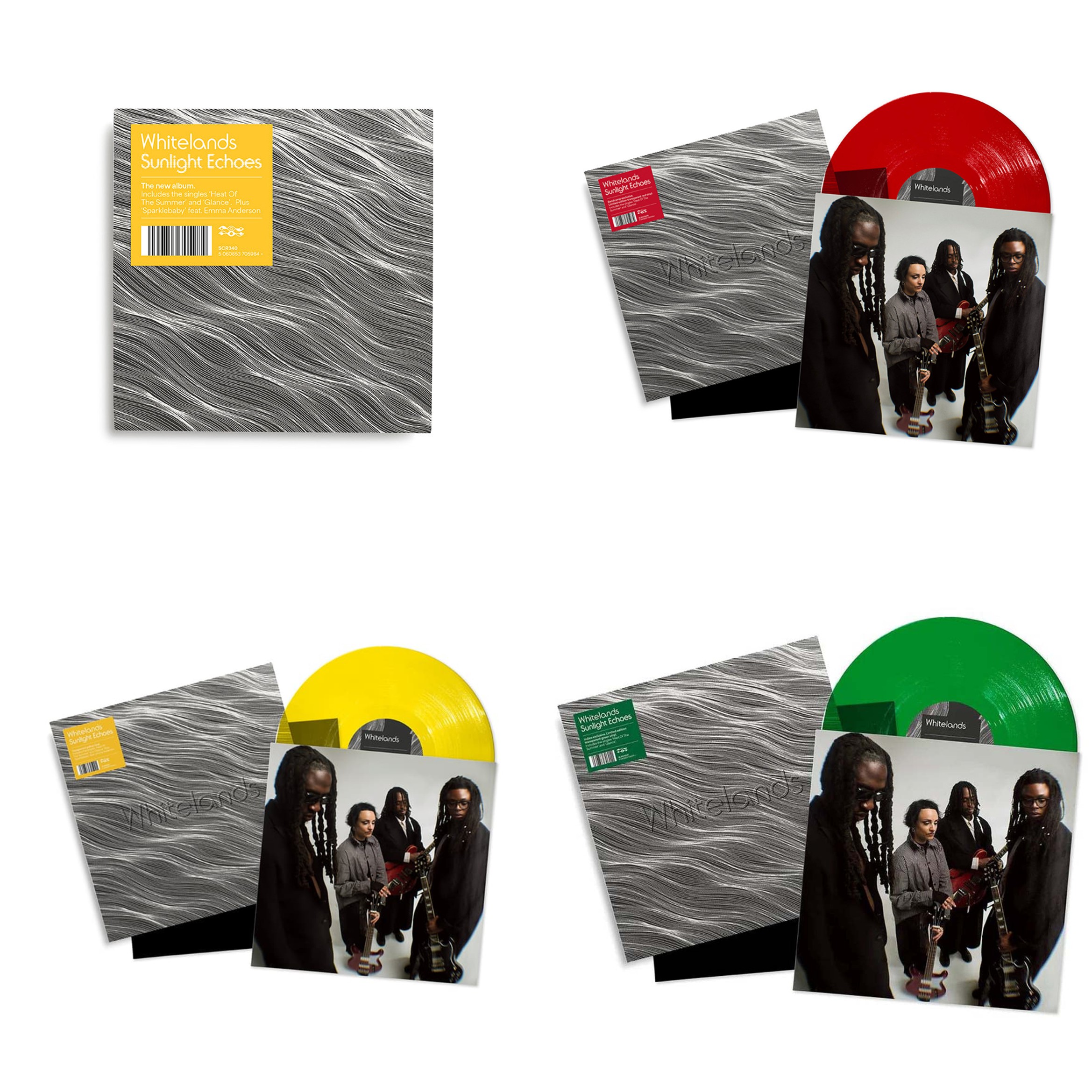
Whitelands are back with their second album carrying a sense of assurance that only comes from time spent learning who you are as a band. The London based four-piece are made up of Etienne Quartey Papafio on guitar and vocals, Jagun Meseorisa on drums and backing vocals, Vanessa Govinden on bass, and Michael Adelaja on guitar. From the outset, Whitelands have operated in a space that values emotion and atmosphere as much as volume, drawing from shoegaze while never allowing themselves to be boxed in by it. There has always been a thoughtful quality to how they present their music, one rooted in social awareness and empathy.
Before their debut album arrived on the ever-amazing Sonic Cathedral label, Whitelands built steady momentum through a run of singles that showcased different sides of their sound, each one adding a little more weight and intention. That groundwork paid off in 2024 with Night bound Eyes are Blind to the Day, a record that leaned heavily into nocturnal moods and inward reflection. It was an album that trusted stillness, layering dreamy guitars with literary lyrics and a sense of quiet confidence. You could hear a band finding their voice in real time, unafraid to sit with difficult emotions or subject matter.
The shift began soon after. The single ‘Heat Of The Summer’ arrived not as a rupture, but as a change in posture. The haze lifted, the melodies stepped forward, and Etienne’s vocals moved from a gentle murmur to something more direct and brimming with confidence. It felt like Whitelands turning outward, embracing movement, warmth, and immediacy without losing their emotional core. That moment now makes complete sense in hindsight, because Sunlight Echoes grows directly from it, capturing a band in motion, expanding their palette while holding onto the intent and sincerity that first drew people in. The band recognise this in themselves with Etienne himself saying,

“We’re coming back with a lot more maturity and realness, it shows how much more emotional our music has become.”
Let’s drop the needle on this one and see where it takes us.
‘Heat Of The Summer’ opens the album with a sense of forward motion that feels deliberate and confident. You already know this track, but placed here it does important work. It sets the tone for what follows, not just sonically but emotionally. Etienne’s vocal sits higher in the mix, clearer and more assured, and that decision alone signals a shift. This feels like Whitelands stepping out into daylight, not abandoning introspection but carrying it with them as they move.
‘Songbird (Forever)’ deepens that feeling rather than softening it. There is a tenderness to this track that hits quickly, helped by the string arrangements which lift the song without ever overwhelming it. It feels devotional in the broadest sense, focused on connection, gratitude, and the people who hold you up when things start to slip. It is one of those songs that feels personal even when you know it’s not about you.
The short and sweet ‘Shibuya Crossing’ acts as a brief pause next. This one is all atmosphere and texture. It feels like we’re listening through a fog and capturing this early morning moment in the city, before the world arises and we are unsure of our place in it.
That unsettled feeling now finds its voice on ‘Glance’. This is where Whitelands lean into restraint, letting suggestion do the heavy lifting. The song circles around missed chances and imagined outcomes, capturing that familiar ache of something that almost happened. The guitars are gentle but persistent, and the rhythm never rushes the emotion. Etienne’s delivery here feels particularly powerful, as if he has been holding something back too long and is no spilling it all at once.
A shoegaze legend pops up on ‘Sparklebaby’ next. Emma Anderson of Lush fame, brings a new dynamic into the album. Her presence adds a soft counterweight to Etienne’s vocal, and the two voices complement each other in a way that feels natural rather than symbolic. This track has a warmth, both musically and emotionally. It plays as a celebration of togetherness, of shared effort and shared survival, and there is a real sense of ease in how the band let the song unfold.
‘Blankspace’ marks a turn inward. The brightness that carried the opening half of the album comes into sharp focus here, growing into something heavier and more contemplative. The song deals with mortality head on, but it does so without melodrama. The arrangement is so upbeat throughout and the song just gallops along. What is becoming obvious at this point in the album is the sheer quality of the choruses. There are more hooks on here than on Captain Hooks coatrack.
‘I Am No God, An Effigy’ is one of the emotional centres of the record. There is a rawness here. The song grapples with loneliness, self-perception, and the difficulty of sitting with yourself when distractions fall away. Musically, it balances the sonic build and release beautifully, with moments that feel close and claustrophobic opening out into something more expansive. Again, the chorus here is incredible with the guitars sounding like synths and soaring to the heavens. I’m breathless.
As we enter the closing stretch of the album ‘Dark Horse’ carries the weight of the outside world with it. The subject matter here is heavy dealing directly with the genocide in Gaza, and the band treat it with the seriousness it deserves. There is grit in the guitars here, a sharper edge that cuts through the warmth of earlier tracks. The song doesn’t offer easy answers, nor should it. What it does though is demand attention, grounding the album firmly in the reality it was created in rather than letting it float away on abstraction.
‘Mirrors’ pulls influence from emo and hardcore without losing the band’s core identity. There is a physicality to this track that feels new, especially in the way the rhythm section drives it forward. I would also say there’s a distinct eighties feel to some of the melodies, especially in the verses. The chant of the chorus sounds like it’s being ripped from Etienne’s very soul. For me his finest vocal performance on the album.
‘Golden Daze’ closes the album with a sense of quiet optimism. It settles into a feeling of endurance, of choosing hope even when certainty is out of reach. The arrangement feels open and unforced, allowing the album to exhale rather than announce its ending. It is a fitting close to a record that has spent its time moving from shadow into light without pretending the shadows ever fully disappear.
What makes Sunlight Echoes so compelling is how human it feels. This is a band unafraid to show growth, doubt, joy, and discomfort in the same breath. The songs hit quickly, but they also reward time, revealing new details with every listen. Whitelands have taken everything they learned from their debut and pushed it outward, sharpening their melodies while deepening their emotional reach. It is music made with conviction and heart, the kind that quietly embeds itself into your days. Even when the album ends, the warmth remains, proof that some echoes are brightest when they come from the sun.
Sunlight Echoes is out now via Sonic Cathedral. You can check it out over on the Whitelands Bandcamp page.

You can follow Whitelands on social media here…
Photo Credit
Edward Sogunro
Discover more from Static Sounds Club
Subscribe to get the latest posts sent to your email.
 Static Sounds Club