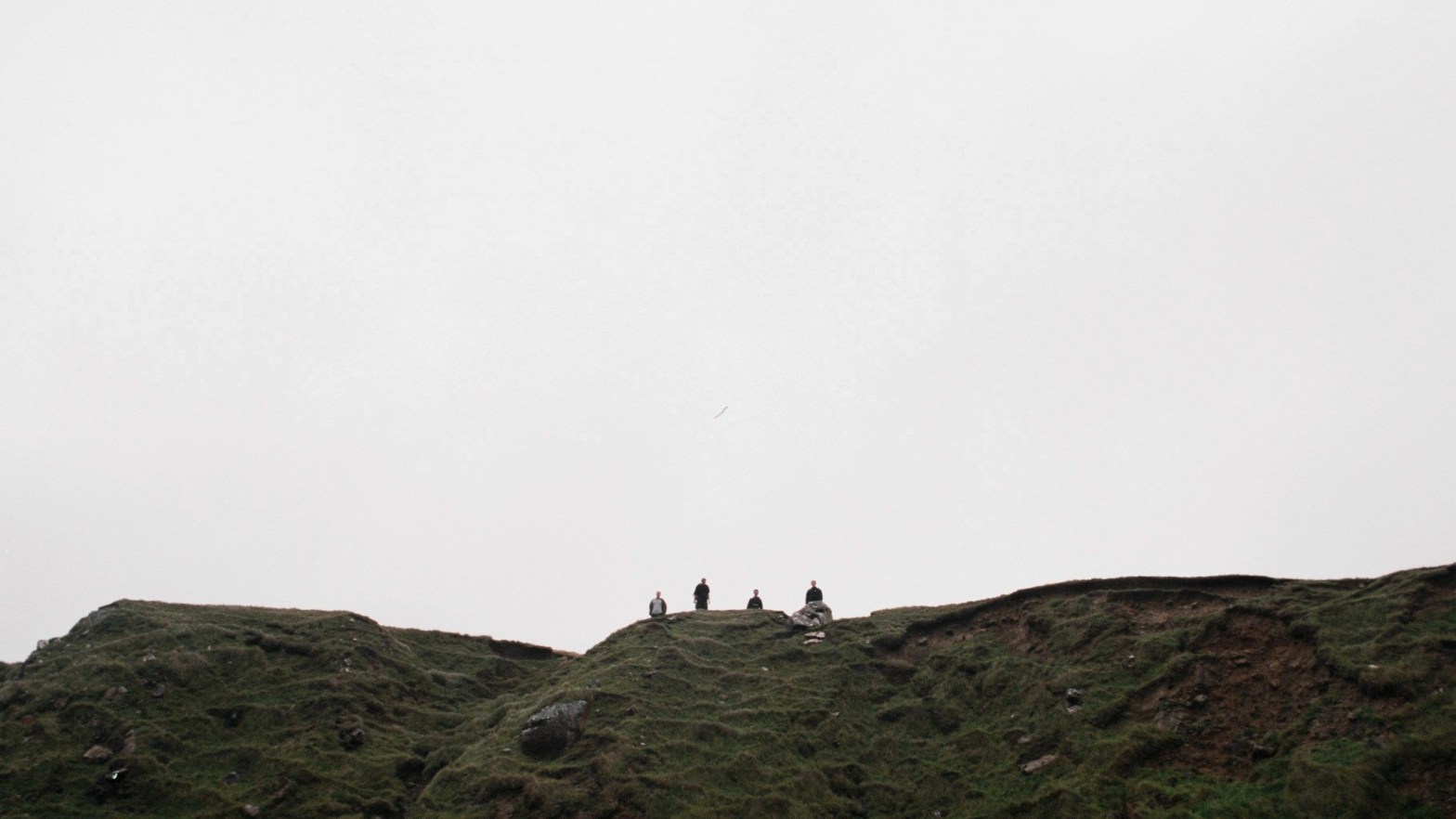
This time last year I had already earmarked my album of the year in Mogwai’s The Bad Fire. Well, it shouldn’t be any surprise I’m at it again in 2026 with the new album from London’s Deathcrash. This is a pretty special album folks so buckle in, it’s gonna be a long un.
I first came across Deathcrash on their 2023 LP Less moved to play ‘Empty Heavy’ on my DKFM Radio show. Their music had this inexplainable draw. There was a mournful quality sure but through all that there was an emotional heft. You couldn’t help but be moved by the dynamic shifts in their music. Tiernan Banks, Matthew Weinberger, Noah Bennett and Patrick Fitzgerald have spent close to a decade refining that dynamic. They learned how to construct vast emotional spaces and then reduce them to rubble in a second. That push towards intense and devastating songwriting became their signature.
Now they return to us with Somersaults and right away it feels like a shift in posture. The volume of feeling remains high, yet the focus turns inward with greater clarity. Aging and examining the life they have carved for themselves has proven fruitful ground for inspiration. Weinberger has this to say.
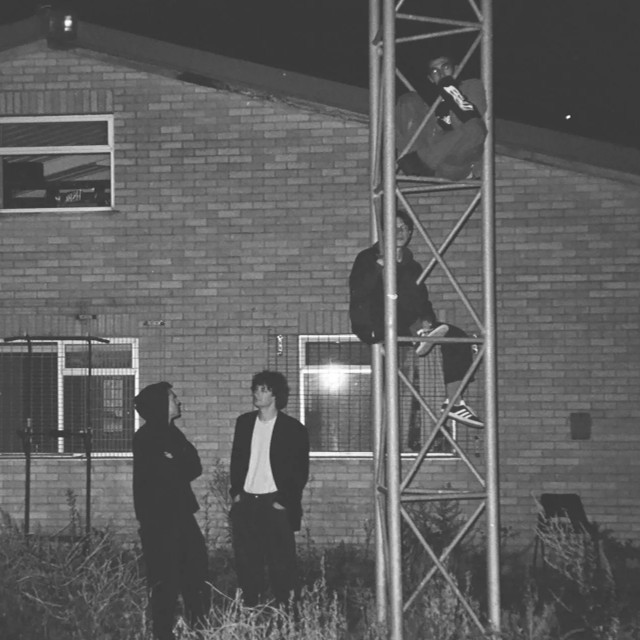
“Adolescence is feeling like you’re gonna live forever, but also that you want to die right now – and they’re basically the same feeling. Growing up is somewhere much more in the middle.”
“I think this record has joy in it. That’s why ‘this life is the best life’ is a big tagline of the record. Some songs are more anxious, some more nostalgic, but they all circle that idea that this is the life we have, and we’re embracing it.”
Vocals sit closer to the front than ever before. The themes circle around growing up, around the quiet reckoning that follows the loud ideals of youth. It is still slowcore in its bones, still patient, still deliberate, but it carries warmth that was once buried deep in the mix. After touring larger rooms and opening for The Jesus and Mary Chain, the band discovered that fragility does not need to hide. That confidence threads through this record.
Let’s drop the needle and I’ll tell you all about it.
The title track ‘Somersaults’ opens the album with a sense of suspended memory. Guitars chime with a nostalgic glow while Banks delivers a vocal that feels both reflective and uncertain. The song takes its time revealing itself. There is a sense of looking back at adolescent dreams and realising which ones have faded. The arrangement feels open, less claustrophobic than earlier work. The choral, group singing sounds positively joyous. It sets the tone for the album perfectly.
We positively explode into ‘NYC’ next. Banks sings, “Thirty, no career, it fucking worries me. And doing the band doesn’t help,”. Such blunt honesty. The band underline his anxiety with a steady, restrained pulse. The guitars circle around a central riff while the rhythm section holds firm. This track captures the unease of adulthood with precision. It acknowledges that we all have doubts but also the importance of not surrendering to it.
On ‘CMC’ the mood shifts towards gratitude. Ambient textures hum beneath the surface while the refrain “This life is the best life” emerges as a quiet mantra. The inclusion of everyday sound, that faint office printer noise, grounds the song in the ordinary. That is the point. The record celebrates continuity. It recognises the value of still making noise in the doorway. The contrast between the anxious confession of ‘NYC’ and the affirmation here captures the uneasy middle ground of adulthood.
‘Triumph’, which many of us heard late last year, expands into something vast. The guitars swell with purpose and the drums build patiently towards release. The song lives up to its name. When the crescendo arrives, it feels like a release valve going off. Deathcrash have always excelled at cathartic endings, yet here the release carries tenderness alongside their trademark force. This song lifts me every time I play it and is without doubt my album highlight.
‘Bella’ strips things back again. The structure feels loose, almost like a rehearsal fragment captured in its purest form. Voices overlap gently, instruments leaving room for each other. Drums really stretching out and filling those spaces. It highlights the trust within the group. After years of writing together, they know when to hold back. The intimacy here reveals a softer side that earlier records only hinted at.
The intensity returns on ‘The Thing You Did’. Fitzgerald’s bass anchors the track with a thick, grounding presence while Bennett’s drums push forward with determination. The outro gathers momentum, guitars rising into a dense wall of sound. It recalls the band’s earlier potency, yet it carries a clarity in the mix that feels fresh.
‘Wrong To Suffer’ settles into a measured crawl. The lyrics feel half swallowed, phrases breaking off before full explanation. This ambiguity works in the song’s favour. It mirrors the confusion that often accompanies growth. The instrumentation remains restrained, allowing the vocal to carry the emotional centre.
There’s a gorgeous melodic brightness on ‘Stay Forever’. The guitars shimmer with a light touch and the vocal lines feel optimistic, genuinely hopeful. “Stay forever like you used to, and do all the things you didn’t when you had them”. There is a quiet romanticism here that speaks to the album’s broader theme of choosing what lasts. The band sound comfortable in this register. It suggests, to me anyway, new possibilities for where their songwriting could travel next.
‘Love For M’ stands out as one of the album’s emotional cores. The bridge contains one of the most striking lines on the record, “I don’t know if I’ll die at all, I’m not sure if I want to.” The honesty is startling. The moment is undercut by a casual studio comment left in the mix, which adds humanity and humour. That decision reflects the band’s evolving relationship with their own seriousness. They no longer need to frame every feeling as monumental.
‘Marie’s Last Dance’ closes the record with measured, epic grace. The arrangement feels reflective, almost circular, bringing the themes of the album back into focus. The guitars hold a gentle resonance while the rhythm section provides a steady heartbeat. The title of the album suggests risk, the act of tumbling forward without certainty. This final track confirms that they have found their footing.
Across Somersaults, Deathcrash embrace the in between. The fatalism that once defined their work softens into something sustainable. They still honour the slowcore lineage of bands like Duster and Low, yet they sound increasingly like themselves. The joy present here does not erase anxiety. It coexists with it. That balance gives the album depth. The despair that once threatened to swallow their songs whole now sits alongside gratitude, humour and hard-won perspective. They still reach for those sky-high crescendos. Yet this time the emotional centre feels grounded. It feels lived in. These are songs written by four people who have tested their ideals against reality and chosen to keep going anyway. That choice rings through every chorus, every patient build, every line that admits fear and then carries on. Deathcrash have refined their impact. And with Somersaults, they don’t just take the leap, they land it on their feet.
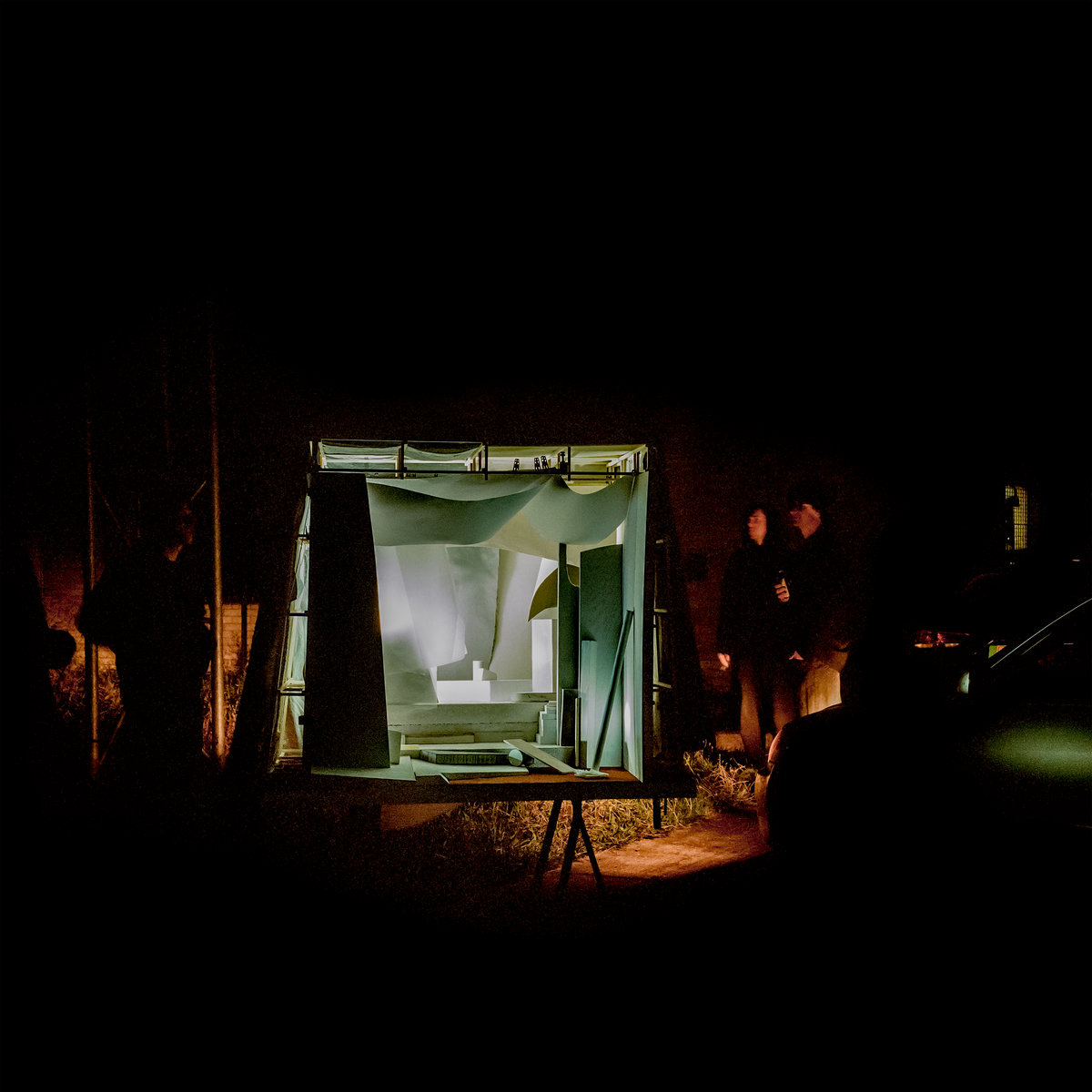
Somersaults is out now via untitled (recs). You can check it out over on the Deathcrash Bandcamp page.

You can follow Deathcrash on social media here…
Discover more from Static Sounds Club
Subscribe to get the latest posts sent to your email.
 Static Sounds Club