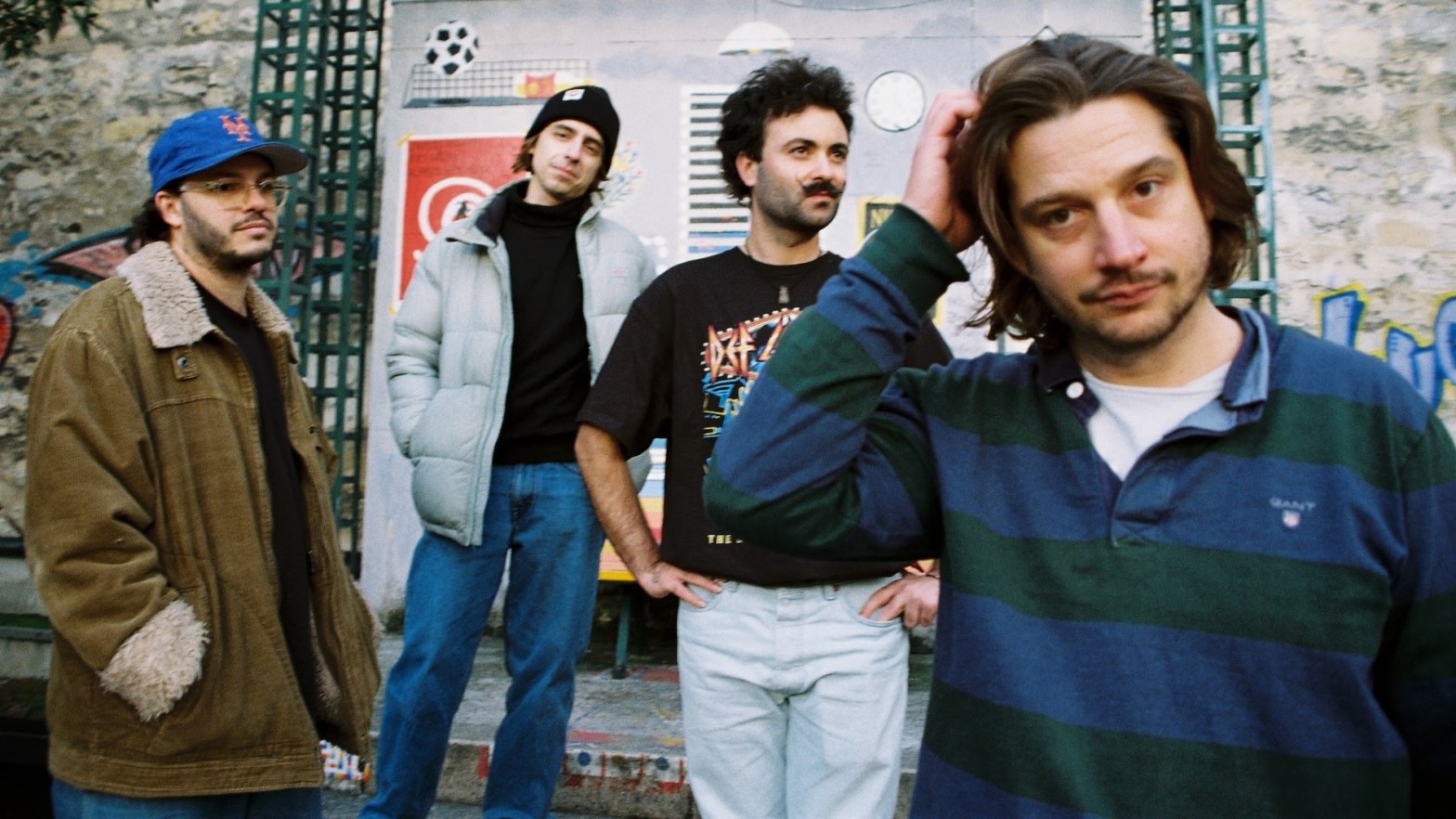
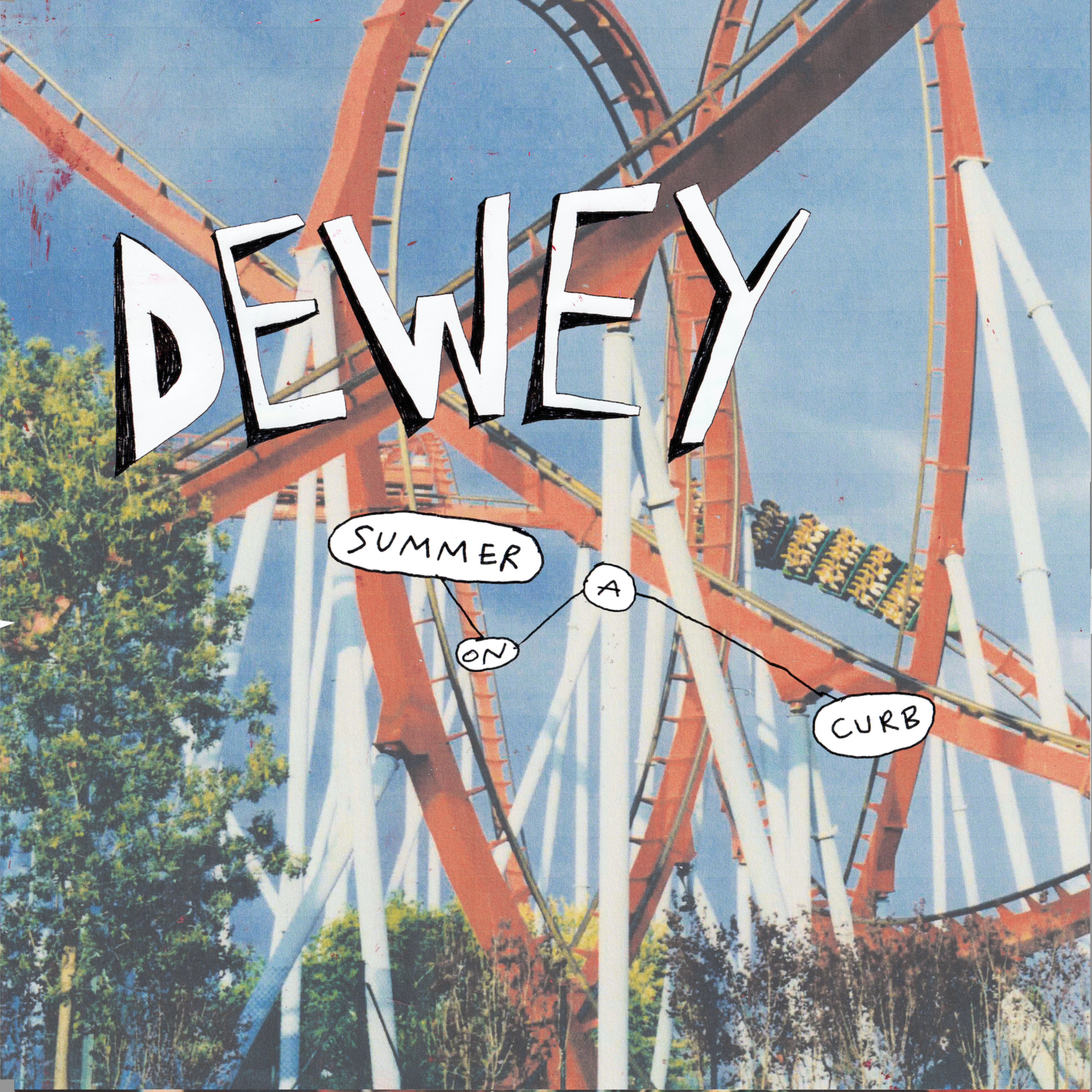
Paris has always had its own relationship with guitar music. It often feels slightly removed from the UK and US narratives that dominate shoegaze history, which makes it all the more thrilling when a band arrives with songs that feel both rooted and refreshingly open. Dewey are one of those bands. An indie rock and shoegaze quartet from Paris, they step forward with their debut album Summer On A Curb, released via Howlin’ Banana Records.
What struck me straight away is how unforced it all sounds. The idea of late nineties nostalgia meeting a modern sensibility feels accurate, yet it only tells part of the story. Yes, you can hear echoes of American basement pop and that soft focus guitar tradition. Yes, there are textural nods to My Bloody Valentine woven through the mix. But what Dewey really have is a knack for melody that lands quickly and lingers.
‘City Has Come To Crash’ opens the album and sets the emotional tone. This was the first track I heard from the record and it still feels like the doorway into Dewey’s world. The guitars arrive in a gentle haze, the rhythm section steady and unshowy. There is a synth driven undercurrent that gives it a faint orchestral sweep, the kind of arpeggiated pulse that quietly drives everything forward. It feels like sitting in the back of a taxi at three in the morning, city lights flashing past, replaying conversations in your head. It’s subdued but never sleepy. A very confident opening.
‘Outside Of The Lines’ builds on that foundation with a little more bite. You may hqve heard this one on my February DKFM Shoegaze Radio show. The guitars have a rougher edge here, chords ringing out with confidence. There is a youthful defiance to the chorus that makes you want to sing along even before you know the words. Dewey understand that pop does not need to be glossy to be effective.
Slowing the pulse next ‘Role Model’ provides breathing space. Berton’s writing favours immediacy over grand statements and this track shows that clearly. It feels like an honest conversation set to chiming guitars. The band never overcrowd the arrangement. Each element has room to breathe. You can hear how self-producing the record has given them freedom to keep what matters and discard what does not.
Then comes ‘Jinx’, the single that introduced many of us to Dewey’s world. Driven by that arpeggiator motif which gives it a bittersweet undercurrent, the track explores the contradiction between chasing popularity and recognising how fleeting trend cycles can be. There is a subtle humour running through it too, mirrored in the video’s playful take on promotional discomfort. Musically it balances sugar and shadow perfectly. The hook is undeniable, yet it sits within a wash of guitar that keeps things grounded.
Up next ‘Face Out’ feels more introspective. The tempo dips ever so slightly, the vocals sit deeper in the mix, and the optimism is dialled up. This is where Dewey’s ability to write what I would call emotional snapshots really shines. The song feels like a moment in time captured in song form.
‘Better Safe Than Sorry’ brings the pace back up. Opening with a weird synth pad it soon blooms into this minor key odyssey. The drums have a looseness that keeps everything human. It is catchy without trying too hard, and that restraint is one of the album’s strengths. Dewey never oversell a chorus. They trust you to meet them halfway.
Bringing us back up to speed ‘Void’ is a highlight for me. The guitars shimmer but it’s the mood that carries weight. It is a reminder that hazy textures can hold real emotional depth when paired with thoughtful songwriting.
The title track ‘Summer On A Curb’ sits at the heart of the album. It encapsulates the record’s blend of warmth and uncertainty. The image the title conjures up is simple and grounded. Sitting outside, watching the world move, feeling both part of it and slightly removed. The band channel that feeling into a melody that feels immediate yet reflective.
‘Tough Crowd’ injects a little edge back into proceedings. There is a playful self-awareness here, a recognition of the pressures that come with creating art in a world obsessed with reaction. The guitars feel a touch sharper, the rhythm section pushing forward with intent.
‘Yesterday After Dawn’ carries a reflective glow. It feels like the calm after a long night. The arrangement is delicate, the vocal delivery sincere. There’s a touch of the Weezer’s on show here. It’s a great reference point as it really suits Dewey’s aesthetic.
Finally, ‘Cardboard’ closes the album with a sense of resolution. We finish up at pace and it’s the perfect way to round out this collection of songs. It’s a pop banger and it shows the confidence of this band that they’d tuck this beauty away at the end of the album.
What makes Summer On A Curb stand out is its balance. It taps into that late nineties and early two thousands sweet spot while feeling current and personal. It nods towards bands like Wishy, Wednesday, Hotline TNT and Slow Pulp without sounding like an imitation. In a French indie scene that deserves far more international attention, Dewey arrive with a debut that feels fully formed yet open to growth.If this is Dewey finding their feet, then the view ahead looks bright. It is rare to find a debut this self-assured, so take a seat and make it your own summer on a curb.
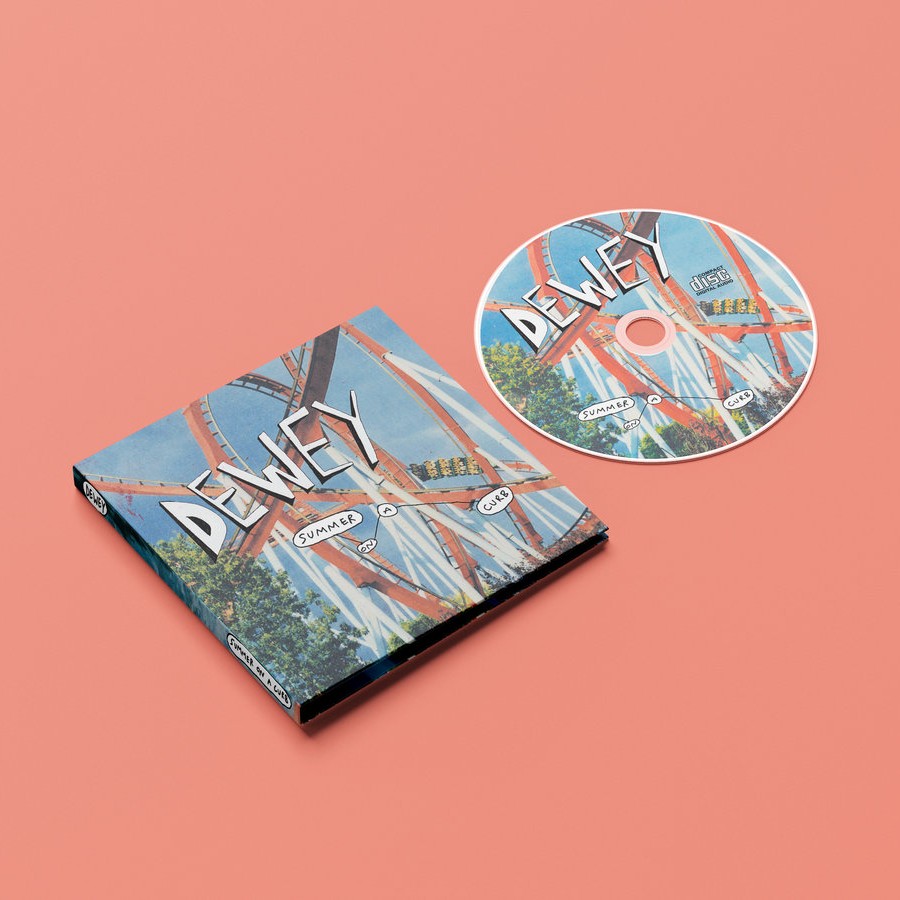
Summer On A Curb is out now via Howlin’ Banana Records. You can check it out over on theDewey Bandcamp page.
You can follow Dewey on social media here…
Discover more from Static Sounds Club
Subscribe to get the latest posts sent to your email.
 Static Sounds Club