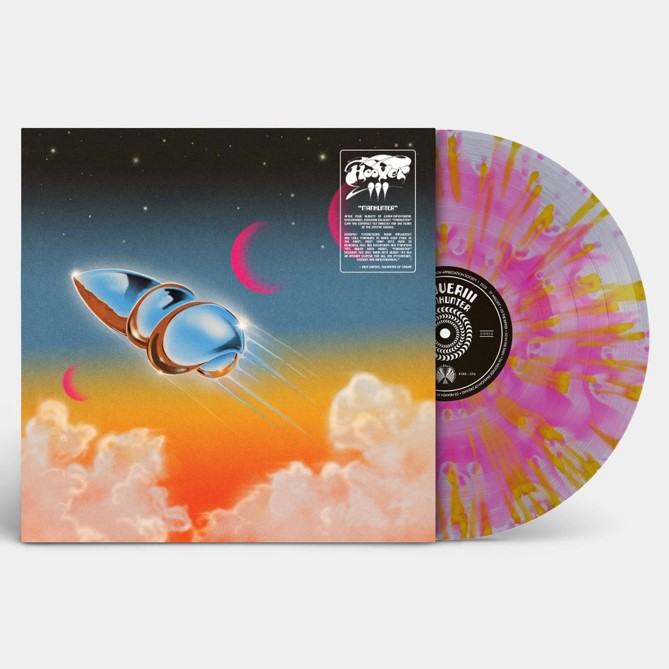
Cloakroom – Last Leg of the Human Table

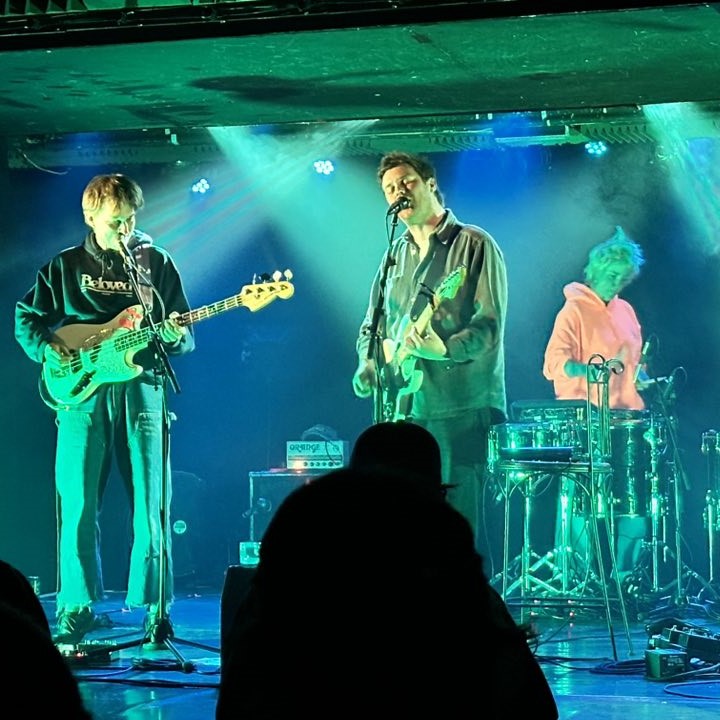
Cloakroom, the Indiana-based trio known for their unique fusion of shoegaze, stoner rock, and post-hardcore sounds, are back with their new album, Last Leg of the Human Table. Emerging from the industrial landscapes of the Midwest, Cloakroom have consistently crafted soundscapes that resonate with both the grit of their surroundings and the expansiveness of their musical ambitions.​

Since their inception, Cloakroom have been on a sonic journey that defies easy categorization. Their debut album, Further Out, introduced listeners to a band unafraid to blend heavy riffs with ethereal melodies, setting the stage for their signature sound. Time Well saw the band delving deeper into expansive compositions, weaving intricate layers that enveloped the listener. With Dissolution Wave (my personal favourite to date), Cloakroom ventured into conceptual territory, presenting a space western narrative that showcased their storytelling prowess alongside their musical evolution.​

The band have described the songs on Last Leg of the Human Table as an exploration of “what it means to be human and the high cost of the human experience.” Additionally, a statement released with the album mentions a “teetering social structure” and how “America has lost its soul,” with much of the album feeling like an attempt at connection, trying to regain something that’s been lost.

Let’s drop the needle and see where Cloakroom take us this time.

The album opens with ‘The Pilot,’ a track that immediately propels the listener into this redefined sonic realm. Exploding with energetic guitars and drums, it leads listeners into a stratosphere of wonder and distortion. This is next level Cloakroom, the dynamic false stops, drum fills and screeches of feedback add punctuation to the story they’re telling.

‘Ester Wind’ mixes things up by blending grunge and power-pop elements into a mesh of sonic hooks, pushing its aesthetic to the forefront. The track’s driving tempo and infectious energy make it a standout moment on the album. Cloakroom are really mixing things up and I love how they’re subverting expectations only two songs in.

Serving as a brief interlude, ‘On Joy and Unbelieving’ offers a moment of introspection. Its minimalist arrangement provides a contemplative pause in proceedings.

The album’s first single, ‘Unbelonging,’ features sunny jangle-pop melodies and poignant lyrics, discussing a desire and ache to travel. The track’s upbeat tempo and catchy hooks make it an accessible entry point for new listeners. Typically, the story isn’t that straightforward. Whilst the guitars take a lighter tone the bass steps up with a heavily fuzzed out sound.

‘The Lights Are On’ Brings the heavy riffs back but continue to mix things up with more introspective verses leaving the big notes for the chorus. There’s a guitar motif on here that leaps out the speaker at you. Sounding like a cross between a sitar and synth it totally steals the show.

I wasn’t ready for ‘Bad Larry’. It could easily be a shoegaze take on a 50’s pop song. Is this what you would expect from Cloakroom? No. Is it utterly exhilarating and life affirming. Oh, fuck aye! That chorus melody is so disarming and will make hearts melt. It does this old heart good to hear one of my favourite bands adding more sonic strings to their bow and absolutely nailing it.

Continuing that reinvention of who Cloakroom are ‘Story of the Egg’ offers a unique narrative and musical approach. It’s enigmatic and draws you in with that driving bass that could also be a pulsing synth. Lyrics are delivered in a tight and measured fashion adding to that clipped percussive pattern the other instruments adopt. The snippet of a disco track sneaking in at the end made me smile.

Another brief interlude, ‘On Joy and Undeserving’ serves as a reflective moment, allowing us a moment to catch our breath.

‘Cloverlooper’ infuses post-hardcore energy into the mix, adding a layer of urgency to the album. Its driving rhythm and intense delivery provide a contrast to the more ambient tracks. This track delves into the more recognisable tones and sonic dynamics we’d expect from a Cloakroom track. The dissonant chords and melodic vocal delivery are spot on and in turn deliver us sated into the final track.

Closing the album, ‘Turbine Song’ encapsulates the journey with its blend of potential energy being restrained beneath gentle melody. The bass once more guiding us along with its warmth and abrasiveness.  The track’s peaceful conclusion leaves a lasting impression, echoing the album’s themes of searching and resilience.

Last Leg of the Human Table stands as a testament to Cloakroom’s evolution and their willingness to explore new sonic territories. By grounding their music in the tangible struggles of contemporary life, they offer a mirror to reflect on your own experiences. The album’s dynamic range, from explosive openers to introspective interludes, invites a deep and immersive listening experience.​

In a world where the ground beneath us often feels unstable, Cloakroom provides a soundtrack that acknowledges the chaos while offering a sense of connection. As we navigate our own paths, Last Leg of the Human Table encourages us to find beauty in the tumult and to seek understanding amidst uncertainty.​

Last Leg of the Human Table is out now on Closed Casket Records and is available on a myriad of vinyl options. Head over and give the band a follow on the Cloakroom Bandcamp Page too to get a digital download.

You can follow Cloakroom on social media here……

SKLOSS – The Pattern Speaks

Austin-meets-Glasgow duo SKLOSS and married couple—Karen Skloss (drums/vocals) and Sandy Carson (guitar/vocals)—have sculpted a hypnotic, fuzz-drenched world in The Pattern Speaks, a debut record that fuses heavy psychedelia, post-metal intensity, and an undercurrent of dreamy, cinematic storytelling. Their lockdown-born project has evolved from living room experiments into a visceral, sonic force, culminating in this, their first foray into the long format released via Fuzz Club Records.

The band offer us this insight into the themes at play on the album.

“Traveller to traveller – The Pattern Speaks is a message in a bottle, a cosmic plea for assistance from the stars, space aliens, or non-human intelligence. It also hints at a way out of our self-made cycles of drudgery and inhumanity.”

That said, let’s drop the needle and dive in.

We open on the title track, a manifesto. From the very first note the ominous vibes are oozing out the speakers. Skloss’s vocals emerge like a ghostly transmission, echoing and layered, shifting between eerie chants and half-spoken declarations. Then it begins. A thunderous, rolling drum pattern pummels forward, reminiscent of Neu!’s motorik propulsion but drenched in doom-laden fuzz. Carson’s guitar churns out cyclical, crushing chords, building an oppressive yet hypnotic momentum. This is a potent opener and sets the scene for what’s to come.

Shifting gears, ‘Mind Hive’ is built around an undulating, syncopated groove that feels like it’s perpetually teetering on the edge of collapse. The interplay between Carson’s fuzz-soaked guitar lines and Skloss’s tight and in your face, drumming creates an unsettling tension, like watching a film on a loop with each frame slightly out of sync. There’s an undercurrent of paranoia here—perhaps alluding to social media echo chambers or the way thoughts can become cyclical, inescapable mazes.

If ‘Mind Hive’ hinted at anxiety, ‘Imagine 100 Dads’ throws itself into full-blown existential panic. A jagged, minimalist punk approach gives this track a sense of urgency, with Carson’s guitar lines skittering between post-hardcore dissonance and classic garage-rock snarl. Opening in a minimal tempo and pared back sound the song slowly evolves into an intergalactic voyage through a black hole.

The most overtly doom-laden track on the album, ‘Dead Bone’ oozes with tension. A creeping bassline underpins cavernous drums, while Carson’s guitar work oscillates between funereal, single-note passages and crushing walls of distortion. When this song erupts the wall of sound is overwhelming and at volume fair moves the air. It’s an exhilarating listen and fans of the genre are going to wallow in this one.

Opening with an instant of reflection—if only momentarily. ‘Snorkels Ask’ reveals a warm, enveloping drone, its serpentine guitar tones creating an almost meditative atmosphere. It’s the closest the album comes to post-rock, allowing space for textures to bloom and evolve over its runtime. Skloss’s vocal chants breaking through from time to time like an echo of a memory.

The most structurally unpredictable track on the album, ‘Upper Attic’ careens between tempos and moods like a fever dream. Angular, almost math-rock riffs stutter and twist, while the vocals take on an almost spoken-word cadence, conjuring images of forgotten spaces. The track builds to a delirious, fuzz-soaked climax which leaves us breathless and buoyant.

A cosmic freakout of the highest order. If ‘Upper Attic’ was claustrophobic, ‘Plugged Into Jupiter’ is the sound of being shot into the stratosphere. The guitars begin calmly picking out their delayed siren call, lulling us into a false sense of security. Skloss’s drumming picking out the vital beats. Then we take off and the drums take on an almost tribal urgency. The guitars roaring like jet engines. There’s an underlying theme of escape here—perhaps from earthly concerns, perhaps from our own being. The middle section sees the instrumentation revert back to the calm of the intro before re-emerging, transformed, for a final, triumphant explosion.

Fittingly, the album closes with its most haunting track. ‘Ghosts Are Entertaining’ is built around a compelling guitar line that sounds like it’s echoing from another dimension. The drums and guitar are in perfect sympatico, just listen to how the drum rolls mirror the riffs. The ghosts in question? Well, they aren’t just spirits—they’re memories, past selves, lingering thoughts that refuse to fade. The final moments of the track, where all instrumentation drops out except for a single, sustained feedback note, leave you suspended in uncertainty.

The Pattern Speaks is an album that doesn’t just ask to be heard—it demands to be felt. It’s a journey through repetition, chaos, and fleeting moments of beauty, a sonic representation of trying to find meaning in the patterns of existence. SKLOSS have crafted a debut that is as unsettling as it is mesmerizing, a record that lingers long after the last note fades. So, take the plunge. Let the pattern speak. You might not be ready for what it has to say—but you won’t be able to stop listening.

The Pattern Speaks is out now via Fuzz Club Records and you can also check it out on the SKLOSS Bandcamp page.

You can follow SKLOSS on social media here…..

bdrmm – Microtonic

Since their 2020 debut Bedroom, bdrmm have been a band in constant motion, refusing to be boxed in by traditional shoegaze tropes. While that first album wrapped listeners in a cocoon of reverb-drenched introspection, 2023’s I Don’t Know signalled a shift—embracing elements of krautrock, post-punk, and electronic experimentation. In my review of that album, I noted how it was obvious the band were relishing exploring what was sonically possible and what they were capable of as musicians.

Now they are back with Microtonic and this time the Hull-based quartet have leaped headfirst into a world of pulsating beats, haunting textures and electronica. The band themselves are only too aware of the progress they have been making saying this about the album.

“I think this is the best thing we’ve ever done; it’s a proper step up. The last album was essentially like a bridge between the two albums. With that one we knew what we were trying to do but with this one we’ve fully cracked it.”

It’s time to drop the needle and dive in.

Opening with a menacing synth pulse that sounds like it was lifted from a John Carpenter score, ‘goit’ immediately sets the album’s uneasy tone. The introduction is sparse, built on industrial clicks and an ominous undercurrent of static. When the beat drops, it’s clear bdrmm aren’t just experimenting with electronic textures—they’re revelling in them. The rhythm section is rigid and mechanical, with a busy hi-hat pattern that wouldn’t feel out of place in a techno set. Then, Working Men’s Club frontman Sydney Minsky-Sargeant enters the mix with a vocal delivery that oozes detached cool, his spoken-word cadence adding a dystopian edge. Lyrically, ‘goit’ is cryptic, fragmented phrases tumbling over each other like overheard snippets of a dream. It’s quite the opening—restless, dark, and disorienting.

Next up is the single ‘John on the Ceiling’. This track sees bdrmm blending their signature dreamlike melancholy with the motorik propulsion of krautrock. The bassline is the engine, locked into a relentless groove while shimmering guitars weave in and out of the mix like ghosts. The song’s title hints at dissociation—an out-of-body experience. As the song progresses, the production becomes increasingly dense. Delayed guitars cascade over one another, reverbed synths swirl, and the vocals drift further into the ether. By the time the final minute hits, the track has morphed into something nearly psychedelic—looped melodies spiralling upwards before dissolving into a cavernous reverb tail.

We head into what I consider the euphoric peak of Microtonic next. If ‘John on the Ceiling’ felt like floating outside yourself, ‘Infinity Peaking’ is full surrender to the void. The track starts with a simple, pulsing synth arpeggio, soon joined by layers of warm, shimmering pads. The rhythm here is crucial. A four-on-the-floor kick drum thuds persistently, anchoring the track even as it expands into more abstract realms. The vocals, delivered in a hushed murmur, repeat mantras rather than verses, reinforcing the track’s trance-like quality. If My Bloody Valentine had ever collaborated with Underworld, it might have sounded something like this.

After the euphoric rise comes a track built on tension. ‘Snares’ oscillates between paranoia and catharsis. The drum programming here is intricate, with skittering percussion weaving through deep, droning synths. The guitars are distant, almost vaporous, barely cutting through the haze. I love the way the track builds. It starts in a hushed whisper before swelling into something frantic and overwhelming. The climax is a maelstrom of whooping synths and crushing beats, evoking a feeling of being trapped in a storm of your own making.

Collaboration is a big strength of bdrmm in general and they continue that spirit on ‘In the Electric Field’ featuring Olivesque from the amazing NightBus. It’s perhaps the most ethereal moment on the record. Olivesque’s vocals float like mist over a sparse, ambient soundscape. There’s a glacial beauty here—soft, undulating synths and beats like a punch in the face creating a hypnotic and dreamlike state. Is this a meditation on modern disconnection, the sensation of being present but not truly there? Just a thought.

As the album’s title track, ‘Microtonic’ serves as both its centrepiece and manifesto. The name itself suggests an exploration of microtonality and true to its title, the track revolves around a looping, ever descending synth line that feels slightly “off,” constantly shifting in minuscule, almost imperceptible ways. Textural details creep in. Guitar shimmers while the bass rages. This is music designed to hypnotize. The beat remains steady, unchanging, while layers of sound morph and evolve around it. There’s a weightlessness here, a sensation of floating through an unfamiliar dimension.

It’s off on a trip through the looking glass next with ‘Clarkycat’. The title references a fictional drug from the cult comedy Nathan Barley, a scathing and prophetic satire about media culture. This gives us a huge clue about the song’s intent—it’s a hallucination, a synthetic trip through a warped reality. The song opens with a glitched-out synth arpeggio, twitching and flickering unpredictably. The notes are detuned, stumbling over each other. The bass is distorted and lurching, oscillating like a drunken heartbeat. Halfway through, the song takes a dramatic turn. The beat vanishes, leaving behind a cavernous echo where only the arpeggiated synth remains, but now it’s even more unstable. Then—BAM. The beat slams back in. The bass distorts further as we head towards the comforting close.

After the chaos of ‘Clarkycat’, ‘Sat in the Heat’ provides a much-needed exhale. This is Microtonic at its most minimalistic, a meditative track that stretches out like a long summer afternoon where time feels slow and heavy. A soft, repetitive guitar motif forms the backbone of the track, drenched in warm reverb and looped. The synth is grand and lush underneath, subtly shifting in intensity, adding a meditative quality. The glitchy beat brings to mind some of Thom Yorke’s solo work as does the soaring guitar line that takes the track home.

Named after an actual dried-up lake in Australia, ‘Lake Disappointment’ is relentless, driving forward with an almost menacing energy. This feels like an out-of-control acid house party all squelchy bass and nervous shuddering beats that scream anxiety. The effected vocals are something new as well. Slightly pitched down they provide a certain anonymity. Theres no way you would recognise this as a bdrmm track if you went in blind. That is testament to how far this band have come.

The album’s closer is its most haunting, a stripped-down requiem that lingers like the last embers of a fire. The vocals are barely above a whisper, fragile and intimate. The bass gently pulses like a heartbeat while the synth plays ambient chords in sympathy.  The electronica aspect involves a looped vocal part over glitchy, jumpy textures. It’s a perfect end to this grand experiment.

What’s clear to me is this isn’t just bdrmm dipping their toes into electronic waters—this is full submersion, a reimagining of what they can be. If I Don’t Know asked existential questions, Microtonic feels like the answer: an album both deeply personal and sonically expansive.

With Microtonic, bdrmm have crafted their most daring, fully realized work yet. It’s an album that refuses to be easily categorized, blending shoegaze, techno, and ambient influences into something wholly unique. This isn’t just an evolution—it’s a full-scale transformation. And the best part? They’ve only just begun.

Microtonic is out now via Rock Action Records and is available from the bdrmm Bandcamp page as well as your favourite indie record shop.

You can follow bdrmm on social media here…

Photo credit

Titouan Massé

Sex Blender – Naïve Core

Now it’s time for part two of the new music released via my good pals over at Dirty Filthy Records.

The saucily named Sex Blender hail from Lviv, Ukraine, and they’ve been bending minds and genres since their inception in 2017.  Their debut, Hormonizer, was a heady concoction of heavy psych, krautrock, and stoner rock, establishing them as a force to be reckoned with in the modern psych scene. Their sophomore release, The Second Coming, delved deeper into experimental realms, blending intricate structures with expansive soundscapes.

Now, they return with Naïve Core, inviting us on another sonic odyssey, pushing their boundaries even further. Let’s drop the needle and take off into their world.

The album ignites with ‘Flaming Banana Pt 1’, a track that immediately thrusts us into a what this band are all about. Soaring, spacious guitar and pulsating rhythms. Spaced out Kosmische rock at its finest. The guitar soloing is just exceptional with the rhythm section holding things down providing a platform for the guitar to shine.

The title track, ‘Naïve Core’, shifts gears into a more groove-laden territory. With a bassline that hooks you from the start and guitars and synths that weave in and out like a psychedelic tapestry, this track exemplifies the band’s ability to meld complexity with accessibility. It’s a groovy wee number that challenges your expectations in ways you wouldn’t expect. Is it Prog? Is it Psyche? I’ll let you decide.

Next up ‘Mojohead’ is a swaggering beast of a track. Again, the Kosmische undertones are evident, but they’re filtered through a lens of 70’s prog style organ. The result is an altogether unique sound that conjures images of late nights in the city and smoky clubs. It’s raw, unfiltered, and undeniably captivating.

Closing out Side A, ‘Lost Identity Blues’ takes a more introspective turn. The melancholic melodies and reflective lyrics delve into the inferred themes of self-discovery and existential pondering. The track’s slower pace allows for a deeper listening and you find yourself fixating on the solos, both organ and guitar. It’s a poignant counterbalance to the preceding more high-energy songs and brings this side to a neat conclusion.

Flipping to Side B, ‘Organoid’ introduces an experimental flair. The track’s structure is unconventional, with shifting time signatures and a mosaic of sonic textures. It’s a testament to the band’s willingness to explore uncharted territories, blending elements of prog-rock with their psychedelic roots.

 ‘Superdakuju!’ is an exhilarating ride from start to finish. The intricate instrumentation and throbbing rhythm section create a sense of urgency, propelling the track forward. There’s a playful energy here, with hints of Eastern musical scales interwoven, adding an exotic flavour to the mix.

Bringing the album full circle, ‘Flaming Banana Pt 2’ revisits themes from the opening track but amplifies them to new heights. The intensity is dialled up, with soaring solos and a relentless rhythm section driving the track to a climactic conclusion. It’s a fitting end to an album that refuses to be confined by genre or expectation.

Naïve Core is a bold statement from Sex Blender, showcasing their evolution as artists unafraid to take risks. Each track offers a distinct experience, yet together they form a cohesive narrative that challenges and rewards in equal measure. This album isn’t just a collection of songs; it’s an invitation to explore the fringes of psychedelic rock and beyond. So, take the plunge, embrace the chaos, and let Naïve Core reshape your musical horizons.

Naïve Core is out now on vinyl via Dirty Filthy Records and Echodelick Records and digitally on the Sex Blender Bandcamp page.

You can follow Sex Blender on social media here…….

Arcane Allies – Mount Adhaphera

It seems like an age since I’ve heard from the good folks at Dirty Filthy Records about a new release. Much like buses we wait for ages for one to come along and then TWO come along in quick succession. Of course, both had to be amazing albums so I am going to cover both this week. 

Kicking things off we have the new album from Arcane Allies, the Berlin-based synth trio.  They’ve been weaving their unique tapestry of sound since their formation in 2016. Drawing inspiration from psychedelic and Krautrock pioneers like Can, Neu! and Tangerine Dream, they’ve also embraced elements from electronic and techno artists such as Derrick May and Jeff Mills. Their journey began during a U.S. tour with the psych-surf band Dai Kaiju, leading to their debut album, Saraswati, in 2019. This was followed by Sunra Oscillations in 2023, showcasing their evolving sound.

Now they return to present Mount Adhaphera, a six-track odyssey that continues their exploration of sonic landscapes. Let’s drop the needle and embark on a track-by-track journey through this latest offering.

The title track sets the stage with a gradual, hypnotic build, like a spaceship powering up for lift-off. A swirling mass of analog synths loops around a krautrock-inspired motorik beat, pulling you into its gravitational field. The theremin wails like a distant cosmic signal, while arpeggiated synths dance in intricate, overlapping patterns, creating a sense of movement that feels both free-floating and structured. The guitars, drenched in reverb, subtly weave in and out, reinforcing the ethereal, exploratory nature of the piece. This is Arcane Allies in full control of their sonic universe, blending organic instrumentation with synthetic textures in a way that feels both futuristic and deeply nostalgic.

Where the opener drifts in on an ambient tide, ‘Cards’ has a more propulsive energy, its tight drum grooves and bubbling bassline hinting at an underlying urgency. The synth lines twist and morph unpredictably, as if they are alive, reshaping themselves in response to the shifting rhythms. There’s an undeniable danceable quality here, but it’s more cerebral than club-ready—a kinetic piece that feels like it’s constantly evolving, inviting the listener to decode its many layers. The way the track locks into a trance-inducing groove while still remaining playful and elastic showcases Arcane Allies’ ability to keep things fresh and unpredictable.

This is the album’s most evocative and geographically unbound track, taking us on a sonic journey between two worlds. Indian-influenced scales shimmer over a steady pulse, creating a dreamlike atmosphere that feels both exotic and cinematic. There’s a distinct warmth here—the kind of sound that could score an imaginary road movie spanning neon-lit highways and sun-drenched deserts. A sitar-like drone hums beneath the surface, grounding the track as the percussion shifts between organic hand drums and electronic clicks and snaps. The result is a mesmeric fusion of sounds that never feels forced, but rather like an unspoken conversation between cultures.

As the title suggests, ‘Harm’ introduces a darker, more ominous energy to the album. A pulsating bassline throbs beneath icy, reverb-soaked synths that drift like ghostly apparitions. The drums are stripped-back and minimal, creating an uneasy sense of space, as if something unseen is lurking just beyond the edge of perception. There’s a slow-burning tension here, a feeling of inevitable escalation, and sure enough, midway through, the track unfurls into a storm of distorted synth swells and scattered percussion hits. It’s a masterclass in atmosphere-building, proving that Arcane Allies are just as comfortable conjuring unease as they are crafting blissed-out sonic landscapes.

If ‘Harm’ is the storm, ‘Toys’ is the moment of playful release. There’s an innocence to the way the synths bounce and glisten, bringing a levity that stands in contrast to the preceding track’s brooding intensity. The drum patterns are looser here, almost jazzy, allowing the track to meander and explore different rhythmic pockets. There’s a modular synth feel to the way the melodies emerge and dissolve, like someone twisting dials and letting the machines speak for themselves. This unpredictability keeps things exciting, making ‘Toys’ a joyful, spontaneous detour before we head into the final number.

Closing out our sonic journey we get aboard ‘Erkan Airlines’.. Airy synth pads stretch out like an open sky, while soft, shuffling percussion mimics the sound of distant engines humming. There’s a dreamlike, almost meditative quality to it—like watching city lights blur past from the window of a late-night flight. Gentle arpeggios and field recordings add texture, making it feel like we’re eavesdropping on a secret world hidden between radio frequencies. As the track fades into silence, it leaves behind a lingering sense of wonder, as if the journey hasn’t truly ended, but merely shifted into another dimension.

Mount Adhaphera isn’t just an album—it’s a sonic expedition through uncharted realms. Arcane Allies have managed to take their krautrock and electronic influences and mould them into something uniquely their own. Each track is a self-contained world, yet they all flow together seamlessly, guiding the listener through peaks of euphoric exploration and valleys of introspective moodiness.

It’s the kind of album that rewards repeat listens, with new details revealing themselves each time. I highly recommend tuning in with headphones in a dimly lit room or letting it soundtrack a late-night drive. However you choose to experience it, Mount Adhaphera offers an escape—an invitation to drift beyond the ordinary and into the unknown. Are you ready to take the trip?

Mount Adhaphera is out now via Dirty Filthy Records and Echodelick Records on psychedelic vinyl limited to a mere 300 copies. Also available via the Arcane Allies Bandcamp page.

You can follow Arcane Allies on social media here….

Idioteque – A Stone’s Throw From Home EP

London-based artist and producer Emanuele Savoca, known in the music realm as Idioteque, has been crafting a unique blend of dark, atmospheric, and bass-driven sounds that traverse the realms of trip-hop, electronic, and alternative rock. Drawing inspiration from a diverse array of artists—including Elliott Smith, Outkast, The Smashing Pumpkins, and Portishead—Idioteque’s music defies easy categorization.

With the release of his latest EP, A Stone’s Throw From Home, Idioteque embarks on a sonic journey that melds his signature atmospheric style with new explorations in sound.

Let’s dive in to see where this EP will take us.

Opening the EP is ‘Stylet,’ a mesmerizing introduction that immediately pulls us into a shadowy, hypnotic world. Featuring the hauntingly delicate vocals of Bâlâ, the track thrives on its minimalist yet intricate production—deep, pulsating basslines, skittering percussion, and an eerie, distant synth line that flickers like a neon sign in the rain.  There’s an understated tension running through the track, as if something is lurking just beneath the surface. Bâlâ’s voice is both intimate and otherworldly, floating above the deep, rolling beat like a siren in the dark.

The mood deepens with my undoubted EP highlight ‘I Remember,’ another collaboration with Bâlâ that fully embraces Idioteque’s trip-hop influences. The track is drenched in nostalgia, its slow-burning beat and looping guitar riff painting a picture of fragmented memories slipping through time. Bâlâ’s voice is largely unaffected, making her lyrics feel direct and straight to the heart. The bassline is warm yet ominous, pulsing beneath a delicate interplay of guitar flourishes and electronic textures. There’s a melancholic beauty here—an emotional weight that feels simultaneously intimate and universal. You don’t just listen to ‘I Remember’—you feel it seep into your bones, wrapping around you like a faded photograph brought back to life.  God, I love this track!

If the first two tracks ground us in deep, introspective territory, ‘Weightless Stairway’ lifts us into something more dynamic and expansive. Featuring the soulful and expressive vocals of Sheba Q, this track blends neo soul energy with Idioteque’s signature electronic production, creating something bold, shimmering, and full of movement. The drums are crisp and driving, the bassline confident and playful, while the guitars swirl with an almost 80’s feel. Sheba Q’s vocals bring a richness to the track, shifting from airy vulnerability to a more commanding presence as the song builds. There’s an uplifting quality to ‘Weightless Stairway,’ and is a brief detour from the EP’s underlying tension—it’s as if we’re floating, suspended in the space between where we’ve been and where we’re going. 

Next, Idioteque brings us back into the depths. ‘What Is Far Behind’ is a slow-burning, atmospheric piece that feels like wading through a dream. The production is thick with texture—ghostly vocals drift in and out, the percussion is soft but insistent, and the synths shimmer like distant city lights. There’s something deeply meditative about this track. The melody is restrained yet emotionally charged, evoking a sense of looking over your shoulder at a version of yourself left behind.

The EP closes out with ‘In The Nearing Distance,’ a track that perfectly captures the feeling of transition and uncertainty. The spoken word vocal really focuses your attention. The backing sounding like a Smashing Pumpkins acoustic number, it carries a quiet momentum, a sense of something just beyond reach. There’s an almost cinematic quality to the way the song and story unfolds and delivers us out the EP.

A Stone’s Throw From Home is more than just a collection of songs—it’s an emotional journey. Each track carries its own weight, its own world, yet they all feel connected by a common thread of movement, memory, and introspection. Idioteque masterfully balances electronic precision with organic emotion, crafting an EP that feels deeply personal yet universally relatable.

If you’re a fan of genre-bending, immersive music that rewards deep listening, this is an essential listen. let yourself get lost in the nearing distance, and see where A Stone’s Throw From Home takes you.

A Stone’s Throw From Home EP is out now and available to download from the Idioteque Bandcamp page.

You can follow Idioteque on social media here…

PREMIERE – Go With Strangers – Ride

Go With Strangers, the brainchild of Eugene San, has been steadily carving a niche in the shoegaze scene. With a sound that seamlessly blends elements of shoegaze, post-rock, and dream pop, he has garnered a lot of plaudits from the community for his emotive and atmospheric songs.

In 2021, during the global pandemic, San found himself at a crossroads. With lockdowns limiting collaborative opportunities, he decided to confront his social anxiety and step into the role of frontman—a position he had previously avoided due to discomfort with hearing his own voice on recordings. This pivotal moment led to the birth of Go With Strangers, marking Eugene’s first entirely solo effort where he not only played all instruments but also took on vocal duties.

The debut EP, Finding Ikigai, was released in 2022 blending elements of alternative rock, post-rock, and shoegaze into a powerful sound that cemented his place on the shoegaze scene.  

Now San is set to release his debut full-length album, Ave, Reverie, in March. You’ll be hearing more about that very soon as I will be breaking it down track by track prior to its release.

To get us excited for the album San is releasing another taster single in the form of ‘Ride’.

It’s a punchy and dark intro into the track. Guitars are as rhythmic as the drums driving the whole thing forward. Sans serene vocals float over it all in stark contrast. The stop start motif mid song is brilliant, the guitar riff like a saw blade through the fabric of the song. The closing minute or so is a frantic build in tension to the full stop of that final guitar note.

You leave this ‘Ride’ exhilarated and wanting to play it again. It’s a heady rush of momentum—soaring at full-throttle to a finish that leaves you breathless.

The single is accompanied by stunning video which I am proud to be premiering on Static Sounds Club. I hope you enjoy it.

Go With Strangers continues to evolve, with San’s dedication to exploring new musical territories at the project’s core. As the release of Ave, Reverie approaches, you have the three singles ‘Ride’, ‘I’ll Miss You, Never’ and ‘Further to enjoy.

Head over to the Go With Strangers Bandcamp page to preorder the album now.

You can follow Go With Strangers on social media here …

Pretty Lightning – Night Wobble

I’m a big fan of music that lets takes me away in my imagination. Pure musical escapist joy is something I crave. In the past the Fuzz Club label have afforded many such opportunities over the years such is the quality of their roster. This is set to continue with the release of the new album from Pretty Lightning.

Pretty Lightning are a psychedelic blues duo from Saarbrücken, Germany, comprising Christian Berghoff and Sebastian Haas. Formed over a decade ago, the band has developed a distinctive sound that blends elements of delta blues, krautrock, and psychedelic rock. Throughout their career, Pretty Lightning have released five full length albums and are have just made that six with the release of Night Wobble.

They have toured extensively across the UK and Europe, sharing stages with notable acts such as Moon Duo, Clinic, Kikagaku Moyo and Night Beats.

Back in 2022, the duo released Dust Moves, their first instrumental album, marking a departure from their earlier vocal-driven work and showcasing their ability to create immersive, atmospheric soundscapes. This evolution their versatility and commitment to exploring new sonic territories.

So, what do the band have to say about this new album?

“Night Wobble is a set of downtempo, repetitive grooves that course through dusty spaghetti-western psychedelia, Tuareg-derived desert-blues, library music and ’70s progressive. It’s always cinematic but shot through with trippy, off-kilter moments that bring a sense of alien to the widescreen panoramas here.”

“This is an oozy, woozy cowboy groove. If it was David Lynch who directed ‘Paris, Texas’ then Ry Cooder’s soundtrack might have sounded something like this.”

I’m already packing my bags in my head. Let’s drop the needle.

Opening the album is the lush ‘In Place Of Bees, Glow Worms’. This track sets the scene at dusk on the forest’s edge. A gentle hum of oscillating synths merges with softly plucked guitar notes, capturing the shifting light as the day surrenders to night. As lap steel slides weave spectral trails, a steady but unhurried rhythm lures you into an eerie yet inviting soundscape. The delicate reverberations seem to mimic the flickering glow of insects, their bioluminescence dancing across the undergrowth.

A shift towards the supernatural, ‘Spectre Crackle’ unspools a ghostly incantation through twangy, reverb-drenched guitars and shimmering cymbals. The percussion rolls in like distant thunder, its sporadic bursts adding to the creeping tension. The track’s hypnotic groove casts an uneasy spell, as if unseen eyes are watching from the darkness, their presence only betrayed by fleeting flashes of movement. The lingering distortion leaves a haunting resonance in its wake.

Up next is ‘Nightroamer’. This track embodies movement—the restless energy of traversing shadowed paths with nothing but instinct to guide the way. A pulsing bassline anchors the track, while spindly guitar lines curl like mist between the trees. There’s an unmistakable desert blues influence here, echoing the hypnotic repetitions of Tuareg rock, but infused with Pretty Lightning’s own ghostly, psychedelic touch. The momentum builds subtly, like the slow realization that there’s no turning back.

A moment of quiet contemplation amid the journey, ‘Yonder Holly Oak’ offers a respite, its echoing slide guitar evoking the grandeur of an ancient, sacred grove. The notes bend and waver like tree branches swaying in the night breeze, forming a meditative, almost ceremonial atmosphere. The track’s structure is loose and fluid, inviting you to drift into a dreamlike trance, carried by the ebb and flow of its undulating melodies. This is hypnotic stuff.

‘Dingle Dangle Ditch’ is a playful yet sinister jaunt, this track brings an off-kilter energy, its irregular rhythms and bending guitar tones teetering on the edge of instability. The title itself suggests a precarious path, and the music follows suit, with angular riffs and sudden dynamic shifts that feel like navigating an uneven trail. At times, the melody seems to unravel completely before snapping back into place, mirroring the exhilaration of near missteps in the dark.

Marking the album’s midpoint, ‘Glade Runner’ serves as a moment of release, where the dense foliage momentarily parts to reveal an open space. The rhythm locks into a steady, undulating groove, the interplay between percussion and bass forming a solid foundation. Guitar phrases float overhead like circling fireflies, their delayed echoes painting phosphorescent trails in the night air. There’s a sense of movement, of acceleration, as if something unseen is guiding the way.

A descent into deeper, more enigmatic realms, ‘Shadow Portal’ brims with ominous undertones. Swirling guitar loops and reverb-laden chords create an unsettling atmosphere. The track’s gradual layering builds an almost suffocating tension, evoking the feeling of being drawn into the unknown. The absence of traditional structure only adds to the disorienting effect, leaving you suspended in liminal space.

Lightening the tone, ‘Peek A Boo’ reintroduces a playful element, albeit one with an eerie undercurrent. The rhythm skips and lurches unpredictably, punctuated by ghostly chimes and whimsical, wavering guitar licks. It’s as if mischievous spirits are darting through the darkness, just out of reach. The track’s buoyancy is infectious, creating a moment of levity amid the album’s more brooding passages. This was my introduction to the album and remains my stand out track.

True to its name, ‘Mellow Swirl’ drapes you in a gauzy haze of softly strummed chords and woozy picked guitar. The melody feels weightless, drifting in and out of focus like a half-remembered dream. Subtle percussive flourishes add texture, while the synths shimmer like morning dew catching the first light of dawn. A moment of serene beauty within the album’s shadowy depths.

Drenched in nocturnal ambiance, ‘Owl Hour’ conjures images of moonlit treetops and silent wingbeats gliding through the dark. The interplay of reverb-heavy guitars and echoing drum patterns mimics the call-and-response of unseen creatures, creating a haunting yet soothing presence. The track feels both mysterious and oddly comforting, as if the forest itself is whispering ancient secrets.

Taking a more experimental turn, ‘(How to) Moonbow’ builds around looping guitar phrases that twist and evolve like shifting prisms of light. The hypnotic rhythm and pulsing bass create a mesmerizing effect, leading you deeper into a kaleidoscopic soundscape. Delicate synths swell in the background, enhancing the song’s celestial atmosphere.

A slow-burning, meditative piece, ‘Furrows’ is rich in texture, with layered guitars stretching out in wide arcs like ripples on still water. The track’s patient pacing invites introspection, its warm tones acting as a moment of calm amidst the album’s more turbulent passages. There’s a deep sense of longing woven into its melody, a gentle pull towards something just out of reach.

Closing out the album, ‘Sonic Broom’ sweeps everything away in a final burst of cathartic energy like a galloping horse ride. The pulsating rhythm locks into a hypnotic groove, guitars buzzing with electric fervour. As layers build to a swirling crescendo, the track dissolves into an ethereal fade-out, leaving you suspended in the liminal space between waking and dreaming.

Night Wobble is a masterclass in atmospheric storytelling through sound, a mesmerizing exploration of movement, stillness, and mystery. It captures the essence of a journey through the unseen corners of the night, each track serving as a chapter in an unfolding nocturnal odyssey. The album showcases Pretty Lightning’s mastery in crafting immersive sonic landscapes, balancing tension and tranquillity with an expert touch. By drawing inspiration from diverse genres while maintaining their signature style, the duo has created something both familiar and refreshingly unique.

Night Wobble is out on exclusive vinyl now via Fuzz Club Records. You can listen to the album over on the Pretty Lightning Bandcamp page.

You can follow Pretty Lightning on social media here…

The Men – Buyer Beware

The Men have been creating riotous proto punk for over eighteen years now. Across their discography, they’ve shape-shifted from post-punk aggression to sun-soaked Americana, from scorched-earth garage rock to cosmic psychedelia, and yet they’ve always retained that distinct raw energy that makes them unmistakably The Men. Their latest album, Buyer Beware, is yet another unpredictable turn—a raucous, urgent, and deeply immersive record that feels both timely and timeless. It channels the energy and raw power of The Stooges and MC5 morphing into the hard hitting, scuzzy rock ‘n’ roll you would expect from a band with this depth of experience.

Their PR gives us this insight.

“The Men’s sound and vision has never been more primal or apocalyptic. A clarion call for troubled times signalled by its title, Buyer Beware finds The Men tackling questions both personal and political, imploring themselves and listeners to take a long hard look in the mirror and at their surroundings.”

Recorded directly to tape with longtime collaborator Travis Harrison, Buyer Beware embraces the crackling spontaneity of their live sound. That all said, let’s dive into each track and break it all down.

The album kicks off with ‘Pony,’ an absolute stormer of a track that wastes no time throwing us into the deep end. With its jagged guitars and barked-out vocals, it’s a high-octane opener that recalls their early no-wave tendencies. Lyrically, it’s a restless plea for forward motion, a challenge directed both outward and inward. Man! It’s only the opening track and I’m already sweating.

Up next is ‘At the Cinema’, a swirling, cinematic fever dream of a track that perfectly captures their knack for blending raw energy with atmospheric textures. It kicks off with a hypnotic, motorik groove that steadily builds, layered with seismic guitars. There’s an undeniable sense of motion—like a chase down a neon-lit city street, where nostalgia and anticipation blur into one. I love the cinema reel ending too, nice touch!

The title track is pure menace. A looming bassline snakes its way through layers of distorted guitar, while the vocals sound like they’re being transmitted through a busted radio in the middle of nowhere. There’s a sense of impending doom here, a warning siren disguised as a rock song. It’s hypnotic, unsettling, and utterly compelling.

A moody shift from the preceding tracks ‘Fire Sermon’ leans into the sheer power at this band’s disposal. It’s heads down and amps to eleven as they bludgeon us with fuzzed-out leads and choppy riffs. The band doesn’t let up for the full minute and a half of its run time. Wayne Kramer would have loved this one.

That short sharp shock comes back into effect on ‘PO Box 96’. It’s a short, sharp shock of punky garage rock. It’s fast, furious, and completely unfiltered—no time for build up, no room for restraint. The Men tear through this track with reckless abandon, driven by pounding drums, jagged guitars, and sneering, almost breathless vocals. It’s the kind of song that feels like a basement gig in full swing, bodies colliding, beer spilling, and the walls sweating. Pure energy—a thrilling jolt of rock & roll adrenaline.

‘Charm’ is another full-throttle rocker, drenched in fuzz and attitude. With its relentless drumbeat and dual male / female vocal delivery, it feels like a lost gem from a forgotten CBGB’s set. The song barrels forward without a care, its raw, unpolished energy embodying The Men’s unrelenting spirit. It’s a perfect encapsulation of their punk-meets-garage ethos.

We back off the gas ever so slightly for ‘Black Heart Blue’ a crushing slow-burner that gradually builds into a full-on storm. It’s a bluesy, desperate howl into the void, channelling both the melancholy of Neil Young and the tension of early Sonic Youth. The band flexes their ability to balance restraint with release, making the eventual eruption into the closing guitar solo all the more cathartic.

‘Nothing Wrong’ lulls the listener in with a slow, spoken-word intro before detonating into a frantic burst of garage rock fury. It’s got that signature rawness The Men do so well—fuzzed-out guitars, relentless drumming, and a vocal delivery that sits somewhere between a sneer and a snarl. The track burns fast and bright, propelled by a sense of barely-contained chaos, before collapsing in a burst of distortion. A reminder that sometimes, simplicity and brute force are all you need to make a track hit hard.

A relentless, driving track with a post-punk undercurrent, “Control” is a brash yet hypnotic song that pulses with nervous energy. The wiry guitars twist and turn unpredictably, while the vocals push and pull between urgency and detachment. It’s a masterclass in controlled chaos.

There’s a sense of disorientation in “Dry Cycle,”. It’s like a little pause to catch our breath. Nice use of a tumble dryer as percussion instrument!

Slowing things back down, ‘The Path’ leans into the band’s more atmospheric side. It’s got a creeping, psychedelic feel to it, driven by shimmering guitar lines and restrained vocals. The lyrics are oblique but evocative, hinting at existential dread lurking beneath the surface. It’s a real change in texture for The Men and it really suits them.

We barrel headlong into ‘Tombstone’ next. This is good old-fashioned rock ‘n’ roll. Vocals play off the searing guitar riffs very nicely. Musically we’re off on a different route, dialling up the rock & roll swagger and Southern-tinged grit. It’s got a rolling groove, packed with fiery guitar licks, a driving beat, and vocals that straddle the line between sneering and soulful. The Men tap into a looser, almost barroom jam energy here, making “Tombstone” a standout moment that proves they can channel their raw power into something more melodic without losing an ounce of intensity.

Closing things out is ‘Get My Soul’ a melancholic yet strangely triumphant outro. It’s got the ragged, nostalgic feel of a last-call anthem, the kind of song that plays as the credits roll on a long, strange night.

In a world where so much music feels disposable, Buyer Beware stands as a bold statement from a band that’s unafraid to take risks. It’s a reminder that rock music can still be a powerful force for expression and connection. So, when The Men ask, “When you gonna stop running?” on “Pony,” it’s not just a challenge to themselves, but to all of us. Are we ready to face the music? Buyer Beware is more than just an album; it’s an experience—a call to arms for anyone willing to listen. Don’t let this one pass you by.

Buyer Beware is out via Fuzz Club Records on February 28th 2025. You can grab a copy on vinyl from Fuzz Club or The Men Bandcamp page.

You can follow The Men on social media here…

F.O. Machete – Mother of a Thousand

I’m going to play my honesty card here and admit I missed F.O. Machete first time around. I don’t remember where my head was in 2004 but F.O. Machete were releasing their debut album, My First Machete and selling out headline tours. They followed that up with Blaze of Flashes in 2006. The band. Natasha Noramly (bass, vocals) and Paul Mellon (guitar, vocals), were on fire releasing EP’s and singles up until 2011’s My Last Machete EP.

At that point the band went on hiatus when Noramly and her Scottish husband relocated across the Atlantic to New York. It wasn’t until the pandemic hit in 2020 that they returned to Glasgow. Scottish label Last Night From Glasgow reached out to the band, initially about releasing their back catalogue. The band had already started rehearsing new material which delighted the label and so a new album was planned.

Their long-awaited comeback album, Mother of a Thousand, was recorded at the famous Chem19 Studios with renowned producer Paul Savage (The Delgado’s, Mogwai, The Twilight Sad). The band had this to say on the background to the album.

“We wanted to make something that feels real and alive. The songs are about finding your way through the chaos and celebrating what matters while you can.”

Let’s chuck this on the turntable and see what we have.

Straight out the gate it’s the fuzzed-out opus ‘Confetti Crown’. It unfurls like a slow-motion explosion—glittering shards of gritty guitar, propulsive bass, and a vocal melody that hangs in the air like a question you don’t quite know how to answer. I love how the drums and bass both explode at the same times. Most satisfying. As openers go its assured and sets their stall out early doors. This is gonna be special.

With a churning rhythm section and a riff that sounds like it’s constantly trying to outrun itself, ‘Bicycle Spokes’ is kinetic and restless. The vocals cut through the haze like headlights on a foggy night, delivering lines about movement—both literal and metaphorical. Lines like “You get so much pleasure from architecture” and “Even corrugated iron had so much texture” make you smile to yourself whilst soaking up the amazing melody.

This is where the tension tightens. ‘The Most Dangerous Thing You Own’ is brooding and ominous, built around angular guitar lines and lyrics that feel like whispered warnings. There’s an underlying menace here, a sense that something is lurking just out of view. The chorus explodes in a burst of frustration and catharsis, but the unease lingers long after the song fades. If you’re like me you’ll be marching about shouting “Select select delete” at anyone who’ll listen after listening to this one.

Clocking in at just under three minutes, ‘Jettison’ is a quick, potent gut punch of a track. The band strips things down to the essentials—razor-sharp drums, a driving bassline, and vocals that teeter between urgency and exhaustion. It’s over almost as soon as it begins, leaving behind a sense of breathless exhilaration. 

At the halfway point the band really flexes their melodic muscles. A shimmering, slightly off-kilter guitar line opens ‘Skeletor’, giving way to a soaring chorus that feels both anthemic and melancholic. It’s moody and never at rest, ever evolving through its run time. That incendiary outro section is going to set off a lot of mosh pits. Guitars slowly fizz and pop before erupting into a glorious wall of sound.   

Side two kicks off with ‘Kicking Up Dust’ showing off both the band’s noisier tendencies as well as their gift for hooky melodies. Verses float along on a bass line that could’ve been culled from a lost Cocteau Twins track before layers of fuzzed-out guitars crash against screamed vocals. It’s a song that feels unstoppable, relentless, and (in the best way possible) slightly unhinged. 

If there’s a moment of pure, unfiltered nostalgia on Mother of a Thousand, this is it. ‘Kids Of The Summer’ is drenched in golden-hour melancholy, painting vivid images of endless nights and reckless abandon. The guitars shimmer, the vocals ache, and for a few minutes, it feels like time itself slows down. 

Next up is ‘Hello Obscurity’. The title alone hints at the themes of fading into the background, of embracing the shadows rather than fighting to be seen. Musically, it’s a slow-burner, with a steady build pulsing along an insistent bassline. There’s something deeply cathartic about the way it unravels— you can almost sense a weight being lifted, only to come crashing back down. 

Softening the edges, ‘Milk’ is as close to a ballad as you’re going to get from F.O. Machete. It’s a sweeping hug of a song that has complimenting vocal and guitar melodies. Drums and bass remaining understated and letting the song blossom on top of them. There’s a tangible warmth on show that speaks volumes to the listener about how much this band cares.

The album closes on a note of existential frustration with ‘The Enhance Button Is Not Working’. The title alone suggests a sense of disillusionment, and the music follows suit—starting slow and sombre before building into a cacophony of sound. By the time the final notes ring out, there’s no neat resolution, no easy answers. Just a lingering sense of something unfinished, something left unsaid. 

Mother of a Thousand is a spiralling, soaring, and sometimes scathing expedition through shimmering melodies and jagged edges, filled with both nostalgic longing and the sharp bite of modern anxiety. Across ten tracks, the band deftly balances introspective lyricism with unrelenting sonic force, pulling the listener into a world that feels at once deeply personal and universally relatable.

It’s also an album that thrives on tension—the push and pull between melody and dissonance, nostalgia and unease, movement and stagnation. F.O. Machete has crafted a record that feels like a living, breathing thing, constantly shifting and evolving with each listen. There are no passive moments here. Every track demands engagement, whether through the visceral energy of ‘Jettison’, the aching beauty of Milk’, or the unresolved chaos of ‘The Enhance Button Is Not Working’. This is music that doesn’t just ask you to listen—it pulls you into its world, urging you to feel every note, every lyric, every distorted chord. 

Mother of a Thousand a bold, uncompromising statement—one that lingers in your mind long after the final track fades. Whether, like me, this is your first introduction to the band or you’ve been with them since the beginning, one thing is certain: this is an album that refuses to be ignored. 

Mother of a Thousand is out now on Vinyl and CD via Last Night From Glasgow.

You can follow F.O Machete on social media here…

Photo Credits

Gary Sloan

Marisa Privitera