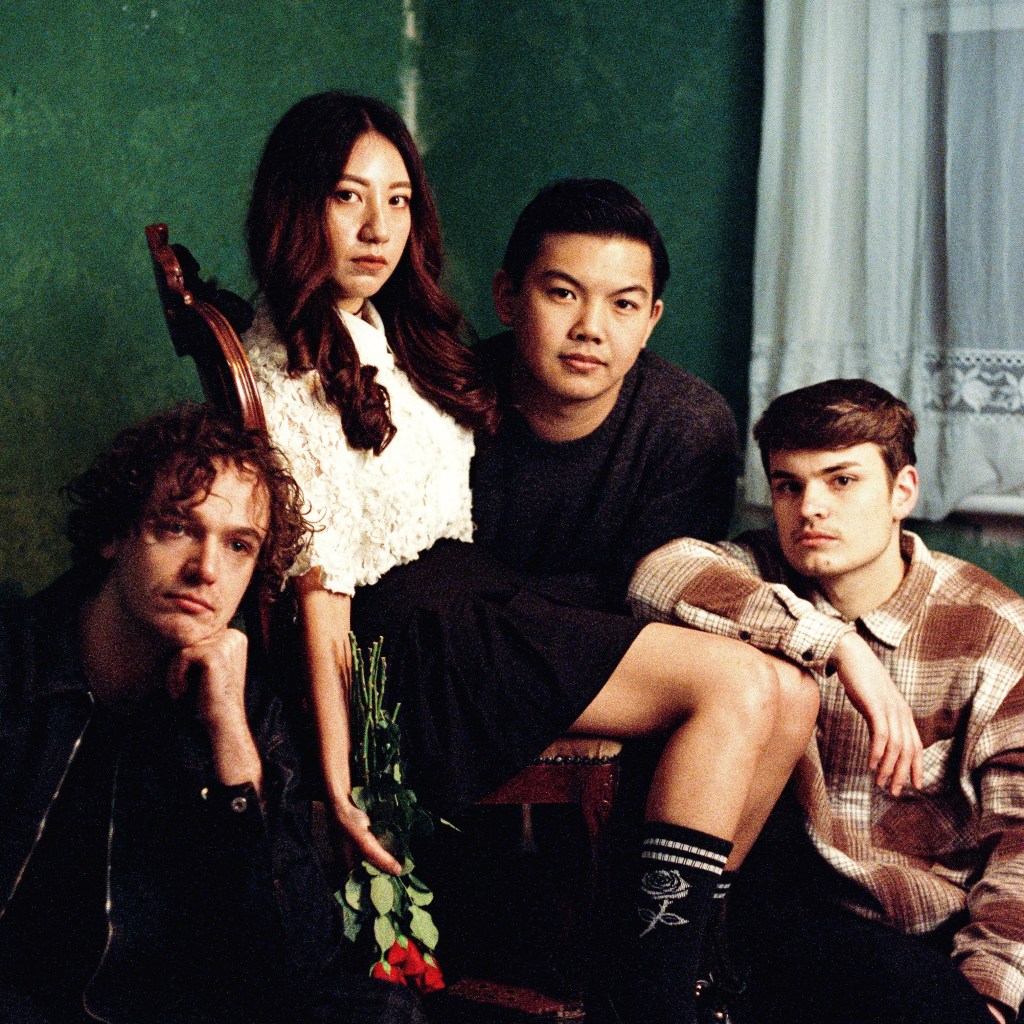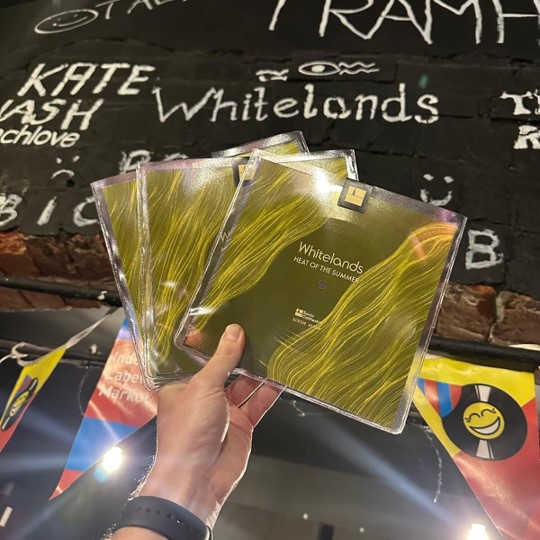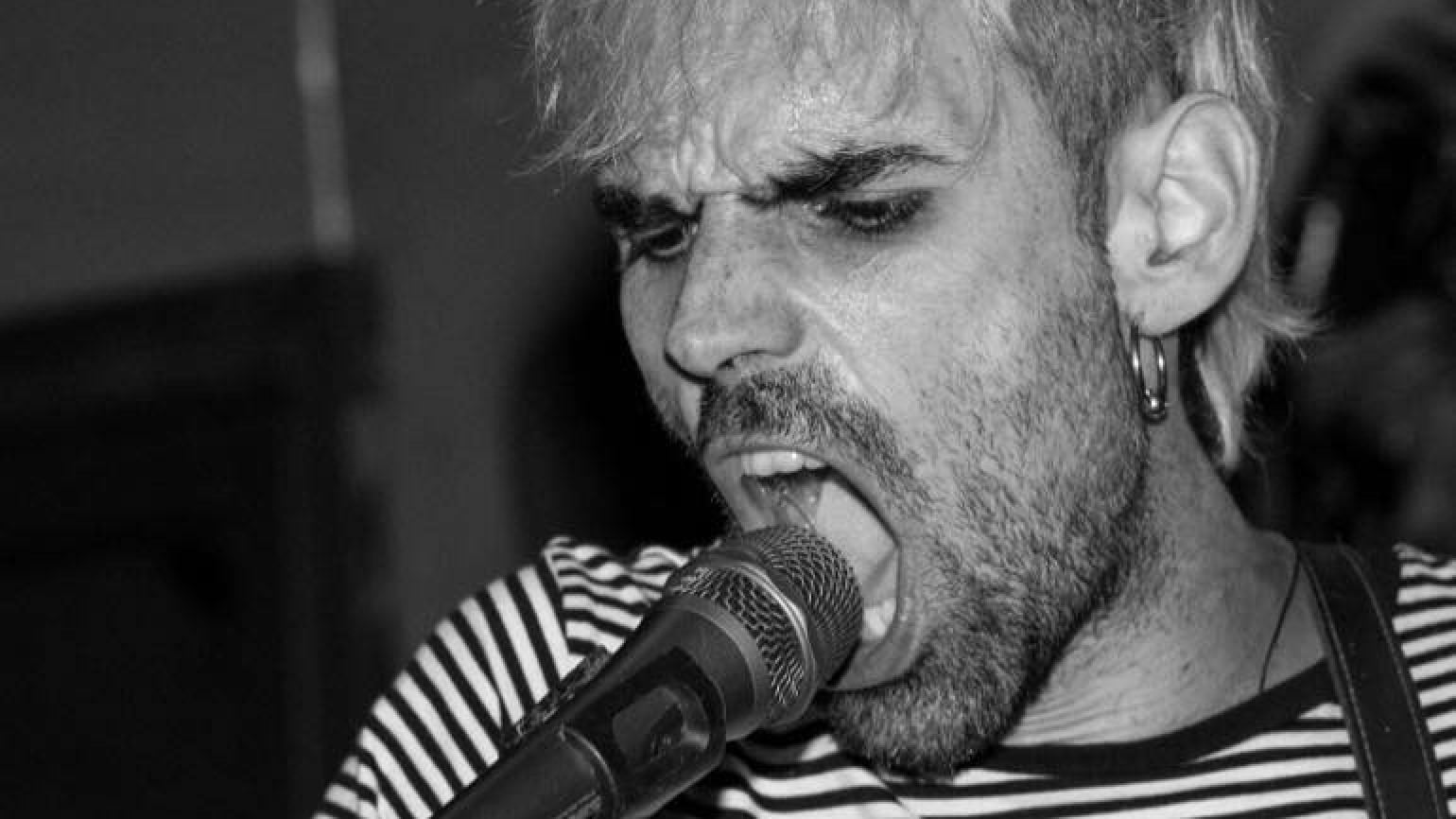
Last Tourist – Slowly Fade

Since their emergence in 2020 with debut single Public Service, Last Tourist have been quietly — but very deliberately — building a discography that reads like a lost volume from the alternative rock archives of a parallel universe. With 2021’s ‘Black Raven’ (featuring the mighty Simon Scott of Slowdive on drums), the spectral ‘Cave in the Hills’, the magnetic ‘Lust’, and a 2023 reimagining of The Cure’s ‘Lullaby’, they’ve mapped out a world that’s as much tethered to the stars as it is to the foundations of noise-rock, post-punk and synth-laced shoegaze.

Their self-titled debut album Last Tourist in 2023 was the culmination of that early journey — a dense, delirious and deeply impressive statement of intent. And now, with ‘Slowly Fade’, they’ve hit escape velocity.

On this release the band have this to say.

“‘Slowly Fade’ shows a darker side of the band leaning towards the darkwave combined with shoegaze reverberating guitars and featuring extract of Ian Curtis last interview before his tragic death.”

Let’s dive in and see where Last Tourist are taking us with this one.

The track begins with what sounds like a transmission from a dying satellite, Curtis’s ghostly voice barely coming through. From the first breathy, echo-drenched vocal line, ‘Slowly Fade’ announces itself as something grander than anything they’ve released before. This isn’t just a new track; it’s the band stepping through the veil into widescreen territory.

The addition of Paul Kehoe (of Peter Hook & The Light) on drums injects a propulsive urgency into the song’s shimmering murk. His playing is all texture and tension — pulsing like an anxious heartbeat beneath the layers of synth and delay.

‘Slowly Fade’ is a stargazer’s delight. There’s a clear lineage to their influences: you hear the moodiness of The Jesus and Mary Chain, the cold pulse of Gary Numan, the layered hypnosis of My Bloody Valentine, the astral ache of Spiritualized, and even the crystalline dread of Suicide. But this isn’t some shoegaze tribute band. Last Tourist aren’t imitating — they’re channelling, mutating, and pushing forward. Oh and let’s talk about the atmosphere — because, this track is thick with it. The fuzz here isn’t just texture — it’s emotion. The synths don’t just sparkle — they mourn. There’s a sadness in this song, but it’s the beautiful kind. The kind you lean into. The kind that makes the dark feel inviting.

The song title itself — ‘Slowly Fade’ — feels like both a threat and a promise. You get the sense that the track is collapsing in on itself, drifting further into space with every passing second.

What’s most exciting about ‘Slowly Fade’ is what it signals. This is a band not content to bask in the cult glow of their early successes. This is a band evolving — leaning harder into ambience, pushing further into abstraction, and yet still anchoring everything with structure, hooks, and feeling.

‘Slowly Fade’ is a deeply impressive track that manages to feel both carefully constructed and utterly effortless.  With an upcoming album on the way, ‘Slowly Fade’ feels like the calm before the (beautiful) storm. If this is the direction Last Tourist are heading in, then buckle up, because we’re in for a journey of cosmic proportions.

‘Slowly Fade’ is out on 6th June 2025 on all major digital platforms via 1991 Recordings. Vinyl collectors — keep your eyes peeled for a physical release on their next full-length. You’re going to want this one on wax.

You can follow Last Tourist on social media here …

The Hologram People – Bongo Express / Afternoon Sniper

There’s a certain magic that happens when a band with a reputation for sprawling cosmic grandeur pares things down to their essence. When the incense clears, and the fog machines sputter out, all that’s left is groove, atmosphere, and instinct. With their latest seven inch offering, ‘Bongo Express’ backed with ‘Afternoon Sniper’, The Hologram People have traded their mountaintop ceremonies and starward gazes for something a little more grounded — but no less transporting.

This is a different flavour of trip. Less sacred rite, more international psych-funk caper. Imagine slipping through a late-60s psychedelic heist flick, dubbed straight from reel-to-reel onto wax. There’s a swagger here, a louche confidence that doesn’t shout but smirks from across the room. If Sacred Ritual to Unlock the Mountain Portal was about elevation — spiritual, sonic, stratospheric — then this new double-header is all about the sway. The sway of hips. The sway of shadows. The sway of palm fronds in a sultry breeze that smells faintly of vinyl and vermouth.

And still, unmistakably, this is The Hologram People. Dom Keen and Jonathan Parkes are carving new grooves into the wax, but the hands guiding the stylus are the same — deft, knowing, and gently mischievous. The textures are intact. The attention to sonic detail is all here. But now, the ritual space is a mysterious smoke filled lounge instead of a misty mountain.

On Side A ‘Bongo Express’ is a laid-back, fuzz-fuelled exotic jam that’s thick with Eastern promise. Strutting in like a mirage over hot sands, shimmering guitars dipped in delay, bongo rhythms bubbling beneath like heat from a cracked desert floor. This track isn’t about propulsion — it’s about suspension. You don’t race down the rails here, you glide along them, hypnotised by the swirling blend of eastern-inflected melody and cosmic cool. There’s a narcotic quality to the repetition, something trance-inducing in the way the melody drifts and curls. And that production — lo-fi in all the right places, like it’s being broadcast from a lost psych-funk archive deep beneath Marrakesh. It’s smooth. It’s sensual. It’s The Hologram People doing what they do best: evoking landscapes of the mind.

The flipside slinks in with attitude. ‘Afternoon Sniper’ rides a funky wave of laid-back bass grooves, bouncy bongo, and locked-in drums that carry an irresistible strut. There’s a noirish energy here — playful but a little dangerous. It’s music for the psychic cat burglar in all of us. Where ‘Bongo Express’ conjured dusty sun-soaked travels, ‘Afternoon Sniper’ lives in the twilight. Its groove is loose yet exact, with guitar stabs and echo-drenched melodies dancing in and out of earshot like shadows slipping behind alleyway corners.

What’s so glorious about this release is how effortless it feels. These are two short tracks — modest in scale, yet bursting with atmosphere. With this seven inch, The Hologram People shift from shamanic space travellers to jet-setting psych-groovers, all without missing a beat. They’ve always had the ability to soundtrack journeys both real and imagined, but with ‘Bongo Express’ and ‘Afternoon Sniper’, they invite you not on a pilgrimage, but a holiday — albeit one scored by mystics, draped in incense, and set to tape on a vintage reel-to-reel player in a sun-bleached villa.

So, my fellow psychonauts: grab this one while you can. Limited pressings like this have a habit of vanishing into the ether before you’ve had your morning coffee.

‘Bongo Express’ is out on 27th May 2025 via the ever-amazing Feral Child Label (note to self: they warrant a blog all to themselves). Make sure and head over to The Hologram People Bandcamp Page and give em a follow!

You can follow The Hologram People on social media here….

Marina Yozora – Daffodils

There’s something truly otherworldly about Marina Yozora. You feel it from the first note, like you’ve walked through a mirror into a dreamscape where the air itself shimmers. If you’ve been following her journey — and if you haven’t, now’s the time to catch up — you’ll know she’s a singular voice in the current wave of dream pop revivalists. Born in Tokyo, seasoned by time in America and Vietnam, and now casting spells from London, Marina’s background weaves its way into everything she touches. Her music is multicultural, multicoloured, and multi-sensory — a shimmering sonic cocktail stirred with wistfulness, identity, and a quiet, aching beauty.

Her debut single ‘Watermelon Pink Blue Skies’ floated into our lives back in February 2024, and now, a year later, Marina returns with ‘Daffodils’. A haunting, heartbreakingly tender moment.

Marina opens the song with reverb-drenched guitar lines. Her voice, that seraphic cascade she’s already become known for, floats in gently — barely above a whisper. ‘Daffodils’ is sparse, elliptical — yet every word lands like it’s been chosen from a poem. It’s melancholic but never bleak; it’s sadness held with softness. The titular daffodils become metaphors for both fragility and endurance — nature’s quiet survivors. And in that duality lies the emotional weight of the song: this is about loss, yes, but also about learning to hold that loss gently.

Sonically, it’s gorgeously self-produced. There’s an airy, almost translucent quality to the track, as if it might dissolve if played too loud. The production choices are as deliberate as the lyrics — every delay tail, every shimmer of synth, every hush between phrases is crafted for emotional impact. It reminds me in spirit of Grouper, Cocteau Twins, or even Castelebeat, but with Marina’s very specific softness and world-weary wonder.

The official music video is a diaphanous visual poem. Marina stands alone in windswept fields, barefoot among the daffodils, eyes closed, hair blown by a soft breeze — a visual echo of the song’s themes of longing and lightness. There are fleeting glimpses of other places: the neon of Tokyo, the fog of a London street, a faded Polaroid of a Vietnamese garden. It’s beautifully constructed, playing like a memory collage — a Third Culture Kid’s heart folded into almost four minutes of visual poetry.

Yozora doesn’t yell to be heard — she whispers, and we lean in. She doesn’t overwhelm you with layers, but lets each element breathe. In a music world obsessed with overstimulation and instant payoff, this is a track that rewards patience and presence.

This is dream pop for the deeply feeling. For those who know that beauty is often tinged with sadness, and that fragility can be a form of strength. For the ones who write letters to the sky and mean every word.

‘Daffodils’ is out now on all the usual streaming platforms. Make sure and head over to the Marina Yozora Bandcamp page and give her a follow.

You can follow Marina Yozora on social media here …….

Marina will be playing live in Glasgow in June. Also on the bill will be Pat’s Soundhouse, Dayydream and Westbound Foxes. Check out the flyer below and make sure and get along to support her and these amazing bands.

Farmer’s Wife – Faint Illusions EP

As the 90s shoegaze revival continues to spiral out in all directions — from clean nostalgia acts to full-blown noise experiments — Austin’s Farmer’s Wife have carved out their own spectral niche. Their debut EP Faint Illusions blends the gloom of grunge, the moodiness of slowcore, and the fantastical weirdness of art-pop into something unique: a haunted, heartsick landscape where every melody is wrapped in gauze and every lyric is a spell. It’s a record that feels simultaneously out of time and right on cue — a bold first step that already places them at the fringes of the underground’s most exciting spaces.

In the ever-shifting dreamworld of shoegaze revivalism, it’s easy to get swept up in texture and forget about soul. But that’s what sets Farmer’s Wife apart — they don’t just bathe in reverb; they bleed into it.

Frontwoman and guitarist Molly Masson is the band’s emotional compass. Her voice — fragile, spectral, yet commanding — narrates twisted fables and desaturated dreams like a post-grunge Persephone. Her lyrics ache with decay and desire, full of gothic poetry and fantastical menace. Alongside her, Jaelyn Valero (drums), Jacob Masson (bass), and dual guitarists Jude Hill and Derek Ivy create an atmosphere that’s rich, volatile, and often unsettling — like Slowdive raised in the desert on a diet of Tool, Mazzy Star, and Siamese Dream.

Across these five tracks, Farmer’s Wife craft a vivid, decaying fairy tale — a world where wilted roses and alien lovers coexist, where passion and putrefaction are impossible to tell apart. Let’s take a walk through their haunted garden.

The EP opens with the fuzzy, scuzzy sound of ‘Dirty Shirley’. The almost metallic guitar riffs contrast beautifully with Molly Masson’s angelic vocal delivery. Right from the get-go, Farmer’s Wife set the tone for the EP’s collision of beauty and rot. The track lurches forward with a dirty glamour but there’s a playful sleaze to it. It’s woozy, disoriented, like the morning after something you can’t quite piece together. The guitar tones are thick with grime, ringing out in bent, bending dissonance — part Smashing Pumpkins, part stoner-psych. The rhythm section, especially the bass, keeps things grounded in a narcotic pulse that feels both lazy and tightly coiled, dragging its feet but ready to pounce. You get the grime and gloss, the sweet and the sick. It’s a song that exists in dualities — intoxication and revulsion, seduction and decay — and it sets the stage for everything to come.

‘Seethe’ turns up the tension — and the menace. It’s the most rhythmically aggressive song on Faint Illusions, and it wastes no time establishing its sense of unease. A tightly wound bassline slithers underneath, almost serpentine in its movement, while brittle, anxious percussion ticks like a warning clock. The whole track feels like it’s pacing the perimeter of something dangerous — never quite breaking in, but constantly pressing at the edges. Guitars don’t explode — they stalk. There are no blissed-out walls of reverb here, no dreamy haze. Instead, they coil around each other like razor wire, feeding the song’s simmering hostility. There’s a sinister clarity to the playing, as if the band wanted you to feel every scratch and scrape with vivid precision. There’s no catharsis. Just tension, and more tension, until the song finally dissolves into a low rumble of guitar noise and unease. ‘Seethe’ feels like a pressure cooker that never gets the release — and that’s entirely the point. It’s a study in restraint and rage, and it shows Farmer’s Wife are as comfortable dragging you through discomfort as they are seducing you into dream states.

Up next is not just my stand-out track on this EP, but one of my favourite songs of 2025 so far. ‘Mildew’ demonstrates that Farmer’s Wife are able to write at the very top tier — the kind of songwriting that doesn’t just impress, it haunts. I loved it so much I played it on my DKFM Shoegaze Radio Show this month, and honestly, it hasn’t left my rotation since. It’s the kind of track that gets its hooks in you without ever raising its voice. The intro is pure atmosphere — woozy, watery guitars that seem to drip from the ceiling, joined by a sluggish but purposeful rhythm section that pulls the whole track down into subterranean depths. Masson’s vocals are next-level here. She’s never sounded more eerily serene. It’s poetry by way of decomposition, sensual in a way that feels totally unclean — like something beautiful left too long in the sun. This is the most expansive and textured piece on the EP. The dual guitars are in full telepathic conversation here — one spiralling off into dreamy melodies while the other drags its heels with growling, pitch-shifted menace. But what makes ‘Mildew’ so special — and why I’ll keep playing it on air and shouting about it from rooftops — is how it manages to be both deeply unsettling and totally gorgeous. It’s rare to find a song that exists so completely in its own atmosphere. This is Farmer’s Wife at their most confident, most strange, and most sublime.

Up next, ‘The Ballet’ is a fever dream waltz — a ghostly dance through twilight streets, stitched together with equal parts beauty and dread. This track begins with a sort of lullaby twang, a childlike melody perched on a skeletal drumbeat. It teeters on the edge of innocence, but there’s something off-kilter lurking beneath the surface. That whimsical intro frays at the edges as the chorus blooms. The guitars sway gently, almost sweetly, but they carry a sour undertone — detuned and slightly warped, like a memory remembered wrong. The rhythm is loose, like it’s been drugged or disoriented, giving the entire song a woozy, waltzing motion that feels just one step away from collapsing entirely. There’s a theatricality to ‘The Ballet’ that sets it apart. It doesn’t obey typical dynamics or structure expectations. Instead, it unfolds like a scene from a tragic opera — dream logic, strange pacing, an atmosphere that’s soaked in decay and glitter. It’s also one of the finest showcases for the entire band’s ability to move as a single, expressive organism — loose but locked in, melodic but menacing. By the time it fades out, ‘The Ballet’ leaves you feeling slightly disoriented, like waking from a dream you’re not sure you wanted to end. It’s unsettling and beautiful in equal measure — and proof that Farmer’s Wife aren’t just making songs, they’re building haunted houses you can live in.

The closer, ‘Discount Roses’, is a perfect finale. It’s softer, more resigned — the sound of crumpled valentines and half-remembered dreams. After the tension and spectral unease of the preceding tracks, this one lets the dust settle. But rather than offering catharsis, it leaves us with something more fragile and fractured — a fading photograph of love’s debris. The opening is delicate, with plucked, plaintive guitar lines that feel like they’re coming from another room. There’s a gentleness here, a slowing of breath, as if the band is finally letting the light back in — but not without the long shadows that come with it. The rhythm is loose-limbed and hazy, swaying more than it moves forward, and there’s a notable vulnerability in the space between the notes. There’s no irony here, no posturing. Just that ache — the one you feel when love slips through your fingers and you can’t quite decide if it was ever real to begin with. The “discount” in the title stings. These aren’t grand gestures or cinematic heartbreaks. These are love’s leftovers — bruised petals, sour candy, kisses that came too late. The track slowly opens out into a wash of ambient fuzz, the guitars gently lifting Molly’s voice into a dreamlike drift. There are touches of Red House Painters and even Grouper in the way the song blurs into abstraction at the end, fading not with a bang but with a long, exhausted exhale. As a closer, it’s devastatingly right. It gathers all the themes of the EP — decay, beauty, dreams, loss — and lets them dissolve into the ether. Nothing is resolved, but everything lingers.

Faint Illusions isn’t interested in being a polished calling card or a crowd-pleasing debut. Instead, it’s a work of vision — raw, unkempt, and gorgeously grotesque. It leans into discomfort, into decay, into all the strange little shadows most bands shy away from. It’s romantic, yes, but the kind of romance that leaves bruises. The kind that sticks under your nails.

What’s thrilling is how confidently Farmer’s Wife play in this space — there’s no hesitation, no hedging. They’re not interested in sounding like everyone else. They want to build a world, burn it down, and invite you to dance in the ashes. And somehow, they make it all sound beautiful.

For fans of slowcore, gaze, goth, and the underbelly of grunge, Faint Illusions is a debut that will leave fingerprints on your bones. It may be called an illusion, but this is very, very real.

The Faint Illusions EP is out now and available to stream at all the usual places. Check out the Farmers Wife Bandcamp page.

You can follow Farmers Wife on social media here….

Hooveriii – Manhunter

After several years spent mapping the outer fringes of modern psychedelia, Los Angeles collective Hooveriii (pronounced “Hoover Three”) return with Manhunter — a rich and expansive fifth album that smartly ties together the raw urgency of their earlier work with the more cinematic ambitions they’ve been gradually embracing. If their self-titled debut in 2018 introduced a lo-fi garage-psych outfit with a taste for sci-fi aesthetics and fuzzy repetition, it was 2021’s Water for the Frogs that marked a pivot toward a broader, more kosmische-inflected sound.

That shift continued with A Round of Applause in 2022 — a bright, synth-heavy, glam-adjacent set that pushed the band’s melodic instincts to the fore — and again with Pointe in 2023, a somewhat more introspective affair that explored mood and atmosphere over immediacy. Each of these records showed a band in transition, growing more confident in their ability to fuse Motorik rhythms, space rock textures, and big pop hooks into something uniquely theirs.

Now, with Manhunter, have Hooveriii fully arrived — drawing together all those disparate threads into a coherent, fully-formed vision? A casual first listen tells me that it’s a record that reaches backward as much as it pushes forward, tapping into 70s prog, glam, krautrock, post-punk, and new age to build something dense but not impenetrable, ambitious but never overwrought. It’s also, at its core, a rock record — unafraid of riffage, melody, or swagger.

This newfound cohesion comes in part thanks to the band’s consistent core. Frontman Bert Hoover remains the gravitational centre, delivering vocals and guitar lines with an unmistakable sense of style and intent. He’s flanked by Kaz Mirblouk (bass, vocals, synth), Jon Modaff (drums, bongos, percussion), Paco Casanova (synth, organ, piano), and Matthew Zuk (guitars), a locked-in unit that gives the record its shape and pulse. Adding further texture are Gabriel “Baby Gabe” Salomon on saxophone and Anna Wallace on backing vocals, both of whom lend key moments a deeper emotional resonance. And there’s even a cameo from Kyle Seely, who drops in a scorching guitar solo on ‘Heaven at the Gates’.

My whistle has been well and truly whetted, let’s drop the needle and dig in.

The album opens with ‘Melody’, a glam stomp that sets a frantic pace right out the gate. It arrives with a strut and a snarl — sharp-edged and swaggering. The beat hits hard and deliberate, a kind of locomotive groove that feels both mechanical and sleazy, while the guitars jangle and screech in wiry bursts, leaning into the friction with glee. There’s an urgency here that’s impossible to ignore — a manic pulse that pushes the track forward without giving you time to settle. The vocals come in hot, clipped and rhythmic, all dramatic flair and icy detachment, while the bass coils and pivots underneath like a rattlesnake on amphetamines. Everything about the arrangement is tight, a perfectly poised chaos. As an opening salvo, ‘Melody’ throws the doors wide open. It’s loud, fast, and thrillingly disorienting. But more than that, it sets the tone for an album that’s not content to settle into one gear.

‘Tin Lips’ is next and immediately it hits like a lost Stranglers track. It’s got that same paranoid pulse, that itchy, neurotic twitch — all clipped, tense verses that feel like they’re constantly on the verge of snapping. There’s a simmering sense of control in the rhythm section, almost mechanical in its precision, but there’s also something deeply human in the way it resists the rigidity, pulling at the seams with every bar. The track builds like a pressure cooker, verses hissing with compressed menace before exploding into those expansive choruses. It’s a brilliant sleight of hand — one moment you’re boxed in by post-punk claustrophobia, the next you’re launched into something sweeping and sky-bound. It’s bold, tightly wound and deceptively emotional.

‘In The Rain’ delivers a surprise — an almost blink-and-you-miss-it haunted psych-folk ballad that conjures Gene Clark wandering through a nuclear wasteland. It’s a sudden drop in tempo and tone, a moment of eerie stillness in the midst of the album’s otherwise pulsing momentum. Everything feels stripped back, spectral. The instrumentation is minimal but laced with texture — distant reverb-drenched guitar lines hang in the air like radioactive mist, while a gently crumbling rhythm moves just slow enough to make you lean in closer. The vocals are hushed and slightly decayed, almost murmured like a secret over the wreckage. There’s a fragility to the delivery, like the song might disintegrate if you breathe on it too hard. That melancholic shimmer gives the track a distinctly after the fall feeling — the kind of song you imagine playing from a dusty jukebox in a derelict roadhouse at the end of the world.

It’s no sooner over than we’re off at full pelt into ‘Westside Pavilion of Dreams’. Like Bryan Ferry fronting the band for a moment, this track feels positively opulent in its swagger — all art-school gloss and metropolitan cool, but shot through with a pulse that’s pure motorik momentum. It’s a dramatic gear shift from the last track and that contrast is what makes it land so hard. The pace is breathless — drums pushing things forward with insistent propulsion while synths swirl and shimmer. There’s an almost cinematic sleaze to the whole thing, the kind of louche, forward-glancing energy that Roxy Music mastered in their imperial phase, repurposed here into something spacier and more hypnotic. Guitar riffs come in bursts — flickering, tasteful, restrained — giving the track a glittering polish without tipping into indulgence. And the vocals, smooth and arch, ride just above the mix, delivering lines with the kind of detached cool that suggests menace dressed as charm.

The band tap into that kosmische sound next with ‘Heaven at the Gates’. Bass and drums locked in and keeping us in focus, it’s one of those tracks where the rhythm section isn’t just holding it down — it is the engine room. There’s an unmistakable motorik heartbeat here, a hypnotic groove that brings to mind Neu! or Harmonia at their most mesmeric — but with a distinctly modern shimmer. The guitar work is restrained but expressive, adding texture more than riffs, until it suddenly lets loose with a soaring solo courtesy of Seely — a moment of unguarded ecstasy that cuts through the repetition like a lightning strike. There’s a sense of control here, but not confinement. The band stretch out and explore without ever losing the thread — each looped phrase subtly shifting, evolving, tightening.  What’s striking is how cosmic it feels without ever tipping into cliché. This isn’t a retro-futurist nod or a throwback — it’s kosmische reinterpreted through the Hooveriii lens: taut, deliberate, deeply felt.

‘Cul-De-Sac’ next is a short intermission, a tone poem of experimental cosmic noise and degenerating static. It’s less a song in the traditional sense and more a transmission — intercepted rather than performed. Clocking in under a minute, it functions like a torn page from a notebook full of half-remembered dreams and decaying analogue tape. Sonic detritus drifts through the speakers — warbling frequencies, bent tones, fractured echoes — as if someone accidentally tuned into a lost space station’s dying signal.

That leads us nicely into the psychedelic riff storm that is ‘The Fly’. The glam stomp returns in fine fashion, but this time it’s more feral, untamed. The track charges in like a bolt of lightning — all shredded guitars, booming drums, and a tempo that seems determined to burn itself out before the track finishes. It’s a reinvention of the swaggering glam energy that kicked off the album, but with a harder edge, a scuzzier, more untethered feel. The riff is a beast, a slithering, repetitive groove that threatens to fall apart but never quite does. The rhythm section kicks in with a frenetic energy, bass lines growling just beneath the surface, pushing everything forward with force. There’s a moment of blissful abandon midway through, where the track falls into a swirling, phased-out breakdown, letting the rhythm section lead the charge while the guitars spiral into a dizzying crescendo. It proves once again that Hooveriii are masters at fusing both chaos and precision in a way that’s utterly irresistible.

Time slows next with the synth-led mood piece ‘Night Walks in Montreux’. This slowly pulsing instrumental is barely a whisper in the roar of the overall album — but it’s a whisper that lingers, drawing you in with its quiet, persistent shimmer. The band dial everything back here, not just in volume but in intent. Gone are the glam riffs and chaotic stomp; in their place, a muted, late-night drift that feels like ambient moonlight music beamed in from a parallel dimension. Placed here in the running order, it acts as a sort of psychic breather — a calm harbour after the storm, a quiet triumph of tone and space.

Here comes the bruiser. ‘Isolation’ brings with it a snarling energy, echoing early King Gizzard or even Thee Oh Sees with its psych-punk punch. But Hooveriii don’t just bash things out — they modulate it with bursts of synth and off-kilter rhythm, turning what could be a straightforward rager into something far more interesting and strangely cerebral. The guitars are gritty and serrated, biting through the mix with a garage-born rawness. But beneath the fuzz and fury, there’s a complex machine at work — one built on a groovy lick that catches your ear every time. There’s a sense of barely controlled mania here. It’s a song that seems to be gritting its teeth as it barrels forward, pulsing with nervous energy. Think frantic house party in a collapsing warehouse — walls shaking, strobes flashing, everyone losing their minds but somehow still in sync. ‘Isolation’ captures a very specific kind of anxious euphoria — it’s adrenalised, paranoid, and exhilarating.

‘Manhunter’ sets the bass front and centre, driving this mellow instrumental with a steady, head-nodding pulse that feels both grounded and exploratory. It’s a track that moves with quiet assurance, guided by groove rather than force, giving the rest of the band space to sketch out a dreamscape that’s as expansive as it is understated. This is the sound of Hooveriii fully leaning into their cosmic side. Guitars drift in and out of focus, treated with layers of delay and reverb, more texture than riff. They shimmer like starlight across a vast and unknowable void, never dominating but always colouring the space. Synth pads hover above the mix like clouds of interstellar dust, creating a deep, spacious atmosphere that invites you to simply float along. As a title track, it’s a bold choice — not a climax, but a centre of gravity. It doesn’t shout for your attention, but slowly pulls you into its orbit.

Angular, twitchy, and straight-up weird. ‘Tarantula Eye’ is the sonic equivalent of a spider scuttling across your ceiling at 3am — disorienting, unpredictable, and impossible to ignore. Built on a gnarly, looping groove that feels like it’s chewing its own tail, this track veers hard into the experimental zone, with synths that squeal and spiral like malfunctioning machinery and a rhythm section that seems to lurch just slightly out of step on purpose. There’s an unsettling, insectoid energy to it — appropriate given the title. Everything here is skittering, agitated, constantly shifting. The drums jab rather than groove, the synths chirp and divebomb like vintage arcade hardware possessed by ghosts, and the guitars chop at the edges like they’re trying to cut their way out of the mix. It’s manic and minimal all at once, built on repetition but never quite settling. In the context of Manhunter, ‘Tarantula Eye’ is a crucial curveball — a reminder that beneath all the spacey grooves and glam stomps lies a band with a taste for the truly strange. It’s confrontational, abrasive, and more than a little demented. And yet, somehow, it still grooves.

The riffs are back with a vengeance on ‘Question’. The guitars dominate here, drenched in phased-out psych fuzz, drawing clear influence from the late-period Spirit albums and that unmistakable Randy California tone: liquid, expressive, and just a little unhinged. There’s a swagger to this track, a kind of sneering playfulness in the way it unfolds. It’s not a song in a hurry — it knows it sounds good, and it lets that groove stretch and breathe. The riff loops like a mantra, thick with attitude but never overbearing. It feels like a jam that’s been shaved down just enough to keep it tight, but still rough around the edges in all the right ways. What’s striking is how the band manage to make something so riff-forward feel so psychedelic. It’s heady stuff, rooted in the 70s but presented with a modern, nervy energy that keeps it from falling into retro cosplay. It’s groove, grit, mood, and mystery, all wrapped around a riff that feels like it’s been unearthed from some forgotten crate of proto-psych gold. One of the most straight-up satisfying moments on the record, and a late-album standout that proves they’ve still got plenty of fuel in the tank.

There’s a deliberate, more measured pace to ‘Me King’. After the riff-heavy propulsion of ‘Question’, this track feels like the band stepping back to let things breathe — but that doesn’t mean it’s lacking in power. Quite the opposite. The restraint here is its strength, and it’s all the more affecting for it. The bass locks in on a monotone pulse, holding the track steady like a tightrope wire. It’s minimalist, almost robotic, but that flatline groove becomes the bedrock for everything else to rise and fall. The drums are equally patient — not flashy, but perfectly placed — allowing the track to simmer, smoulder and bloom in just the right moments. That contrast between the steady, grounding rhythm section and the soaring choruses is what gives the song its emotional weight. The vocals are melancholic but clear-eyed, rising in those big, echo-laden refrains with a quiet desperation that sticks with you. When the guitars enter full bloom in the chorus, they shimmer with a kind of bittersweet grandeur — psychedelic, yes, but rooted in something deeply human. There’s a feeling of trying to reach for something just out of grasp. A longing threaded through the noise.

We are treated to another woozy, spacey moment with ‘Awful Planet’, a late-album curveball that dials things back into minimalism just when you think the band might be ready to rev things up again. There’s no fanfare here, no big dramatic push — instead, it arrives like a fog, slow and deliberate, casting long shadows and shifting the tone with quiet force. Every note played feels essential. There’s no fat here, no clutter — just a slow, deliberate progression where space is as important as sound. What makes ‘Awful Planet’ so affecting is its restraint. The textures are weightless, almost ambient at times, yet emotionally loaded. There’s a kind of cosmic loneliness baked into its DNA — a track that seems to hover between exhaustion and transcendence. A deep breath before the curtain falls.

The album comes to a close with the 60’s sway of ‘Stage’, and it’s a beautifully bruised finale. From the very first strum, the parallels to The Velvet Underground are undeniable — that chugging, melancholic chord progression, the unfussy rhythm guitar, and a vocal delivery that’s deadpan but deeply felt. There’s a simplicity here that feels almost confrontational in the context of the kaleidoscopic sprawl that came before. Gone are the synth freak-outs, the motorik grooves, the spiralling cosmic jams. What’s left is bare and human. A few chords, a steady beat, and a voice that seems to be taking stock of the wreckage — emotional, personal, maybe planetary. But don’t mistake it for slight. ‘Stage’ carries a weight precisely because of its restraint. It feels like the album looking itself in the mirror, asking what it all meant. The guitar tones are warm but slightly frayed, and the production leaves enough air in the mix to make each strum feel tactile. It feels like the band is walking off into the sunset with a shrug and a half-smile, knowing full well they’ve said everything they needed to — but not everything they could.

So, what exactly is Manhunter? Well for it’s not just Hooveriii’s most accomplished release to date — it’s a kaleidoscopic map of where psych-rock can go when you refuse to be hemmed in by nostalgia or genre convention. Across fifteen tracks, the band expertly balance grit with grace, pastiche with progression. It’s an album that knows its references — Bowie, The Velvets, Can, Spirit, Gene Clark — but never relies on them. Instead, it builds something new from the fragments of the old, each track its own world but still connected to a broader vision. The production is full of texture, but it never feels overworked. The performances are tight but raw where they need to be. And there’s a real sense of play running through it all — like a band that still gets a thrill from following their own curiosity into the unknown. In a time when so many psych and garage acts either chase fidelity to a bygone era or lean too heavily on fuzzed-out clichés, Manhunter feels like a breath of fresh air. It’s the sound of a band pushing themselves, trying things, stretching out, and — crucially — having fun doing it.

Manhunter is out now on vinyl via LEVITATION / Reverberation Appreciation Society and you can check it out over on the Hooveriii Bandcamp page.

You can follow Hooveriii on social media here….

Ellum – Deciduous EP Review

Every now and then a release arrives in my inbox that feels like it already knows what I like to listen to. It doesn’t shout. Deciduous, the debut EP from Austin-based singer-songwriter Paige Morton aka Ellum, is exactly that kind of record. A quiet stunner. A bruised and beautiful hybrid of indie rock, shoegaze, slowcore and post-hardcore. It doesn’t chase genre—it kinda just bleeds through them.

Ellum, still cloaked in a bit of mystery, wears influence like a second skin. The palette is fascinating: the emotional turbulence of Converge, the bare fragility of Nick Drake, the noir elegance of Interpol—all running like veins through this deeply personal and richly textured six-track release. Production duties come courtesy of Carson Pace of The Callous Daoboys, a pairing that makes perfect sense once you hear the results. These songs ache in unexpected directions. And the further you go in, the harder they hit.

Let’s dive into it.

The EP opens with the bittersweet ‘Macy’, a song of two halves. It begins with disarming simplicity: a single, gently strummed guitar lays the foundation, wide open and raw, while Morton’s voice—delicate, exposed—trickles in like the ghost of an apology. There’s a deep sense of stillness in this first section, but it’s not peaceful. It’s the kind of quiet that trembles with tension, as though the track is waiting for something to break. And then, without warning, the second half crashes in. A sudden swell of fuzzed-out guitars and reverb-heavy distortion flips the emotional tone completely. This isn’t a slow build or a gentle shift—it’s a rupture. The track lurches from introspective singer-songwriter territory into full-blown shoegaze melancholy, guitars howling like they’re trying to outrun the weight of the words just sung. It’s cathartic but never messy—each layer of sound precisely placed to elevate the emotional stakes.

Up next, ‘Deciduous’ slips into something more fragile, more haunted. After the emotional rupture of ‘Macy’, this track feels like stepping through the smouldering wreckage. The guitars are cleaner here, bathed in chorus and delay—a glistening shoegaze shimmer that calls to mindthe more subdued corners of Whirr’s catalogue. But unlike their sprawling soundscapes, Ellum keeps things close and compressed. Everything here feels deliberate, tight, wound like a spring. Lyrically, the song plays like a quiet unravelling. The title itself—Deciduous—evokes ideas of shedding, of letting go as a seasonal necessity. There’s a suggestion of growth through loss, but also a fear of what remains after the fall. The emotional restraint is chilling—this isn’t melodrama, it’s the real thing. One of the standout features here is the way the instrumentation mirrors that emotional unease. Guitar’s chime and quiver, notes occasionally bending out of key, like nerves fraying at the edge. There’s a sense that everything might fall apart if held too tightly—and that tension gives the song a heartbreaking edge.

That quiet-then-profoundly-loud format continues into ‘Papercuts’, but here it’s distilled into its sharpest, most urgent form. This is the shortest track on the EP, but don’t let the runtime fool you—’Papercuts’ stings. It arrives like a whisper and leaves a bruise. The intro is skeletal—barely there. Morton’s voice comes in low and close, almost conspiratorial, riding a single repetitive guitar phrase that feels like it might vanish if you blink too hard. But it’s the restraint that’s so unnerving. You can hear the song tightening its grip from the first bar. And when it goes off, it really goes off. Guitars explode into the foreground in great shuddering waves, distorted just enough to give the edges that satisfying blur. The shift isn’t just dynamic—it’s physical. Your chest tightens. It’s the sonic equivalent of a paper cut: small, sudden, deceptively deep.

‘Easy’ arrives almost fully formed. There’s no coy build-up, no tentative lean-in—it kicks the door open with purpose. Drums pound with ritualistic insistence over a sublime, slow-burning chord progression that feels both familiar and otherworldly. Right from the off, there’s a gravity to it. The chord changes unfold patiently giving the song a grounded, almost meditative weight. As the bass slides in beneath the surface and harmony vocals begin to bloom around Morton’s lead, the track settles into a kind of hypnotic, head-nodding pulse. The arrangement breathes; it trusts the listener to sit inside the pocket, to feel the weight of each pause and swell. It’s a reminder that ease doesn’t mean absence of struggle, but maybe, just maybe, the ability to move through it with grace.

We settle back into that peaceful insistence of guitar and voice on ‘Sick’. It’s a gentle return to Ellum’s core sonic motif—Morton’s voice, calm but cracked around the edges, floating over cyclical guitar patterns that seem to breathe in and out. There’s a deceptive stillness here, like the kind that lingers just before a fever breaks. The title suggests discomfort, but what we get is something more quietly unsettling: exhaustion, perhaps, or the strange calm that comes from surrendering to what you can’t control. There’s a tension just under the surface, a kind of emotional drone that never resolves. The bass pulses like a second heartbeat and pared back drum pattern gives the track a sense of space and unease. The mix leaves just enough room for silence to become a character—one that presses in between each phrase, demanding to be felt. ‘Sick’ is a slow burn, a quietly devastating track that doesn’t demand attention but absolutely rewards it.

The closer is Morton at her most vulnerable. ‘Moonlight’ strips things down again—warm, lo-fi textures but with a vocal that’s in control and leading the song. It’s intimate and spectral, with the feel of a demo that was too pure to overwork. There’s a quiet confidence in the delivery, like she knows exactly where she’s taking us, even if we’re drifting through fog. From the outset, there’s a dreamlike stillness to the track. The guitar is hushed, slightly detuned, almost feeling like it’s been recorded to cassette—warped around the edges in that beautiful way where tone becomes texture. But instead of crumbling under its own fragility, the song holds its shape. Morton’s voice does the heavy lifting here, clear and grounded, threading purposefully through the mist. That shoegaze shimmer is dialled right back, but the influence is still there—in the reverb-drenched guitar tails, in the way the chords seem to hover rather than land. As the song begins to dissolve, there’s no grand finale. Just a slow fade, as if she’s walking out of frame, still singing. No resolution. No punctuation mark. It ends the way real emotion often does: mid-thought, still reverberating.

Deciduous is a stunning debut—not just for what it does, but for what it doesn’t do. It refuses to settle. It holds space for vulnerability without demanding resolution. These songs feel lived in and raw, like pages torn from an overstuffed journal. There’s an emotional precision here that makes each track land differently depending on when and how you hear it. Across six tracks, Ellum delivers a stunningly cohesive debut that feels like it was grown rather than written—rooted in emotional honesty and nurtured by a melting pot of influences that never overwhelm her own voice. Morton strips her sound back without ever losing complexity; every layer feels intentional, every moment of quiet carries as much weight as the loudest passages. Morton has built something special here. The leaves are falling, but spring is already humming underneath.

Deciduous is out now and available over on the Ellum Bandcamp Page.

You can follow Ellum on social media here….

I am David Laing – We Then Me

When an artist takes the time to dive into their emotional well, you know you’re in for something honest, raw, and real. David Laing’s sophomore album, We Then Me, does just that—serving up a powerful mix of heartbreak, healing, and self-discovery. After years of delays and personal battles, Laing has returned with a record that is more than just an album; it’s a testament to resilience, personal growth, and, ultimately, acceptance.

Laing’s journey to We Then Me wasn’t an easy one. Having faced a long stretch of physical and mental health struggles, including an overwhelming period of anxiety and OCD, it’s clear that these challenges shaped the music we hear today. This is an album steeped in a vulnerable honesty—about love, loss, and the complicated aftermath of relationships. The tracks resonate with those universal themes, but it’s Laing’s unique perspective and musical craft that really elevate this record into something special. His band on this album are Stuart Guffie (lead guitar/backing vocals, producer), Ryan Ballantyne (bass/piano), Ryan McCluckie (piano), Scott McCluckie (Drums) and Megan Quinn (backing vocals).

Laing had this to say on the journey so far.

“The album’s been a long time coming. The vast majority of it, I wrote at a time when I was freshly out of a relationship and reeling in all the emotions that comes with it. For various reasons it was delayed and delayed until eventually coming to fruition over the last year or so.”

“From listening to the existing tracks, I was able to put myself back into those feelings and finish the album lyrically from more of a retrospective approach. I’m immensely proud of the work my band mates and I have put in and achieved in the finished product”.

Let’s drop the needle and see where the music takes us.

The album opens with ‘The First Time That We Met’, the intro stripped-back and vulnerable. The band slowly joins in the throng, tiptoeing around David Laing’s hushed vocal like they’re entering a room still echoing with ghosts. There’s something quietly cinematic about the build here—the way each instrument arrives with patience, not drama. The song feels like it’s unfolding in real time, drawing the listener into a memory as it’s being relived. What’s most striking is how this track acts as the emotional fuse for everything that follows. It’s the ignition point. You feel the tremble of something new beginning, even if you sense it won’t last forever. As the band settles into a subtle rhythm—restrained drums, low-mixed slide guitar, and a quietly humming bass—you get the sense that this isn’t just a story about love; it’s the prelude to a much bigger emotional journey. And just like that, We Then Me sets its tone: honest, reflective, and at its core, human.

Up next is the cautious optimism of ‘Best Thing’. The tone is immediately brighter and the pace quickens. There’s a bounce in the rhythm section, and the guitar work shimmers with just a hint of jangle, giving the whole thing a sense of forward motion, as though Laing is finally allowing himself to hope again. But this isn’t head-over-heels romance—it’s a slow thaw. Laing doesn’t give himself over completely; instead, there’s a gentle hesitation in the lyrics, like someone testing the water with their toes before diving in. He’s aware of how fleeting joy can be, how easily love can slip through your fingers, and it’s that awareness that gives the song its emotional weight. Lines land with bittersweet precision, hinting at the knowledge that even the “best thing” might be temporary.

‘Maybe Maybe’ has a folksy charm that immediately makes it leap out the speakers. The rolling piano and locked-in-the-pocket drums drive the whole song forward like a train that doesn’t quite know its destination but can’t afford to stop. It’s warm, rootsy, and rhythmically alive—one of the album’s most instantly engaging tracks. There’s a looseness to the performance here that adds to its charm, like the band hit record mid-rehearsal and captured lightning in a jar. But while the instrumentation dances with an almost carefree energy, the lyrics tell a more complicated story. For the first time, we can start to hear the doubt starting to creep in. The repeated “maybe” of the title becomes a sort of emotional seesaw—hope on one side, uncertainty on the other. Laing masterfully uses this lyrical indecision to mirror that stage in a relationship where you begin to second-guess the things you were once so sure of. What’s so effective here is that duality—this is a song that could soundtrack a road trip or a breakdown, depending on your emotional state. It captures the essence of romantic limbo: not quite in, not quite out, holding your breath and hoping it all makes sense tomorrow.

The piano motif evolves further on ‘If You Want Me To’. This time it’s looser, more questioning. It tumbles gently around the spaces, hesitant and searching. It’s another slow burner, opening on the sparsest soundstage so far, and you can practically hear the air between the notes. There’s bravery in that emptiness. Laing trusts the listener to lean in. Lyrically Laing sounds like he’s asking a question he already knows the answer to, but needs to ask anyway—because not asking would hurt more. The band slowly arrives, but they don’t fill the space—they colour it in soft hues: brushes of percussion, subtle swells of strings, a bassline that barely breathes. It’s a beautifully restrained crescendo but there’s no resolution here, and that’s the point. ‘If You Want Me To’ doesn’t try to tidy up the mess—it just sits in it. And sometimes that’s the most honest thing a song can do.

The ‘We’ side of the album comes to a close with the finality of ‘We Lie’. In the tradition of all the great singer-songwriters—think Randy Newman with a broken heart or early John Lennon after a sleepless night—it opens on a rolling piano phrase and an almost conversational vocal, like we’ve walked in on a one-sided confession. Laing’s delivery is weary but direct, the kind of tone that only arrives after you’ve stopped trying to convince anyone, including yourself. It isn’t long before the band lift the song, and when they do, it’s like a dam giving way—not in a sudden rush, but in a controlled surge. The drums arrive with slow, pulsing intent, and the bass begins to boom like a warning signal. Guitars shimmer and swell around the edges, never overwhelming the central piano motif but building a tension that feels impossible to shake. It’s the sound of truths finally surfacing. As the final notes taper off, we’re left with the unmistakable sense that something has fractured. The intimacy that once felt so full of promise now feels performative, hollowed out by denial and routine. ‘We Lie’ is a devastating way to end the “We” side of We Then Me, and it sets the stage perfectly for the album’s turn inward.

Heading into the ‘Me’ side now, we open with a familiar and gut-wrenching favourite. Having been a standout on BBC Radio Scotland, ‘Something’s Gone’ is a song that many will recognize immediately—and not just from the airwaves. This is the kind of track that burrows under the skin. It’s a deep, aching piece that explores the moment when you realise something essential has quietly slipped away—not in a dramatic explosion, but in the subtle erosion of connection. There’s a stark vulnerability to the opening here. The instrumentation is restrained, skeletal even, giving Laing’s voice full command of the emotional terrain. He doesn’t overplay it—his vocal is measured, weary, but never self-pitying. It’s the sound of someone looking directly at the wreckage and, for the first time, admitting that the damage can’t be undone.  Laing delivers some of his most devastating lines with near-deadpan clarity. It’s the absence that hits hardest, the space left behind.

‘Be There’ is a tender, hopeful plea—a soft exhale after the gut-punch of ‘Something’s Gone’. Where its predecessor deals in absence, this track gently asks for presence. The piano returns, delicate and deliberate, forming the spine of the song with a steady, calming pulse. It’s one of the more tender offerings on We Then Me, wrapped in a warmth that feels like an arm around the shoulder at just the right time. What’s striking is the emotional clarity Laing brings to this track. After the haze and confusion of earlier songs—where doubt crept in, where disconnection took root, ‘Be There’ feels like a turning point. It doesn’t deny the pain, but it doesn’t wallow either. It acknowledges the mess and still asks for connection. There’s a courage in that honesty.

One of the more unique tracks on We Then Me is the beautifully titled ‘The Time I Fell in Love With You for Half a Day’—and it’s a stunner. This is Laing at his most idiosyncratic, weaving whimsy and melancholy together with that trademark sleight-of-hand that somehow makes both feelings hit harder. It’s an idea that sounds throwaway at first—a fleeting love, gone as quickly as it arrived—but he doesn’t treat it as disposable. Instead, he honours the moment. The result is one of the most charming, and quietly affecting, tracks on the album. A gentle groove bounces underneath and a breezy guitar line that feels like a walk through golden-hour light. There’s even a twinkle of keys in the mix that evokes a kind of childlike wonder, like you’re rediscovering joy in a moment you didn’t expect to matter. Beneath it all, there’s a real sense of longing. Laing sings about this brief, beautiful connection with the same reverence someone might reserve for a lifelong love. It’s not ironic or flippant. It’s sincere. And that’s the magic trick—he takes something small and gives it weight, lets it linger in the listener’s memory with the same aching significance as any grand romantic gesture.

The title track is where the threads finally knot together—a summation of everything that has come before it, but also a stepping stone into something new. It’s a moment of deep reflection, a sonic exhale after the emotional tightrope Laing has walked so far. Fittingly, it doesn’t burst with resolution; instead, it unfolds gently, with quiet dignity and hard-earned acceptance. The arrangement is spacious and deliberate. The band gives Laing’s voice all the room it needs to tell the story. Soft guitar chords anchor the piece, while subtle ambient textures hum beneath, like echoes of the “we” that once was. You can hear a sense of distance, but not detachment—this is a goodbye with love, not bitterness. Laing captures the strange dissonance of post-relationship identity with painful clarity. “We” once defined the world, but now he’s learning to live in the singular. There’s sorrow in that, yes, but also strength. It’s not about erasing what was shared—it’s about acknowledging its impact and moving forward with its memory as part of you, not the whole of you. As the track draws to a close, the instrumentation becomes increasingly sparse, almost as if the song is evaporating, leaving only the self behind. It’s a subtle but masterful bit of production—mirroring the emotional arc from union to solitude with a natural grace. It leaves you feeling like something profound has ended, but something equally valuable has just begun.

‘Had It All’ takes the listener by the hand and walks them gently into the gloaming—into that hazy, golden-hour moment where memory and regret sit side by side. It’s a song steeped in introspection, but not indulgent. Instead, it’s measured and considered, like looking through an old photo album with equal parts love and longing. Of all the tracks this might be the one that hits closest to the bone for anyone who’s looked back and wondered: when did it all start to slip away? From the first few notes, there’s a noticeable shift in sonic palette. The track leans into a subtle country feel—not the rhinestone swagger of Nashville, but something more in line with the late-night, heart-on-sleeve vulnerability of artists like Gram Parsons or early Jayhawks. Fingerpicked acoustic guitar lays the foundation, warm and earthy, while slide guitar flourishes swell in and out of view like memories you can’t quite shake. The lyrics don’t reach for drama; they sit with the facts. “We had it all,” he sings, and the line lands not as a boast or even a lament, but as a plainspoken truth. There’s power in that kind of honesty. It doesn’t ask for sympathy—it asks for understanding.

The album comes to a close with the searing vulnerability of ‘To Whom This May Concern’—a track that strips everything back until there’s nowhere left to hide. Just Laing, a guitar, and a truth that’s been building quietly in the shadows across the entire record. It’s not just a song—it’s a reckoning. A final, unfiltered open letter to a former lover, delivered with such raw honesty that it almost feels intrusive to listen. But that’s precisely the point. We’re meant to feel it all. Where earlier tracks leaned on lush arrangements or band interplay, here Laing opts for complete exposure. The acoustic guitar is delicate and unadorned, every creak and slide of the fingers audible, grounding the performance in reality. There’s no reverb to hide behind, no layered harmonies to soften the blow—just one voice, wounded but resolute, laying everything out. That sparseness gives the song a gravity that’s hard to shake. It demands attention, and it rewards it with some of the most affecting lyrics Laing has ever penned. In many ways, this track completes the transformation hinted at in the title We Then Me. It’s the moment where Laing fully embraces the “me” side, not with bravado or self-help platitudes, but with a calm acceptance of everything that’s come before. It doesn’t reach for closure, but it does offer catharsis. And in that catharsis, there’s healing.

We Then Me is an album that reflects both the fragility and strength of the human experience. David Laing has poured his heart into these tracks, and the result is a deeply emotional and resonant record that will stick with you long after the final note fades. With its mix of introspective ballads, tender moments, and reflective songwriting, We Then Me is a triumph of vulnerability, a stunning piece of work that feels as much like a personal journey as it does a universal exploration of love and loss.

If you’ve ever been through a breakup, struggled with your own identity, or simply wondered about the nature of love, this album will speak to you. Laing’s ability to craft deeply emotional and relatable songs is what makes We Then Me such a standout release—both musically and lyrically. It’s an album that feels like a conversation, one where you can’t help but lean in and listen closely.

We Then Me is out now digitally via the I am David Laing Bandcamp page. Vinyl copies can be secured here.

Pet Symmetry – Big Symmetry

Chicago’s Pet Symmetry, Evan Weiss (Vocals, Bass),  Marcus Nuccio (Vocals, Drums), and Erik Czaja (Vocals, Guitar), have always been the kind of band who wrap massive feelings in big fuzzy guitars and even bigger inside jokes. If, like me, you’ve followed them from their earlier records like Pets Hounds and the perfection that is Vision, you’ll know them as the kind of outfit who blend the sincerity of emo’s golden age with the unshakable energy of power-pop and the sideways humour of three best mates who really should know better. But with Big Symmetry, their long-awaited third album, they’ve gone and done something none of us saw coming: they’ve made a record about love. Real love. Big love.

This isn’t a love album in the traditional sense, though. It’s not soft-focus ballads and candlelit choruses. Instead, Big Symmetry is a full-throttle fuzz-fest written in a burst of inspiration and recorded over four years of weddings, side-projects, global pandemics, and the sort of joyful chaos that comes from growing up without letting go of your inner goofball. It’s a record forged in snowy cabins in Illinois, shaped by card games, psychedelics, and prank t-shirts. According to the band’s own (very charming) press release, it wasn’t even meant to be about love. But it turns out, when you put three long-time friends in a cabin with guitars and no distractions, love just kind of leaks out.

The result is the band’s most cohesive, most heartfelt, and—dare we say—most mature effort to date, without sacrificing the toothy grins or tongue-in-cheek humour that made them so endearing in the first place.

That charming press release was written by the band members wives. Here’s a short extract telling us what to expect.

“Pet Symmetry went big – literally and figuratively – with Big Symmetry. Our husbands might not have set out to write an album about love, but somehow that’s exactly what they did. It’s a record that captures the energy of three longtime friends pouring their hearts into something bigger than themselves. Big Symmetry is big on heart and big on sound. And, like being in love, it rocks. Big time.”

Let’s dig in and see how big this goes!

The album opens up low-key with a lo-fi demo take of the title track. It’s stripped back to just voice, acoustic guitar, and sparse keys, which really lets the emotion at the heart of the song shine through. There’s a quiet bravery in starting a record known for its full-band bombast with something this vulnerable. It feels like being let into the room where it all began—before the amps, before the production, before the clever winks and hooks. Weiss’s voice sounds close and unvarnished, almost like he’s sitting next to you on the floor, quietly working through feelings too tender to dress up. There’s a rawness in the delivery—cracks in the voice, slight hesitations—that speak volumes. The lyrics are impressionistic but emotionally direct, sketching out the themes of the record: connection, intimacy, and the unexpected gravity of friendship and love. ‘Big Symmetry’ sets the tone for the album that follows—honest, heart-driven, and unafraid to be a little messy in the name of something real.  It’s a gutsy move, this opening. Instead of launching straight into a big guitar track, Pet Symmetry ask us to pause, to listen closely, and to take their big love seriously.

We’re back in classic Pet Symmetry territory next with the emotive and explosive ‘Big Engagement’—a track that sees the band fire on all cylinders, channelling anxiety, excitement, and elation into a fuzz-blasted, shout-along anthem. It’s a study on the whole experience of popping the question, but not in a Hallmark card way. This is Pet Symmetry, after all. The track opens with a taut, nervous energy—angular chords and tightly coiled drums that mirror the internal panic of overthinking the biggest decision of your life. Evan’s lyrics cut right to the marrow but what makes ‘Big Engagement’ so effective is its emotional duality. ‘Big Engagement’ is everything Pet Symmetry do best: melodic chaos with heart, humour, and a hook that lingers long after the rings on the finger.

Up next, we’re making a ‘Big Wish’, and with it comes one of the album’s most uplifting moments. It’s a triumphant return to soaring melodies, dynamic arrangements, and the kind of storytelling lyrics that Pet Symmetry have quietly mastered over the years. If ‘Big Engagement’ was the nervous flutter before a leap, then ‘Big Wish’ is the rush of air once you’re in freefall—wide-eyed, weightless, and weirdly at peace. Musically, the track glides. Shimmering lead lines sit atop a tight rhythm section that sounds like it’s running on pure adrenaline, yet still leaves plenty of space for Weiss’s vocals to breathe. There’s a little Midwest emo DNA baked in—mathy flourishes and subtle rhythmic tricks—but it’s all anchored by a killer chorus that feels instantly timeless. This is Pet Symmetry at their most melodically generous.

A warm and breezy highlight, ‘Big Island’ finds Pet Symmetry indulging their most laid-back impulses, and the result is nothing short of golden-hour magic. This track is the sound of sand between your toes, a cold drink in your hand, and not a deadline in sight. The band drape the track in chorus-drenched guitars that glisten like sun off the waves. There’s a gentle sway to the rhythm section—Marcus Nuccio’s drumming is easy going but tight, while Erik Czaja lays down melodic basslines that bounce like flip-flops on a boardwalk. It’s not showy, it’s not trying to prove anything. Instead, it’s confident in its cool, happy to just be. Lyrically, it’s a celebration of simple pleasures and you can practically smell the coconut sunscreen. There’s a genuine gratitude here, a kind of sunburnt nostalgia that avoids the trap of cliché by staying rooted in specific, lived-in imagery. It’s not paradise as fantasy—it’s paradise as a lucky accident.

‘Big Diamonds’ could easily be a sister track to ‘You & Me & Mt. Hood’ from Pet Symmetry’s Vision era. There’s a shared DNA here—the laid-back pace, the gently melancholy tone, and that now-signature call-and-response vocal interplay that feels like an overheard conversation between old friends. But while Mt. Hood gazed inward with a slightly bruised heart, ‘Big Diamonds’ reframes the introspection for a different time, a different lens—one that glints with maturity, warmth, and acceptance. The arrangement is deceptively simple. Clean, chiming guitars ripple while the rhythm section keeps things spacious and grounded. There’s a real elegance in how it all unfolds—never in a hurry, never reaching for bombast. It’s that mid-tempo sweet spot Pet Symmetry pull off so well, where every instrument feels like it’s breathing in sync. There’s a subtle emotional arc in ‘Big Diamonds’. It starts almost tentative, uncertain, but gradually builds into something quietly triumphant. No big crescendo, just the feeling of resolution. Like someone finally exhaling after holding their breath for too long. The whole thing plays like a sigh—peaceful, earned, and just a little wistful.

Now here’s where the emotional weight hits hardest. ‘Big Steve’ is a eulogy wrapped in fuzz—a heartfelt, tribute to a friend gone too soon. It’s raw, it’s ragged, and it might just be the emotional core of Big Symmetry. Pet Symmetry have always had a knack for sneaking gut punches between the jokes and jangly riffs, but this time they lean all the way in. There’s no wink, no irony. Just grief, laid bare. The guitars come in heavy, thick with distortion, but there’s a tenderness beneath the noise. It’s that classic Midwestern emo trick: marry sadness to volume and let the listener scream their sorrow into the ether. And that chorus—my god. It’s massive. A cathartic, melodic detonation that sounds like it was recorded in a single take, heart in mouth. You can hear the ache in Weiss’s voice. But ‘Big Steve’ isn’t just about sadness. It’s also a celebration. The track surges with love, with memories, with gratitude for having known someone worth missing this much.  In a record full of big feelings and bigger sounds, ‘Big Steve’ is the moment that swells beyond music. It’s communal mourning, it’s shared healing, and it’s a reminder that the loudest songs are sometimes the ones about loss.


‘Big Water Cooler’ kicks off with a thumping bassline that immediately grabs you by the collar. It’s chunky, it’s confident, and honestly? It’s a hook in its own right. The bass work here is masterful—groovy and propulsive, like a heartbeat in steel-toe boots. From the first few seconds, you know you’re in for something punchy and playful, but still razor-sharp. Musically, this is one of the album’s most rhythm-forward cuts. The drums lock in with that swaggering low-end to build something irresistibly taut, almost danceable. It’s got a touch of Talking Heads in its DNA—a little off-kilter funk woven into the emo tapestry—but still distinctly Pet Symmetry, especially when the fuzz kicks in and the guitars join the party with chunky downstrokes and sly little flourishes. Lyrically, it’s a sharp and wry number, turning everyday mundanity into something weirdly profound. But like all good Pet Symmetry songs, there’s a clever emotional bait-and-switch: what starts as a song about corporate ennui slowly transforms into a commentary on modern disconnection. ‘Big Water Cooler’ is a smart, deceptively heavy track that proves Pet Symmetry can do groove just as well as grit.

Arguably the most whimsical and joyfully unhinged moment on Big Symmetry, ‘Big Barker’ is the kind of song only Pet Symmetry could pull off without it collapsing into novelty. It’s a love song of sorts—just not to a partner, or even a van this time. No, this one goes out to Charlie Barker, the dog next door, whose antics clearly made a big enough impression to warrant an entire track in his honour. From the jump, the energy is pure dopamine. The rhythm section bounces with a light, almost ska-adjacent skip—Nuccio’s drums are tight but playful, while the bassline hops like a tennis ball being chased through tall grass. The guitars are jangly and bright, echoing the sunny disposition of their four-legged muse. And yes, there are actual woofs layered into the backing vocals. Not overdone, not kitsch—just perfectly timed little yips that land somewhere between charming and completely deranged. The Fountains of Wayne comparison is so spot-on. There’s that same ear for sticky melodies and tongue-in-cheek storytelling, that same ability to write something ridiculous that somehow ends up being secretly poignant. Think ‘Stacy’s Mom’ meets a suburban dog park fever dream. It’s fun. It’s fearless. It’s got bark and bite. And it proves Pet Symmetry aren’t afraid to follow their hearts—even if it leads them to a song about a neighbour’s dog.

It’s time to grab a ‘Big Opportunity’, and Pet Symmetry do just that with one of the most ambitious and theatrical tracks on the record. This one’s a masterclass in their ability to juggle the playful and the profound—all big dynamic flourishes, unexpected twists, and those ever-reliable signature backing vocals. From the outset, there’s a sense that this track is about to go places. The guitars lurch into action like they’ve been waiting impatiently in the wings, all jagged edges and glorious dissonance, before dropping away just as quickly into verses that flirt with restraint. It’s this push-pull dynamic—loud then soft, heavy then hushed—that gives ‘Big Opportunity’ its theatre-kid-on-a-sugar-rush momentum.

Oh Vanessa, you glorious rust bucket. ‘Big Mileage’ is exactly what it sounds like: a full-throttle, open-road love song to Pet Symmetry’s dearly departed tour van. But in true Pet Symmetry fashion, it’s not just funny—it’s oddly emotional. This track is a blast of bittersweet adrenaline, mixing punk urgency with garage-rock charm and a lyrical wink that’s as sincere as it is side-splitting. From the opening riff, you know this is going to be a rager. The guitars are crunchy and insistent, driving like bald tires on a sun-baked interstate. The rhythm section revs with propulsive energy, like the van itself pushing past its limits one more time for the sake of one last show. It’s kinda Weezer-meets-Superchunk, with just enough grime in the tone to keep things raw and real. There’s a sense of chaos in the playing—like the van could fall apart mid-song, but everyone’s still having a blast. What’s incredible is how Pet Symmetry turn a song about a smelly, dying van into one of the album’s most heartfelt highlights. It’s funny, yes, but it’s also about friendship, loyalty, and the bittersweet feeling of moving on from the things that once held your world together. ‘Big Mileage’ is a fuzzed-out, full-hearted farewell to the beast that carried the band’s dreams across countless state lines.

Next Pet Symmetry take a sharp left turn into hushed, lo-fi territory with ‘Big Guilt Trip’—a soft, stripped-back comedown that’s soaked in introspection and subtle heartbreak. It’s a return to the acoustic intimacy of the album’s opener, bookending the record with a deep sigh rather than a bang, and it’s all the more powerful for it. The production is delightfully raw. There’s no polish, no reverb-soaked theatrics—just Evan Weiss quietly unraveling his regrets like a crumpled note left on a kitchen table. The lo-fi aesthetic lends the song a confessional tone, like you’re overhearing someone working through something they haven’t quite figured out how to say aloud yet.

Closing out Big Symmetry is ‘Big Doink’, and it’s the perfect way to cap off this wild ride of an album. ‘Big Doink’ finds itself gently driving with a laid-back groove, but still carrying that distinct Pet Symmetry pulse. It’s laid-back, but there’s an undeniable energy that propels it forward, keeping things grounded while still giving a sense of spaciousness. Lyrically, ‘Big Doink’ seems to channel a moment of blissful release—a snapshot of living in the moment and the occasional thrill of indulgence. There’s a subtle sense of finality in the track, not in a way that says “goodbye,” but more like a quiet acknowledgment that things can end without fanfare. It’s a track that leaves space for the listener to decide what the end of the album means for them—whether it’s a moment of satisfaction or a reminder that sometimes, the best way to finish things is to just let the music flow. A fitting send-off for a record that’s about love, life, and everything in between—nothing more, nothing less.

Big Symmetry is Pet Symmetry’s most vulnerable, joyful, and fully-formed record yet. It’s an album that radiates affection—for each other, for the lives they’ve built, for the tiny absurd details that make up our days. In stepping away from irony and leaning into feeling, they’ve created something that still rocks big time, but hits even harder emotionally.

What’s so magical here is that nothing feels forced. The love pours out naturally—from riffs written in snowy cabins, lyrics inspired by daily life, and the kind of deep friendships that have weathered the wilds of the indie touring circuit. It’s a big record with a bigger heart. And like all the best love letters, it’s messy, passionate, and utterly sincere. So, go listen. Fall in love a little. Hug your dog. Text your mates. And for god’s sake, get your van serviced.

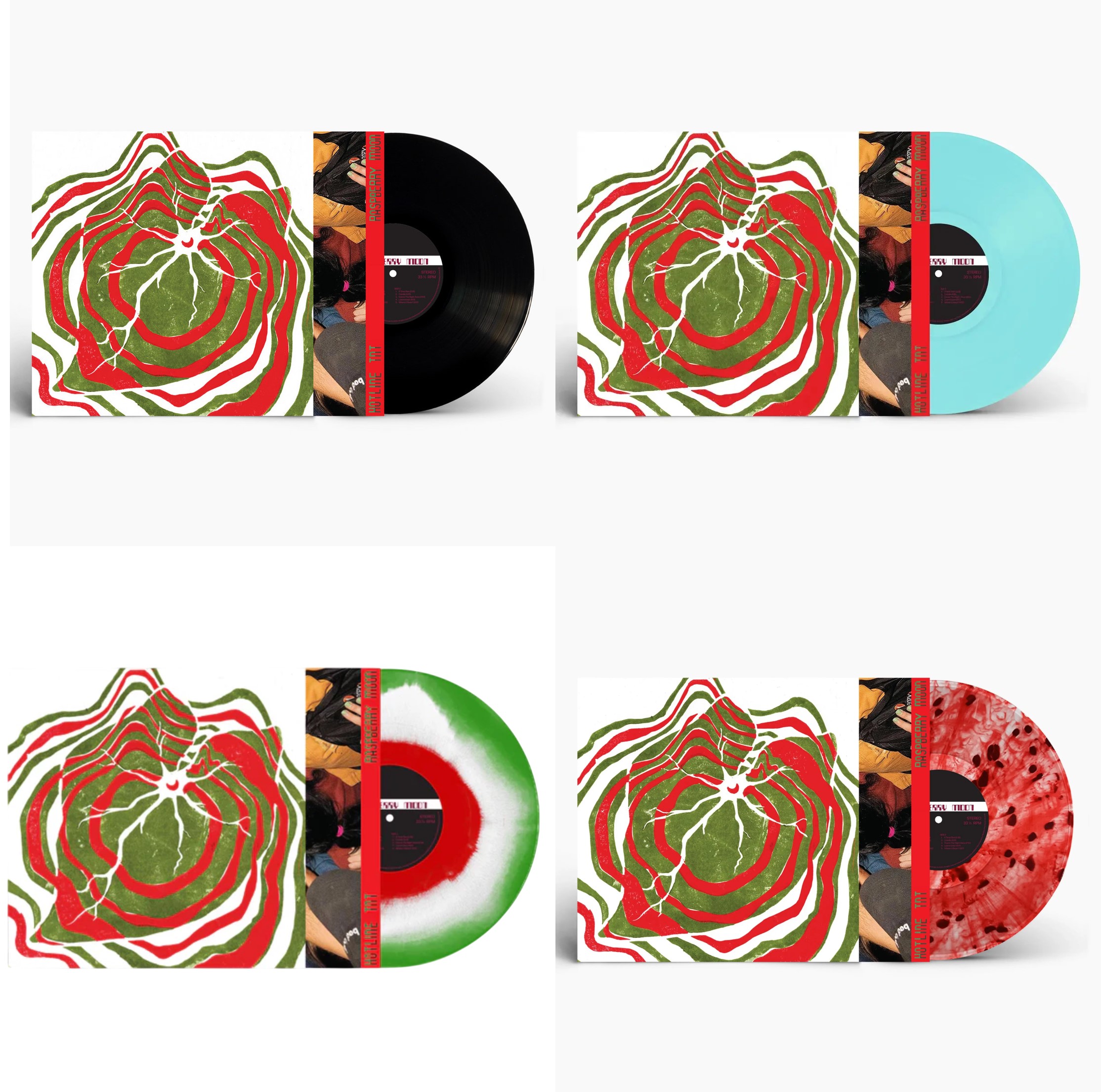
Big Symmetry is out now on some lovely vinyl variants via Storm Chasers LTD / Asian Man Records and you can check the album out over on the Pet Symmetry Bandcamp page. UK folks can order via the ever amazing Devil Dog Distro.

You can follow Pet Symmetry on social media here…

Haunted Images – Haunted Images

Louth-based producer and songwriter David O’Farrell-McGeary, under the moniker Haunted Images, has delivered something quite extraordinary. Known already to those paying attention through a string of excellent singles— ‘If You Want’, ‘Grey Days’, ‘Sometimes’, and the devastatingly good ‘Stay Awake’—this self-titled album feels like the full arrival. A fully realised vision forged in isolation, insomnia, and introspection.

David’s sound is a curious thing. Take the rich fuzz-textures and dreamlike layering of classic shoegaze, throw in the brooding weight of Deftones and Deafheaven, then lace it with the glitched ambience of Aphex Twin. It’s a sound that both swells and shatters, that finds grace in the grit and melancholy in the noise. Lyrically, the album turns inward, unpicking memory, trauma and forgiveness—not with grandstanding, but with intimate precision.

On what the album is about David says:

“Overall, this album is about forgiveness. Forgiveness within yourself and forgiveness of the people around you. An exploration of dark periods of time through the lens of music. Although each song has its own individual identity, the piece as a whole definitely has its own unique identity. It’s a deeply introspective album where I dissect myself at every song and put many personal and traumatic experiences under a musical microscope”

Ok let’s adjust the lens and have a closer look and listen to this then.

The album begins not with a bang, but with a burden. ‘I Forgive You’ unfolds in slow motion. Sludgy and mournful, the track’s first half crawls through layers of thick distortion and ghosted vocal lines — not so much sung as exhaled. There’s a real sense of weight here, both emotional and sonic, like something unresolved is being dragged to the surface. Then comes the break — and what a break it is. The track erupts into a euphoric finale, as if the weight has finally lifted, even if just for a moment. The guitars bloom, the textures soar, and as an opening statement, it sets the emotional tone perfectly: heavy, human, and unflinchingly honest.

‘If You Want’ dives headlong into that gloriously fuzz-caked 90s sandpit, kicking up grit and gold in equal measure. Built around a deceptively simple two-chord structure, the track wastes no time pulling you in with its quiet strummed intro — a lull before the fuzzstorm. When the distortion hits, it hits, soaked in the unmistakable flavour of that Smashing Pumpkins Big Muff grind. It’s tactile and physical, a sound you feel in your chest. But it’s not just about weight — there’s a delicacy too, especially in the vocals. David’s delivery floats in the mix, dreamy and disembodied in a way that clearly nods to My Bloody Valentine’s lovelorn murmurings. There’s a push and pull here between heaviness and softness, where the melodies weave their way through the noise like threads of sunlight through fog.

The first instrumental interlude offers a surprising shift in mood. All soft classical guitar and glowing synth ambience, ‘Arklow emo’ opens a different dimension of David’s sound world—tender, nostalgic, and ghostly. It’s a palate cleanser, but more than that, it speaks to his compositional depth. The title nods cheekily to press descriptions of his sound as “Arklow emo,” and to the Irish hometown that shaped his sonic identity.

With ‘Stay Awake’, Haunted Images doesn’t flinch. This is a track that looks directly into the darkest corners of the human condition and doesn’t look away. Written in the stillness of the night — those long, stretched-out hours where sleep won’t come and your thoughts start to circle — this song is steeped in a raw, emotional honesty. It’s one of the most powerful and personal moments on the album, tackling the crushing weight of depression and the terrifying impulse to simply stop existing. The lyrics don’t sensationalise or dramatise; instead, they gently unpack the burden of witnessing someone you love fall into that kind of despair — when you can’t fix them, can’t save them, but you can stay awake with them. It’s a heavy responsibility, beautifully articulated. Musically, the track moves between quiet, reflective passages and swelling, emotional crescendos, like breathing through a panic attack. The shoegaze textures are dialled in perfectly: thick but not suffocating, immersive but never overwhelming. In its vulnerability, ‘Stay Awake’ becomes an act of quiet defiance — a hand reaching out into the dark.

There’s something slow-burning and cinematic about ‘Sometimes’. At its core, it hums with restraint — all half-light and hesitation, like watching dust drift through a shaft of dying sunlight. David’s delivery here is ghostly, almost weightless, with that same airy vulnerability you’d hear in a Whirr or early Nothing track. It doesn’t rush or push. Instead, it lingers — reflective, lost, slightly out of time. And it makes sense. This was a song born from isolation, written in a dimly lit room where the sun barely crept in. That setting is palpable in the music. There’s a dull greyness that hangs over the track, not in a lifeless way, but in a way that feels numbed by repetition — days bleeding into nights. Then just when you think it might drift away entirely, ‘Sometimes’ swells into something fierce and emotionally uncontainable. An avalanche of drums, fuzz, and melody crashes down in the final stretch, tearing through the stillness with glorious abandon. It’s not chaos for chaos’ sake — it feels earned, cathartic even.

Placed dead centre in the album, ‘I Don’t Know Where It Begins or Where It Ends Anymore’ feels like the stillness at the heart of the storm — a necessary pause, yet one that carries its own quiet intensity. This instrumental plays like a dream you’re trying to hold onto, but that keeps slipping through your fingers. A pulse of ambient synths, chimes and vaporous textures drift slowly outward, untethered from any fixed structure. There’s no rhythm to lock into, no verse-chorus cycle — just the gentle unfolding of sound.

‘Take Me Instead’ marks a thrilling left-turn in the flow of Haunted Images — a sharp-edged, sonically daring moment that leans into industrial abrasion and experimental textures without losing sight of the album’s emotional through-line. It’s arguably the boldest piece on the record, one that doesn’t just expand the sonic palette but smashes it open and rebuilds it with scorched circuit boards and found sound fragments. What’s especially striking is David’s use of real-world sonic debris — notably capturing the buzz and glitch of cellular data interference from his phone, running it through distortion and mangling it into something strangely musical. It’s a fascinating act of transformation, alchemising technological detritus into something raw and expressive. The guitars here are less about walls of fuzz and more about texture and friction, scratching against the mix like rusted wire. Despite its abrasive core, there’s still something deeply human underneath it all. It’s that same aching vulnerability that runs through the record — only now refracted through digital decay and chaos.

After the chaos and corrosion of ‘Take Me Instead’, ‘Grey Days’ returns us to more familiar shoegaze territory — but it’s not a retreat. Instead, it’s a recalibration. Here, David shows that he doesn’t need maximalism to make an impact. What makes ‘Grey Days’ so affecting is its restraint: the fuzz is still there, the layers still hum and churn, but they give way more easily. There’s breathing room between the noise. The song glides on a delicate, sugar-spun melody — the kind that slowly unfurls and quietly lodges itself in your memory. David’s vocals feel more foregrounded here, offering a clear emotional anchor amid the haze. There’s a softness to the delivery, almost conversational, which makes the weight of the lyrics hit even harder. It’s a bittersweet track, all shimmering melancholia and subdued beauty. That balance between sadness and something almost serene is masterful. There’s a sense of resignation in the lyrics, but also a kind of grace — the way we carry pain not because we want to, but because it never quite leaves. As David suggests, it’s the grey days — not the catastrophic ones — that linger longest, that work their way into the texture of your life.

!FLASHING IMAGES WARNING!

‘A Grey Sky Over A City Of Ghosts’ is the haunting instrumental epilogue to ‘Grey Days’, but it feels more like an extension of its soul than a direct follow-up. This is where the music sheds any remnants of structure and settles into something more ephemeral, like a fading echo of an echo. If ‘Grey Days’ was the raw, exposed emotion, this track is the hazy, distant reverberation of that feeling — like remembering a dream just before it slips away for good.

And then, we reach the final chapter. ‘Heavenlevel7’ the oldest song in the collection, is both an epilogue and a delicate resolution. After an album steeped in introspection, pain, and dissonance, this track arrives as the softest of sighs — but still full of that careful emotional complexity that defines the record. Lyrically, it’s a song about grappling with identity and the disorienting distance of disassociation. The line “I think it’s OK now” — quietly tentative — hangs in the air like a question rather than a declaration. It’s the album’s closest moment to peace, but it’s a fragile, almost hesitant peace, borne from the weary acceptance that things might not be “OK” in the traditional sense, but they are now — at this moment. And sometimes, that’s enough.

Haunted Images is a record of stark honesty and vast scope. It’s a deeply introspective work, but never self-indulgent—the careful songwriting and production choices invite the listener in rather than shutting them out. What’s striking is how current it sounds. There’s a weight and precision in the production—those drums thundering through the mix, every layer tuned to the emotional frequency of the moment—that makes this album feel contemporary and vital, rather than nostalgic or referential.

More than just an impressive debut, this is a statement of intent. David has carved out a space that’s uniquely his: shoegaze for the haunted, post-rock for the heartbroken, ambient noise for the emotionally curious. It’s an album that doesn’t just explore darkness—it brings lanterns and maps.

Haunted Images is out now and you can grab it digitally or on CD from the Haunted Images Bandcamp Page.

You can follow Haunted Images on social media here…..

Our Worlds Collide – All The Light We Shall Never See

Emerging from the fertile creative soil of the West Midlands, Our Worlds Collide have rapidly carved out a name for themselves as purveyors of emotionally rich, sonically overwhelming shoegaze/post-rock. Drawing inspiration from genre legends like Slowdive and Explosions in the Sky, alongside the crushing noise textures of My Bloody Valentine and Lovesliescrushing, the band’s sound is both rooted in tradition of the genres and thrillingly forward-looking.

Built around the powerhouse rhythm section of Nicko Cureton and the atmosphere-drenched guitar and vocals of Finlay Hatton, Our Worlds Collide have already caused waves locally, where their live shows have left audiences spellbound. Now signed to 1991 Recordings, the band is gearing up for a full-length album — an exploration of both the hazy, soft-edged corners of shoegaze and the euphoric walls of static noise that threaten to topple over you.

Their latest single, ‘All The Light We Shall Never See’, is the dazzling opening salvo from this new chapter, and it’s nothing short of breathtaking. It’s been edited down from the sprawling and all-consuming twelve-minute live experience to a more radio friendly four minutes of fuzzed out bliss.

From the very first note, ‘All The Light We Shall Never See’ sets out its stall with shimmering intent. A slow, glittering build of feedback and melody immediately envelops the listener, setting a tone that feels simultaneously delicate and crushing. Hatton’s guitar work is particularly spellbinding here — weaving glowing threads of distortion and clean tones into an intricate tapestry that feels almost tactile in its richness. Cureton’s drumming is equally deserving of praise. Rather than simply underpinning the haze, his percussion feels alive — dynamic, expressive, and at times almost conversational with the swirling chaos around it. There’s a real sense of weight behind every snare crack and cymbal swell, grounding the track even as it threatens to drift into the ether. Vocally, Finlay Hatton delivers a performance that feels less sung and more breathed into existence. His voice merges with the instrumentation rather than sitting above it, becoming another blurred colour in the song’s sonic watercolour.

In its waves of sound, in its yearning vocals, in its overwhelming climaxes and tender silences, Our Worlds Collide have created something truly special. If this single is any indication of what’s to come on their debut album, then make no mistake: Our Worlds Collide are very much the ones to watch.

‘All The Light We Shall Never See’ is out now via 1991 Recordings and you can check it out over on the Our Worlds Collide Bandcamp page. Here’s all twelve minutes for your aural enjoyment.

You can follow Our Worlds Collide on social media here….