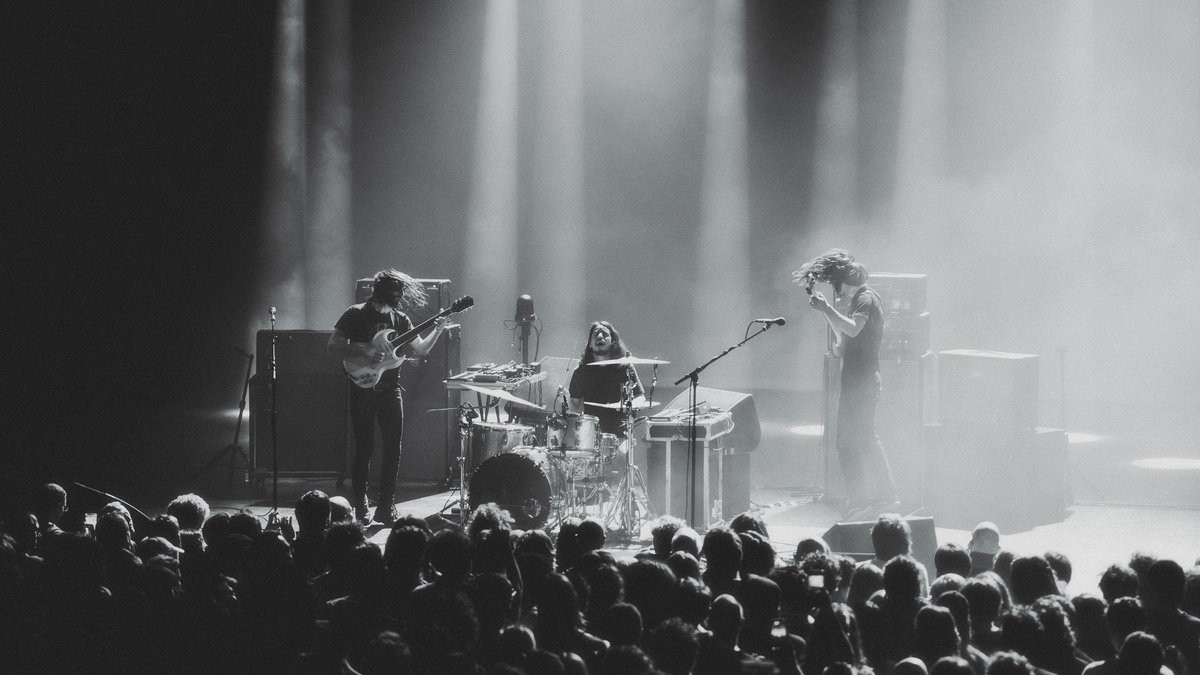
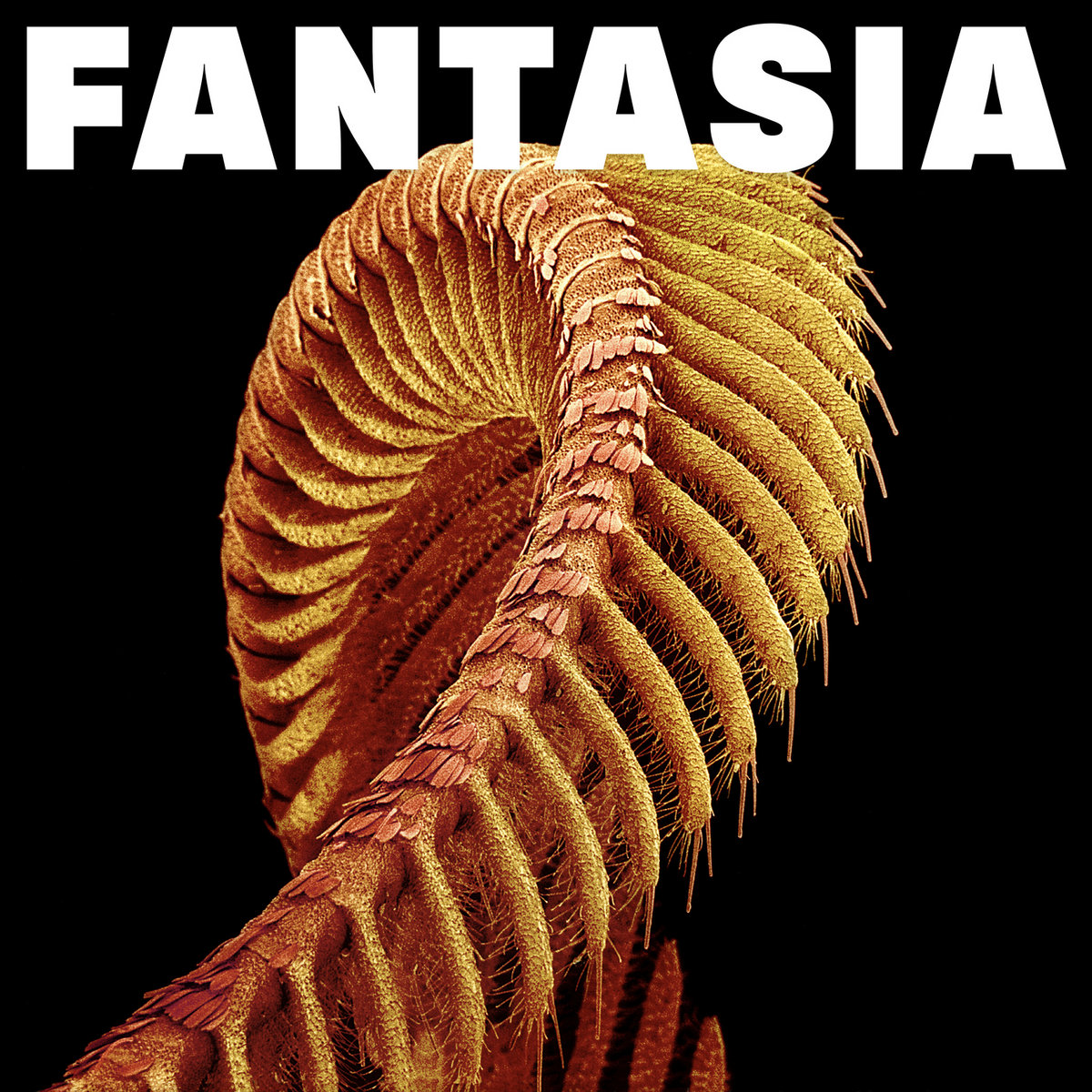
When I first wrote about Slift, I was still trying to make sense of how three people could make that insane sound. A friend had pointed me towards their KEXP session from Trans Musicales in Rennes, and from there I fell headlong into their back catalogue. By the time Ilion arrived, I was already waiting to see how far Jean Fossat, Rémi Fossat and Canek Flores could stretch their heavy psych universe. That record felt enormous. It asked for time, patience and a decent set of speakers. It was Slift operating at full mythic scale, with riffs, saxophone, electronics, doom weight and space rock excess all pulling together until you felt slightly rearranged by the end of it. Now comes Fantasia, the band’s new album, and it feels like a fascinating next move. Slift have kept the force, the imagination and the sense of cosmic threat, but this time the songs are leaner, sharper and more direct in their intent.
That change in shape makes sense when you look at where the band are standing in 2026. Jean and Rémi Fossat are brothers, while Canek Flores has been with them since their school days, making this a trio with ten years of shared instinct behind them. You can hear that history in the way they move as one unit. Fantasia was built differently from the long form sprawl of Ilion, with Jean bringing clearer song ideas into the rehearsal room before the band took them into the studio to record. There is still plenty here for those of us who want Slift to open a hole in the ceiling, but the playing now feels clipped, driven and aimed at something real. The record is also shaped by Jorge Luis Borges, political unease, false idols, xenophobia, corruption and the belief that people can still rise against the systems pressing down on them. Jean Fossat gives that belief its clearest spark on the opening track when he sings of finding “a fire for your soul.” That line feels like the key to the whole album.
‘Fantasia’ opens the record with Slift doing what Slift do best, making the first few seconds feel like the beginning of a transmission from somewhere beyond the edge of the map. A low throb starts to gather, the synths flicker around the edges, then the band begin to build with patience and bite. Jeans vocal still has that edge and his guitar has that familiar scorched quality, Rémi’s bass is thick and restless, and Flores keeps the whole thing moving with a sense of control that keeps the heavier passages from spilling everywhere. This sounds like the theme song for a dystopian sci fi movie and it carries a clear message. The world is burning; people are frightened and Slift are asking what kind of force we can still summon together. What an opener.
‘Corrupted Sky’ tightens the grip almost immediately. The rhythm section comes in with a hard, almost post punk pulse, while the synths bring a colder colour to the track. There is a sense of movement here that feels very different from the longer waves of Ilion. This one drives through the streets of the imagined town at speed, past figures of power and suspicion, past people who have learned to look at strangers as threats. Rémi’s bass gives the track its engine, growling with enough grit to keep the guitars from lifting too far away from the ground. Jean’s guitar solo then tears through the middle with a real chase scene quality. It swerves, climbs, burns and keeps moving forward. Slift still sound like a band with space rock in their bloodstream, but ‘Corrupted Sky’ proves they can compress that scale into something more urgent without losing their identity.
The album’s uneasy atmosphere deepens next with ‘The Village’. This is where Fantasia starts to feel like a place with rules, rituals and people watching from behind closed doors. The immigrant is treated as a threat, and the music mirrors that suspicion beautifully. The guitars have a clenched feel, the drums keep circling the track’s nervous energy, and the vocal sits inside the noise like someone trying to push back against a crowd that has already made up its mind. There are still flashes of prog complexity in the way the parts interlock, but the song never feels showy. Slift use those twists to create unease rather than to prove how many ideas they can fit into one track. By the closing stretch, the whole thing feels like a warning shouted across a town square as the sky starts to darken.
There is a swagger to ‘A Storm of Wings’ that makes it one of the album’s most immediate moments. The riff has a physical snap to it, almost like a heavy festival chant dragged through fuzz and smoke. Then the band start adding layers of weight until the track becomes a full body surge. Flores is brilliant here, giving the song both swing and force, while Rémi’s bass keeps leaning into the groove with real bite. Jean’s vocal feels more defiant than desperate. The references sitting behind the song may reach toward jazz and literature, but what comes through in the speakers is the sense of a crowd beginning to move together. After the fear and suspicion of ‘The Village’, this feels like the first sign that something larger is coming. You can almost hear doors opening.
‘Orbis Tertius’ sends the album into stranger territory. The title reaches back to Borges, and the music carries that sense of a reality being rewritten by the people who control the story. The drums begin with a ritual feel, the bass sits low and tense, and the guitars rise in sheets of heat. Slift have always understood repetition as a living thing. They can sit inside a pattern and keep making it change through pressure, tone and attack. That is exactly what happens here. The track seems to keep turning the same object over in its hands, finding a different surface each time. The people inside Fantasia are beginning to see that the version of the world they have been given is built on fear, habit and obedience.
Then ‘Waiting Man’ arrives and gives the record its most vulnerable turn. After all that force, it is striking to hear Slift leave more room around the voice. The song has the weight of a psychedelic ballad, with a slow burn feel that lets the emotional centre come forward. Jean sings, “I waited for love, waited my time,” and the line lands with a plain sadness that feels new for this band. His voice sounds worn, human and close to breaking in places. The guitars still glow at the edges, and the low end still has that Sabbath rooted heaviness, but the track is built around a realisation. It is the point where the narrator understands that the world he trusted has failed him. On an album full of scale and political charge, this is the moment that feels most intimate.
‘The Day of Execution’ pulls the record back into motion with a heavier charge. If ‘Waiting Man’ is the breath before the decision, this track is the decision itself. The guitars coil and lash out, the drums push forward with real force, and Rémi’s bass sounds like it is dragging sparks from the floor. The difference is in the shape. The song keeps its focus. It does not wander off into the far distance. It keeps returning to the core feeling of confrontation, as though the whole album has been moving towards a point where fear gives way to action.
‘Secret Mirror’ closes Fantasia with a wide, reflective sweep. The synths open the space beautifully, creating a sense of standing in the aftermath of something heavy and looking around at what has changed. Slift allow this track to build with patience, letting the atmosphere gather before the heavier passages arrive. Jean’s guitar feels less like a weapon here and more like a searching light. Flores keeps the movement steady, while Rémi adds low end weight without crowding the arrangement. It is a brilliant closer because it avoids easy comfort. The album has spent its time asking how people respond to corruption, fear, control and cruelty, and ‘Secret Mirror’ leaves the question facing back at you. What do you see when the noise settles? What have you accepted? What are you ready to resist?
Fantasia is a thrilling continuation of the Slift story because it answers Ilion without trying to repeat it. The last record opened up vast mythic spaces and asked you to give yourself over to the trip. This one brings the danger closer to home. It still has the riffs, the synth glow, the thunderous rhythm section and the sense that Slift are capable of making a room feel too small for the sound inside it. It also has a clearer human pulse. These songs are about people trapped inside broken systems, people remembering their own strength, and people finding the courage to push back together. Slift remain sonic explorers, but on Fantasia they have aimed the telescope back at the world we are living in, and the view is fierce, strange and worth facing. Will you stand?
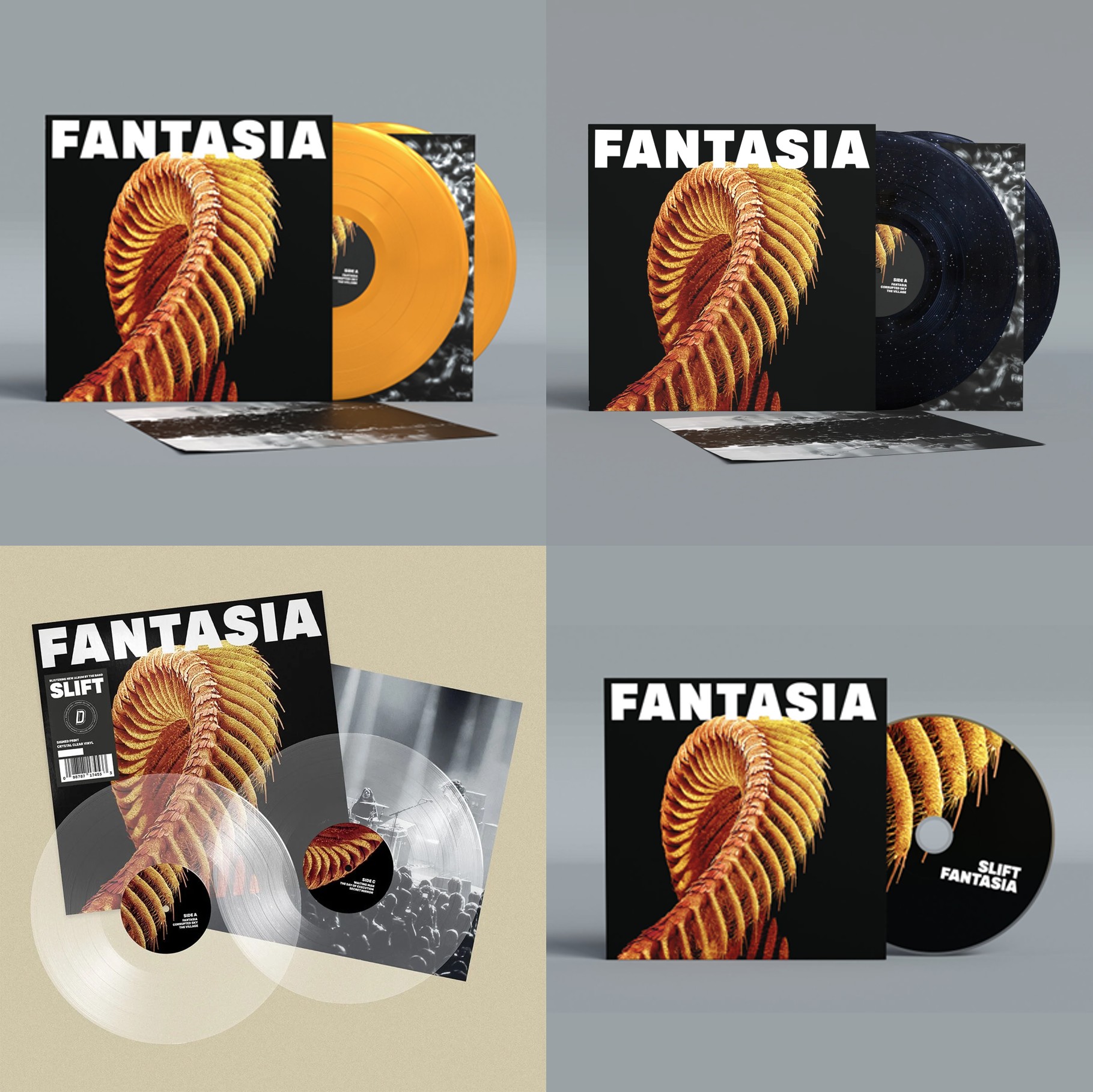
Fantasia is out June 5th via Sub Pop. You can check it out over on the Slift Bandcamp page.
You can follow Slift on social media here…
Discover more from Static Sounds Club
Subscribe to get the latest posts sent to your email.

