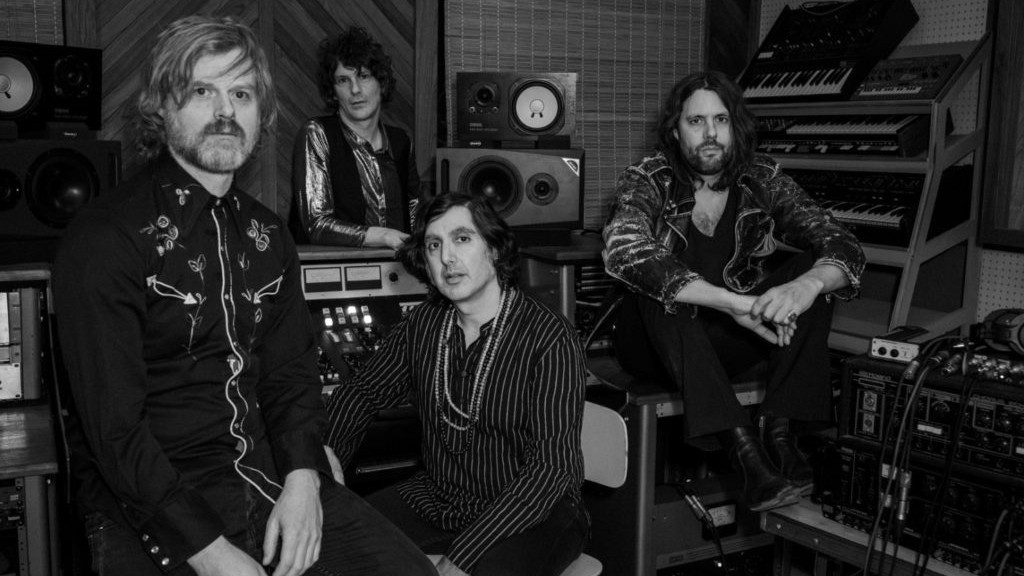
Elephant Stone have spent twenty years finding fresh routes between Indian classical music, psychedelic pop and guitar music with a heavier pulse. The Montreal group began in 2006 as Rishi Dhir searched for a new sense of purpose following his years with The Datsons, later known as The High Dials. Each Elephant Stone release since has carried a certain willingness forward and along the way, Dhir has performed with Beck and The Brian Jonestown Massacre, joined the psych group MIEN and gradually assumed responsibility for production, engineering and mixing at Now he’s back with his tenth full length release ASHA and it finds Dhir working alongside drummer Miles Dupire Gagnon, guitarists Robbie MacArthur and Jason Kent, with Kent also contributing keyboards and backing vocals. Dhir handles bass, dilruba, guitar, keyboards, percussion, sitar, tabla and vocals, while Amy Millan of Stars and Broken Social Scene joins the band on the closing song. Two decades into their life, Elephant Stone sound ready to address grief, political fear and the search for sanctuary with striking directness.
The record takes its name from Dhir’s mother, who died during its writing and recording. Asha also means hope in Sanskrit, giving that title a deeply personal dual meaning. Sorrow sits at the centre of these songs, joined by anger at a society repeating some of history’s ugliest behaviour. Dhir explains the limits and intentions of his writing with characteristic honesty.
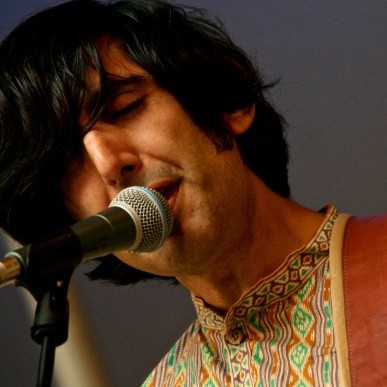
“I only write about what I know and think I understand, as long as there’s Rishi, there’s going to be Elephant Stone.”
Can’t wait to drop the needle on this one and dive in.
‘Here Comes The Rising Sun’ begins with a softly pulsing bassline and a steady drum pattern that has an earthy, communal feel. Dhir allows the rhythm section to establish the mood before electronic details begin appearing around it. These little flickers give the arrangement a sense of morning gradually coming into focus. The lyrics speak openly about grief and pain, yet the music keeps looking towards the day ahead. The rising sun becomes a daily reminder that time continues and another chance has arrived. The closing section expands into a psychedelic wig out, with the earlier calm giving way to a rush of sound. That ending feels like the sun has reached full strength and burned through the remaining cloud. It is a lovely opening statement, gentle in its first steps and full of life by the time it reaches the other side.
Fuzzy proto punk guitars introduce ‘Everything Evil’, the lead single and burst of frustration. Dhir’s soft vocal delivery provides a clever foil for the guitars, which race forward with very little interest in stopping for breath. Man, this fair licks along. The rhythm keeps pressing ahead as one accusation follows another, giving the song the feel of a list that has grown too long to ignore. Dhir turns his attention towards ruling figures who sell freedom while keeping control firmly in their own hands. Every line strikes quickly, with the short running time making each one feel more urgent. That gentle voice makes the anger even more effective. Dhir sounds weary with the repetition of it all, as though he has watched the same performance from those in charge too many times.
The second single, ‘Fascists Killed Yer Rock ‘N’ Roll’, immediately reduces the pace. That sequencing works beautifully after the breathless attack of ‘Everything Evil’. Sitar textures return to the foreground and the rhythm settles into a heavier step. The guitar begins with a direct rhythmic purpose before sending eerie cries through the darker corners of the arrangement. Dhir writes about the methods fascism uses to gain power. Fear becomes currency, outsiders become targets and hardship becomes an opportunity for people with ambitions of control. Dhir explains his thinking with real clarity:
“You’d have to be living under a rock to ignore what’s happening. I don’t claim to have the answers; this song is about giving the threat a name. It’s a reminder that we’ve seen this script before… and we’ve overcome it before.”
The bridge addresses those figures directly, reminding them that their game is already known and their song has already been heard. Rock and roll becomes a symbol of expression, community and refusal. The band respond to political darkness by making enough noise to disturb it.
My album highlight arrives with ‘I Got A Pill’. A pulsing groove takes over and gives the record one of its most immediately physical moments. Your foot starts tapping almost at once. There is something wonderfully cheeky about Elephant Stone wrapping a song about control inside music this funky. The bass moves with a relaxed confidence; the drums keep the groove locked and small tabla and sitar details add identity. The lyric adopts the language of someone offering an easy solution. Take the pill, feel better and leave your thoughts behind. Comfort becomes a means of obedience, and personal responsibility becomes another part of the sales pitch. Its lighter vocal touches make the underlying idea more unsettling. Repeated syllables and friendly assurances give the song the air of an advert designed to make submission sound appealing. You can hear how manipulation works through simple phrases, easy answers and a rhythm people can follow without pausing to think. This sinister little dance is one of Elephant Stone’s finest grooves.
‘Broken Arrow’ brings us straight back to the classic Elephant Stone sound. A killer melody sits at the heart of the track, carrying a direct lyric about identity and the desire to become a fuller version of yourself. Dhir imagines himself as an arrow that has lost its direction. Shoegaze toned guitars run underneath the melody, filling the background with a soft haze. Elephant Stone have always had a fine instinct for melody, and ‘Broken Arrow’ provides another example of how naturally Dhir can place an introspective thought inside a song you remember after one play. Loss can disturb your sense of self as much as your relationship with the person who has gone. ‘Broken Arrow’ considers the moment when old certainties disappear and a new direction has yet to reveal itself. Its melody provides the reassurance that the lyrics are still seeking.
Piano takes the lead on ‘A Beautiful Fate’, easing the album into a dreamlike ballad. Guitar and synthesiser details appear around it, adding little points of light without disturbing the stillness. The arrangement has the appearance of stars reflected across calm water, every note bright against the darkness surrounding it. It is one of the record’s prettiest pieces, and that beauty gives the lyric’s emotional chill even greater depth. The words feel like thoughts appearing after a period of shock, when you begin looking backwards and reassessing the life you have lived. There is loneliness in those admissions, joined by a growing sense of gratitude. Fate contains pain, and the narrator still finds reason to call it beautiful. That response feels central to ASHA. Dhir allows grief to exist within the same song as thankfulness. The piano holds those feelings together, playing with a delicate clarity as the surrounding instruments provide atmosphere and gentle accents.
A gloriously squelchy bassline gives ‘Parallel And Contrary Motion’ its spine. It bounces beneath the song with real warmth, keeping the music buoyant as Dhir writes directly about the death of his mother. Synth lines add an almost Baroque European character, curling around the rhythm with an ornate grace. I love the way the arrangement once again couches sorrow through such an upbeat musical setting. The title describes two lives moving together and apart at the same time. Those memories remain vivid, even as the passing seasons make her physical absence impossible to escape. Dreams allow her to return, though she appears differently each time. The bright melody feels connected to the happiness she gave him. Dhir honours that relationship by placing its joy alongside his grief. The bass keeps moving, the synthesiser lines retain their elegance and the song refuses to reduce a whole life to its ending.
‘Sleepwalking In Prague’ enters Dhir’s dream world as the record begins its final descent. The song moves in waltz time, giving his walk through the city a circular motion. Each turn seems to bring him back towards the same streets, the same clock and the same crowd. He tries to speak, yet his words sound unfamiliar. The city is alive around him but his body appears detached from it. Prague may hold memories of someone he has lost, and the lyric allow you to imagine what those streets mean to him. The astronomical clock becomes a meeting point between time, death and dream. The guitars deserve a big shout out here. Their clear, singing tone brings George Harrison to mind, with each phrase carrying melodic purpose. They sound sublime against the waltz rhythm and give the song a tender glow. That familiar warmth fits the dream setting beautifully. Dhir may be lost within Prague, yet the guitars seem to recognise the route.
‘Spirit, Take Me Away’ offers a final goodbye. Dhir accepts that the person he loved has gone and understands that the world will continue around him. His own spirit remains unsettled, searching for somewhere to belong after that loss. Dreamy guitar surrounds the vocal and lets the emotional weight settle gently. The playing has a soft, spacious quality that suits the subject, giving Dhir room to express love, absence and exhaustion. Amy Millan brings light into the song with her gorgeous voice. I am a huge Stars fan, so you can take my enthusiasm with the appropriate degree of cheerful bias. Her presence feels exactly right. Dhir and Millan sound connected by the emotion of the song, and her vocal gives the final goodbye an added tenderness. It feels like another person has entered the room and sat beside him for the last few minutes.
After a short silence, an old recording of Dhir’s son Krish appears. Three years old at the time, he repeats his invented phrase “macca chacha singsing” while his father encourages him to say it again. It is a small family moment preserved by chance, full of play and affection. Following an album concerned with death, political fear and the pain of absence, a child’s voice reminds us that life continues through the memories we keep and the love still around us.
ASHA feels like an important Elephant Stone album. Twenty years into the band’s life, Dhir has made a record that speaks directly about his mother while also looking outwards at the forces making the wider world feel darker. The music retains everything I love about this band. Sitar and tabla sit naturally beside fuzzy guitars, electronic details, piano, thick basslines and melodies that lodge themselves in your memory. Each arrangement serves the emotional idea at its centre. The album begins beneath a rising sun and ends with a spirit searching for its place. Between those points, Dhir finds anger, uncertainty, gratitude, memory and even a seriously funky song about systems of control. Hope survives throughout because it has been tested by experience. Asha gave Dhir her love and her name. With ASHA, he has given both a lasting home.
ASHA is out now via Elephants on Parade, with vinyl available through Little Cloud Records. You can check it out over on the Elephant Stone Bandcamp page.


You can follow Elephant Stone on social media here…
Photo Credit
Bowen Stead
Mitch Wolters
Discover more from Static Sounds Club
Subscribe to get the latest posts sent to your email.
 Static Sounds Club