Haunted Images – Haunted Images

Louth-based producer and songwriter David O’Farrell-McGeary, under the moniker Haunted Images, has delivered something quite extraordinary. Known already to those paying attention through a string of excellent singles— ‘If You Want’, ‘Grey Days’, ‘Sometimes’, and the devastatingly good ‘Stay Awake’—this self-titled album feels like the full arrival. A fully realised vision forged in isolation, insomnia, and introspection.

David’s sound is a curious thing. Take the rich fuzz-textures and dreamlike layering of classic shoegaze, throw in the brooding weight of Deftones and Deafheaven, then lace it with the glitched ambience of Aphex Twin. It’s a sound that both swells and shatters, that finds grace in the grit and melancholy in the noise. Lyrically, the album turns inward, unpicking memory, trauma and forgiveness—not with grandstanding, but with intimate precision.

On what the album is about David says:
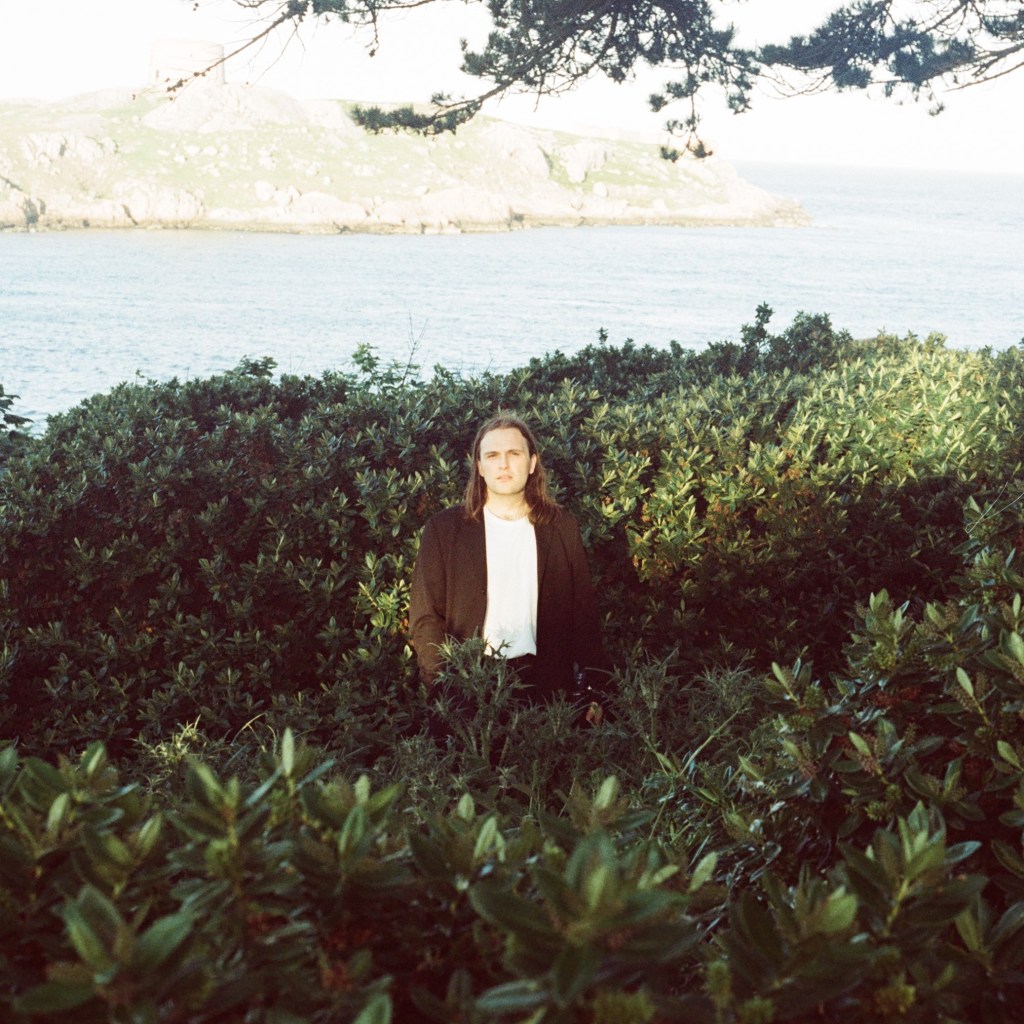
“Overall, this album is about forgiveness. Forgiveness within yourself and forgiveness of the people around you. An exploration of dark periods of time through the lens of music. Although each song has its own individual identity, the piece as a whole definitely has its own unique identity. It’s a deeply introspective album where I dissect myself at every song and put many personal and traumatic experiences under a musical microscope”

Ok let’s adjust the lens and have a closer look and listen to this then.

The album begins not with a bang, but with a burden. ‘I Forgive You’ unfolds in slow motion. Sludgy and mournful, the track’s first half crawls through layers of thick distortion and ghosted vocal lines — not so much sung as exhaled. There’s a real sense of weight here, both emotional and sonic, like something unresolved is being dragged to the surface. Then comes the break — and what a break it is. The track erupts into a euphoric finale, as if the weight has finally lifted, even if just for a moment. The guitars bloom, the textures soar, and as an opening statement, it sets the emotional tone perfectly: heavy, human, and unflinchingly honest.

‘If You Want’ dives headlong into that gloriously fuzz-caked 90s sandpit, kicking up grit and gold in equal measure. Built around a deceptively simple two-chord structure, the track wastes no time pulling you in with its quiet strummed intro — a lull before the fuzzstorm. When the distortion hits, it hits, soaked in the unmistakable flavour of that Smashing Pumpkins Big Muff grind. It’s tactile and physical, a sound you feel in your chest. But it’s not just about weight — there’s a delicacy too, especially in the vocals. David’s delivery floats in the mix, dreamy and disembodied in a way that clearly nods to My Bloody Valentine’s lovelorn murmurings. There’s a push and pull here between heaviness and softness, where the melodies weave their way through the noise like threads of sunlight through fog.

The first instrumental interlude offers a surprising shift in mood. All soft classical guitar and glowing synth ambience, ‘Arklow emo’ opens a different dimension of David’s sound world—tender, nostalgic, and ghostly. It’s a palate cleanser, but more than that, it speaks to his compositional depth. The title nods cheekily to press descriptions of his sound as “Arklow emo,” and to the Irish hometown that shaped his sonic identity.

With ‘Stay Awake’, Haunted Images doesn’t flinch. This is a track that looks directly into the darkest corners of the human condition and doesn’t look away. Written in the stillness of the night — those long, stretched-out hours where sleep won’t come and your thoughts start to circle — this song is steeped in a raw, emotional honesty. It’s one of the most powerful and personal moments on the album, tackling the crushing weight of depression and the terrifying impulse to simply stop existing. The lyrics don’t sensationalise or dramatise; instead, they gently unpack the burden of witnessing someone you love fall into that kind of despair — when you can’t fix them, can’t save them, but you can stay awake with them. It’s a heavy responsibility, beautifully articulated. Musically, the track moves between quiet, reflective passages and swelling, emotional crescendos, like breathing through a panic attack. The shoegaze textures are dialled in perfectly: thick but not suffocating, immersive but never overwhelming. In its vulnerability, ‘Stay Awake’ becomes an act of quiet defiance — a hand reaching out into the dark.

There’s something slow-burning and cinematic about ‘Sometimes’. At its core, it hums with restraint — all half-light and hesitation, like watching dust drift through a shaft of dying sunlight. David’s delivery here is ghostly, almost weightless, with that same airy vulnerability you’d hear in a Whirr or early Nothing track. It doesn’t rush or push. Instead, it lingers — reflective, lost, slightly out of time. And it makes sense. This was a song born from isolation, written in a dimly lit room where the sun barely crept in. That setting is palpable in the music. There’s a dull greyness that hangs over the track, not in a lifeless way, but in a way that feels numbed by repetition — days bleeding into nights. Then just when you think it might drift away entirely, ‘Sometimes’ swells into something fierce and emotionally uncontainable. An avalanche of drums, fuzz, and melody crashes down in the final stretch, tearing through the stillness with glorious abandon. It’s not chaos for chaos’ sake — it feels earned, cathartic even.

Placed dead centre in the album, ‘I Don’t Know Where It Begins or Where It Ends Anymore’ feels like the stillness at the heart of the storm — a necessary pause, yet one that carries its own quiet intensity. This instrumental plays like a dream you’re trying to hold onto, but that keeps slipping through your fingers. A pulse of ambient synths, chimes and vaporous textures drift slowly outward, untethered from any fixed structure. There’s no rhythm to lock into, no verse-chorus cycle — just the gentle unfolding of sound.

‘Take Me Instead’ marks a thrilling left-turn in the flow of Haunted Images — a sharp-edged, sonically daring moment that leans into industrial abrasion and experimental textures without losing sight of the album’s emotional through-line. It’s arguably the boldest piece on the record, one that doesn’t just expand the sonic palette but smashes it open and rebuilds it with scorched circuit boards and found sound fragments. What’s especially striking is David’s use of real-world sonic debris — notably capturing the buzz and glitch of cellular data interference from his phone, running it through distortion and mangling it into something strangely musical. It’s a fascinating act of transformation, alchemising technological detritus into something raw and expressive. The guitars here are less about walls of fuzz and more about texture and friction, scratching against the mix like rusted wire. Despite its abrasive core, there’s still something deeply human underneath it all. It’s that same aching vulnerability that runs through the record — only now refracted through digital decay and chaos.

After the chaos and corrosion of ‘Take Me Instead’, ‘Grey Days’ returns us to more familiar shoegaze territory — but it’s not a retreat. Instead, it’s a recalibration. Here, David shows that he doesn’t need maximalism to make an impact. What makes ‘Grey Days’ so affecting is its restraint: the fuzz is still there, the layers still hum and churn, but they give way more easily. There’s breathing room between the noise. The song glides on a delicate, sugar-spun melody — the kind that slowly unfurls and quietly lodges itself in your memory. David’s vocals feel more foregrounded here, offering a clear emotional anchor amid the haze. There’s a softness to the delivery, almost conversational, which makes the weight of the lyrics hit even harder. It’s a bittersweet track, all shimmering melancholia and subdued beauty. That balance between sadness and something almost serene is masterful. There’s a sense of resignation in the lyrics, but also a kind of grace — the way we carry pain not because we want to, but because it never quite leaves. As David suggests, it’s the grey days — not the catastrophic ones — that linger longest, that work their way into the texture of your life.

!FLASHING IMAGES WARNING!

‘A Grey Sky Over A City Of Ghosts’ is the haunting instrumental epilogue to ‘Grey Days’, but it feels more like an extension of its soul than a direct follow-up. This is where the music sheds any remnants of structure and settles into something more ephemeral, like a fading echo of an echo. If ‘Grey Days’ was the raw, exposed emotion, this track is the hazy, distant reverberation of that feeling — like remembering a dream just before it slips away for good.

And then, we reach the final chapter. ‘Heavenlevel7’ the oldest song in the collection, is both an epilogue and a delicate resolution. After an album steeped in introspection, pain, and dissonance, this track arrives as the softest of sighs — but still full of that careful emotional complexity that defines the record. Lyrically, it’s a song about grappling with identity and the disorienting distance of disassociation. The line “I think it’s OK now” — quietly tentative — hangs in the air like a question rather than a declaration. It’s the album’s closest moment to peace, but it’s a fragile, almost hesitant peace, borne from the weary acceptance that things might not be “OK” in the traditional sense, but they are now — at this moment. And sometimes, that’s enough.

Haunted Images is a record of stark honesty and vast scope. It’s a deeply introspective work, but never self-indulgent—the careful songwriting and production choices invite the listener in rather than shutting them out. What’s striking is how current it sounds. There’s a weight and precision in the production—those drums thundering through the mix, every layer tuned to the emotional frequency of the moment—that makes this album feel contemporary and vital, rather than nostalgic or referential.

More than just an impressive debut, this is a statement of intent. David has carved out a space that’s uniquely his: shoegaze for the haunted, post-rock for the heartbroken, ambient noise for the emotionally curious. It’s an album that doesn’t just explore darkness—it brings lanterns and maps.

Haunted Images is out now and you can grab it digitally or on CD from the Haunted Images Bandcamp Page.

You can follow Haunted Images on social media here…..

Our Worlds Collide – All The Light We Shall Never See

Emerging from the fertile creative soil of the West Midlands, Our Worlds Collide have rapidly carved out a name for themselves as purveyors of emotionally rich, sonically overwhelming shoegaze/post-rock. Drawing inspiration from genre legends like Slowdive and Explosions in the Sky, alongside the crushing noise textures of My Bloody Valentine and Lovesliescrushing, the band’s sound is both rooted in tradition of the genres and thrillingly forward-looking.

Built around the powerhouse rhythm section of Nicko Cureton and the atmosphere-drenched guitar and vocals of Finlay Hatton, Our Worlds Collide have already caused waves locally, where their live shows have left audiences spellbound. Now signed to 1991 Recordings, the band is gearing up for a full-length album — an exploration of both the hazy, soft-edged corners of shoegaze and the euphoric walls of static noise that threaten to topple over you.

Their latest single, ‘All The Light We Shall Never See’, is the dazzling opening salvo from this new chapter, and it’s nothing short of breathtaking. It’s been edited down from the sprawling and all-consuming twelve-minute live experience to a more radio friendly four minutes of fuzzed out bliss.

From the very first note, ‘All The Light We Shall Never See’ sets out its stall with shimmering intent. A slow, glittering build of feedback and melody immediately envelops the listener, setting a tone that feels simultaneously delicate and crushing. Hatton’s guitar work is particularly spellbinding here — weaving glowing threads of distortion and clean tones into an intricate tapestry that feels almost tactile in its richness. Cureton’s drumming is equally deserving of praise. Rather than simply underpinning the haze, his percussion feels alive — dynamic, expressive, and at times almost conversational with the swirling chaos around it. There’s a real sense of weight behind every snare crack and cymbal swell, grounding the track even as it threatens to drift into the ether. Vocally, Finlay Hatton delivers a performance that feels less sung and more breathed into existence. His voice merges with the instrumentation rather than sitting above it, becoming another blurred colour in the song’s sonic watercolour.

In its waves of sound, in its yearning vocals, in its overwhelming climaxes and tender silences, Our Worlds Collide have created something truly special. If this single is any indication of what’s to come on their debut album, then make no mistake: Our Worlds Collide are very much the ones to watch.

‘All The Light We Shall Never See’ is out now via 1991 Recordings and you can check it out over on the Our Worlds Collide Bandcamp page. Here’s all twelve minutes for your aural enjoyment.

You can follow Our Worlds Collide on social media here….

Mass Text – An Introduction

Let me take you back to a smoky, feedback-drenched night in Glasgow, just a few weeks back. I was there to catch the always-brilliant DEHD, but as fate would have it, the evening’s true revelation came courtesy of the support act—Mass Text. A solitary figure bathed in stage fog and pedalboard glow, he sent waves of shimmering sound across the venue that stopped me dead in my tracks.

What followed was one of those rare sets that doesn’t just warm you up—it blows you away. Drenched in reverb and emotional resonance, Mass Text didn’t just open for DEHD—he carved his own lane entirely. His sound felt like it had seeped in from the edges of a dream, each song blooming with gorgeous decay and bittersweet melody.

And here’s the thing—I got to meet him after the show. Chris Sutter, the man behind the Mass Text moniker (and frontman of Chicago’s fearsome post-punk trio Meat Wave), was every bit as gracious and thoughtful as his music. No rockstar posturing—just a humble, passionate craftsman talking about pedals, process, and future plans. It’s rare to find someone so tuned in to the emotional undercurrent of their sound, and it made this music feel even more personal.

That night sent me down a Bandcamp rabbit hole. And what I found there? An early glimpse of something special. Let’s dive in.

‘Exercise’ opens with a gorgeously ghosted-out chord progression—guitars all fuzzed and looped like a half-remembered daydream. There’s a woozy, gravitational pull to it, like the track is orbiting its own emotional centre. When Sutter’s vocals finally arrive, they’re drenched in reverb whispering like they’re echoing from the next room over. The brilliance of ‘Exercise’ is in its restraint. It doesn’t rush. It builds mood, texture, and a sense of slow-burning intensity. It reminds me a bit of early Grandaddy but with more emotional bite—less escapism, more confrontation. It’s as if Sutter is pulling a memory out of static, then slowly letting it dissolve again.

On the other hand, ‘Dancing with a Shadow’ feels darker, thicker in the atmosphere, as if it’s pressing up against the walls. Guitars chug and shimmer in equal measure, and the rhythm section marches forward like a slow-motion landslide. It’s a track that’s both seductive and sad, and it paints with a palette of greys, blues, and crushed neon. Lyrically, it feels like a song about wrestling with the past—about feeling haunted not by ghosts, but by versions of yourself. The production is lo-fi in all the right places, adding intimacy rather than distance. There’s a spiritual connection here to mid-period Sonic Youth, particularly Murray Street, where melody meets menace and lingers.

This one gets under your skin. You’ll find yourself humming the central riff long after it ends, like I did after the gig. Emily and Jason from DEHD joined Sutter on stage for this one. ‘Dancing with a Shadow’ was my highlight of his set with its ever-increasing power and reach.

Sutter sent me on a whole bunch of great songs he’s been working on for his debut album and from the easy swagger of ‘Birthed’ to the alt electro folk of ‘Light Light’ he has a plethora of amazing music ready and waiting.

Mass Text is a thrilling, emotional departure for Sutter—a sonic world apart from the high-decibel angst of Meat Wave. These first two singles are nuanced, slow-burning, and totally immersive. They whisper more than they scream, and in doing so, they invite you to lean in closer, to sit with the weight of things. It’s shoegaze with muscle memory or post-punk with poetry.

And the best part? This is just the beginning. With an LP currently in the works, Sutter’s solo venture is one to watch closely. Fans of Cloakroom, Nothing, early Deerhunter, and even Galaxie 500 will find plenty to get lost in here.

Don’t sleep on this. Head to the Mass Text Bandcamp page, hit follow, and support these first glimmering dispatches from what promises to be one of the most compelling new projects out of Chicago’s underground. This is the kind of stuff I live for here in the Static Sounds Club—a gem in the seam.

You can follow Mass Text on social media here….

Cloth – Pink Silence

Cloth, for the uninitiated, are the twin siblings Rachael and Paul Swinton. They first made waves with their 2019 self-titled debut Cloth, a record that immediately marked them as something different in the Scottish indie landscape—low-lit, late-night indie that drew on minimalism and atmosphere more than bombast. With Paul’s intricate guitar work and Rachael’s serene, whisper-soft vocals, Cloth felt like a secret you were lucky to stumble across. It was all space and suggestion, a masterclass in how to say more by playing less. That debut went on to be shortlisted for the Scottish Album of the Year Award and won them the admiration of tastemakers across the UK, from BBC 6 Music to Rough Trade.

Then came Low Sun in 2022, a shift in both tone and scope. Still unmistakably Cloth, but tinged with a darker, more exploratory mood. Where Cloth sounded like the dusk falling gently over the city, Low Sun ventured into midnight—a little more layered, a touch more rhythmic, as if they were beginning to push gently at the walls of their own sound. You could hear the confidence growing, and with it, a quiet hunger.

Which brings us to now. To Pink Silence. An album that doesn’t so much announce itself as seep in under your skin. Released via Rock Action Records (yes, that Rock Action—home of Mogwai), Pink Silence sees Cloth stretch further than ever before, but they do it with the same hushed poise that made us fall for them in the first place. Produced by Ali Chant (Perfume Genius, PJ Harvey), and featuring contributions from luminaries like Adrian Utley of Portishead, Owen Pallett, and Stuart Braithwaite, it’s an album that feels expansive, confident, yet still deeply intimate. It’s twilight music with muscle.

Let’s get into it.

The opener—and title track—sets the tone with a stunning emotional ambiguity. Built around a skeletal guitar figure and Rachael’s signature feather-light vocals, it’s an invocation of stillness. But listen closely: there’s tension lurking beneath. That phrase “pink silence” is borrowed from the light just before dusk or dawn, and the song embodies that liminal beauty—part longing, part peace, part dread. It’s a curtain-raiser that doesn’t explode, it glows—and in doing so, it tells you everything about the slow-burning world you’re stepping into.

‘Polaroid’ lands like a memory you’re not sure you want to revisit. Released ahead of the album as a single, it gives us one of the strongest melodic hooks Cloth have written so far. There’s a heartbeat pulse to the rhythm, a sense of propulsion that makes this one of the most immediate tracks on the album. It’s shimmering, sad, and quietly devastating.

A claustrophobic and hypnotic highlight. ‘Stuck’ does what it says on the tin—its groove is a loop, a cycle, a spiral. Rachael’s delivery becomes almost mantra-like, and it works brilliantly. Paul’s guitar drips tension, and the way the production folds layers in and out creates a dizzying sense of stasis. This is Cloth at their most experimental without losing that signature clarity. You feel trapped, but willingly so. Like you’re letting the track hold you in its vice grip.

Up next might just be the crown jewel of Pink Silence. ‘Golden’ flirts with outright pop, but with Cloth’s typical restraint and emotional intelligence. There’s a hi-hat skip in the beat, some real brightness in the mix, and a yearning chorus that absolutely kills you. It’s beautiful and bruised—hopeful but haunted. It gives me Radio Dept. vibes, or a slightly euphoric Beach House moment. An end-of-summer song with the first cool wind in the air. Sublime.

Minimal, melancholy, and so emotionally pure it feels intrusive. ‘The Cottage’ unfolds slowly, like a letter being read in real time. The instrumentation is stripped way back and distant, giving space to Rachael’s voice, which here feels especially fragile and intimate. The lyrics are sparse but suggest deep memory—images of a retreat, a shared escape, now tainted or gone. It feels like grief, but also closure. Like someone saying goodbye to the past without bitterness, just truth. It’s the stillest song on the album, and perhaps the most powerful.

‘It’s A Lot’ arrives next all edgy, jittery and checking the corners. Every space in the mix gets its own highlight throughout the song. Rachael’s voice assuming more authority and the guitars both short and sharp as well as serpentine in the latter stages—like they’re trying to find an exit that isn’t there. There’s a beautifully restless energy here, like a person pacing a small room, mind racing, heart pounding. It’s anxious music—but held with such grace.

 ‘I Don’t Think So’ might be the most pop moment on the record, but still delivered in that unshakeable, whispery Cloth fashion. The sparse guitars here are angular, with an almost post-punk energy, and Rachael’s delivery has a cold detachment to it. But come the chorus, there’s a fire. This is where the restraint is, the drama. It’s one of those rare songs that feels like a quiet scream.

‘Stones’ feels like a classic Cloth deep cut—textured, moody, and metaphorical. The “stones” of the title feel symbolic of all the small burdens we carry, the invisible weight that accumulates. There’s a looping, seasick rhythm and a slow drift in the chord progressions that echo the lyrics perfectly. It’s not flashy, but it stays with you. The kind of track you go back to weeks later and realise it’s been playing in the background of your brain the whole time.

Now we get a real shift in temperature. ‘Burn’ is raw and cathartic—its sonic edges sharper than much of the album. There’s a scorched-earth feel to it, as though Cloth are exorcising something. The instrumentation hits harder, the reverb is deeper, and the emotional arc is undeniable. The closest they’ve come to a musical purge.

The closer is one of the finest endings to an album I’ve heard in ages. ‘Write It Down’ is Cloth looking directly into the heart of everything they’ve built up over the album. It’s about memory, communication, and the need to document our pain before we forget it—or worse, rewrite it. There’s something sacred about the stillness here. A looping, almost music box-like motif anchors the track, gently unfurling like the kind of thought you only dare have at 2AM. Rachael’s vocal is at its most tender and clear, almost like a voice inside your head. The instrumentation remains sparse, but there’s a quiet grandeur in the restraint. It’s not a goodbye. It’s more like a memory being sealed. A moment held in amber.

Pink Silence isn’t an album that chases your attention. It earns your trust. It unfolds like a slow emotional film—quiet, detailed, devastating. Cloth have managed something really special here: an album that feels like a natural progression, but also a huge artistic leap. More confident, more exposed, more them. This is music for the quiet moments. For the deep-end thinkers. For the dreamers and the emotionally fluent. 

If you haven’t heard Pink Silence yet—really heard it—go find a still hour, some decent headphones, and let it wash over you.

Pink Silence is out Friday April 25th 2025 Via Rock Action Records. You can check out the album and more on the Cloth Bandcamp page. The album is also getting the Dinked treatment too.

You can follow Cloth on social media here…

Fir Cone Children – Gearshifting

There’s something beautiful about witnessing an artist grow in tandem with their subject matter. Since 2014, Alexander Donat has been releasing an annual album under the Fir Cone Children moniker, crafting lo-fi dream-punk songs inspired by fatherhood, family, and the fleeting intensity of childhood. But as his daughters have grown, so too has the scope, tone, and emotional depth of the project.

What began as a sonic scrapbook of youthful mischief and bedtime adventures has quietly evolved into something richer—more contemplative, more complex. The songs are no longer just snapshots of playtime and puddle-jumping. They’re about milestones, memory, and the bittersweet awareness that nothing stays the same for long. The fuzz is still there, the melodies still sticky, but the sentiment has matured. Now with the release of this year’s entry, Gearshifting, I’ve come to realise that the music doesn’t just document the passage of time—it feels it. This is the sound of a father watching the world change through the eyes of his children—and realising he’s changing too.

Let’s dive in.

Opener ‘Let’s Calm the Senses’ has that trademark FCC hustle and bustle but the bpms’s have dropped a bit. We’re in a more contemplative mood here. There’s a lovely sense of restraint in the way it builds—like trying to steady your breathing while the world spins around you. The guitars shimmer rather than shout, and the drums patter along with a half-sleepy urgency. It feels like the moment just after a tantrum or just before a dream—still buzzing, but searching for peace. It sets the tone: we’re not in the sandpit anymore—we’re in our heads.

And here’s the chaos! This is ‘Madness!’ Fir Cone Children rarely sound this propulsive. Drums tumble like a bag of fireworks, guitars detonate and reform mid-measure. Lyrically, it’s a teenager’s anthem—brimming with frustration, absurdity, laughter, and eye-rolls. But it’s also tight as hell. The hooks hit, the structure’s clever, and despite the pandemonium, it’s all held together with feeling. Somewhere between Sonic Youth at their most giddy and The Ramones in full-speed mode.

I’ve already had this one on repeat since the single dropped and premiered right here on Static Sounds Club—a massive emotional centrepiece. Donat turns the camera around here, singing not as the child, but as the father. Inspired by his daughter’s first time on stage, it’s brimming with nervous joy, swelling pride, and pure love. Full of arresting lyric drops. Stunning.

A tempo switch and attitude reset for ‘Now is Now’. This is an existential pep talk in punk-rock form. Short, sharp and refreshingly bratty, it serves as a kind of sonic espresso shot. Echoing the punch of early Fir Cone Children albums, this track brings back the lo-fi urgency but infuses it with the reflective tone of a parent trying to teach their kids the power of the present moment. It burns bright and fast.

 ‘Ghost in the Frame’ is a real a standout. It swaggers in like some new romantic 80’s pop gem crossed with an early Cure track. The bassline is thick with drama, and the guitars drip in chorus and reverb, conjuring that dusky, cinematic gloom that makes you feel like you’re driving through fog in an oversized trench coat. But beneath the noir-pop sheen, there’s something more fragile at work—memories flickering, presence fading. It’s both cool and haunted, like the sound of growing up and realising your childhood bedroom isn’t quite the same anymore. A real emotional sucker punch in sequins.

‘Spelling Your Name’ might be the catchiest cut on the album. Straight-ahead melodic punk with a gorgeous vocal refrain that’s part playground chant, part love song. You can feel the smile behind the mic. There’s something incredibly pure here: like singing your crush’s name into a tape recorder and pressing rewind a hundred times. Sugary and sincere, without veering into twee. The guitar motif reminds of the wonky jitter pop of Spirit of the Beehive. A sound I love.

Up next ‘Swedish Shades’ explores the reaction of Donat’s nine-year-old daughter. To be more precise how wearing a pair of shades changes her social behaviour and even the way she moves. The guitar is choppy and played at pace. It’s fast, playful, and completely alive—like watching someone discover a new layer of confidence in real time. The track captures that giddy metamorphosis from shy kid to full-on swagger queen with nothing but a tilt of the chin and a pair of oversized sunnies. There’s a punky looseness in the rhythm, but it’s tight where it counts—mirroring the sudden boldness that comes with costume and play. Joyous and just a little bit feral.

That wonky pop returns as ‘Ball on Lawn’ bursts on to the speakers. It’s a tight yet airy number about losing a ball over the fence into the neighbour’s garden. There’s a wonderful sense of scale here—turning a small domestic drama into a full-blown emotional epic. The guitar jangles like a sunny-day wobble, while the rhythm section skips with the kind of nervous anticipation only a child can feel while weighing up whether to knock on a stranger’s door. It’s pure Fir Cone Children magic—everyday innocence filtered through fuzz pedals and frantic energy.

Inspired by his daughters “adopting” a neighbour’s cat, ‘Perfect Trade’ is perhaps the album’s most emotionally open song. It’s slow and gauzy, built on clean chords and soft harmonies. But the simplicity is deceptive—this song glows with understanding. What at first seems like a whimsical tale of feline friendship quietly blooms into a meditation on kindness, connection, and the ways children instinctively care for the world around them. There’s real depth in the softness—each note floats gently but lands with meaning. Like all the best Fir Cone Children moments, it finds profound beauty in the ordinary.

And here’s the closer—and what a closer it is. ‘Life Rearranges’ is a perfect encapsulation of the Fir Cone Children journey to date. It’s got everything, that frantic energy, that uncertainty that comes with becoming a teenager and more. There’s a glorious push-pull at play—the verse sections feel like they’re trying to hold things together, while the choruses spill out with emotional openness. The title says it all. Change isn’t just coming, it’s already here. Donat captures that dizzying blur of shifting friendships, moods, and milestones in motion. It’s a curtain call that feels like a doorway.

With Gearshifting, Fir Cone Children moves from capturing moments to confronting movement itself. It’s an album about flux, growth, and emotional velocity. Still punk, still dreamy, still rooted in family—but more grounded, more reflective, more alive than ever.

Donat has made his most accomplished and emotionally resonant record yet—and that’s saying something, given how consistently brilliant this project has been.  If you’ve grown up with Fir Cone Children over the years, this one’s going to hit deep. If you’re new to the party, there’s never been a better place to jump in. This album feels transitional. It’s got dirt under its fingernails and a telescope in its pocket. There’s joy here—but also awe, sadness, curiosity. The sound of gears catching. The next phase.

Gearshifting is out now and available now on tape, CD and digitally from the Blackjack Illuminist Bandcamp page.

You can follow Fir Cone Children on social media here…

Cyanide Sisters – Cyanide Sisters

Cyanide Sisters formed in Stockholm at the tail end of the 2020s — a time when a lot of indie rock was playing it safe. But these two, Christian Baringe and Daniel Jansson, brought something more unruly and unapologetically loud to the table. Christian, the punk-turned-producer, supplies the grit and the gnarl, while Daniel brings the melodic chops and emotional gravity. Together, they’ve sculpted a debut album that feels like a love letter to lost youth, slacker spirit, and the enduring power of a great, fuzzy riff.

Some albums don’t knock politely — they kick down the door, spill fuzz all over the floor, and demand your full attention. It’s a record that feels both haunted and defiant, channelling the primal noise-pop of Psychocandy-era Jesus and Mary Chain and injecting it with the garage-born weirdness of bands like The West Coast Pop Art Experimental Band. The result? A glorious, unkempt mess of melody, menace, and emotional wreckage.

Let’s take a walk through the noise…

The album’s opener, ‘Kill the Light’, is an understated fuzzed out lullaby. It’s a sugar sweet 60’s pop gem swathed in perfectly restrained feedback. The kind of tune that might’ve been penned by The Shangri-Las if they’d traded in their beehives for battered Jazzmasters. Guitar’s shimmer and hiss like a distant storm, while the vocals drift in soft and sorrowful — barely there. There’s a fragility beneath the distortion that’s quietly devastating. It doesn’t try to blow the doors off; instead, it slowly dissolves them with melancholic charm. A bold move to start the album so gently, but it pays off beautifully — it sets the tone for a record that’s as much about heartache as it is about volume.

Up next ‘Get in Line’ pulls off a masterful illusion. If you only listened to its intro, you’d think you were about to get a Sonic Youth like angular art rock number. Instead, what appears out of the cloud of distortion is another pop gem. The guitars wobble and detune like they’re melting in real time, but underneath it all lies a pristine melodic core — bright, buoyant, and oddly uplifting. The verses shuffle along with a lazy coolness, vocals delivered with a detached croon that recalls early Beck or even Lou Reed on a particularly glam day. There’s a subtle tension in the rhythm — a push-pull that keeps the track teetering on the edge — but the chorus opens wide, all sunlight and grit. It’s this constant tug-of-war between chaos and clarity that gives the track its charm. Cyanide Sisters are showing their hand early: this isn’t noise for noise’s sake — it’s noise in service of something beautifully bittersweet.

Now we’re floating in more psychedelic waters. ‘All That Glitters Isn’t Gold’ is a hazy, sunshine-soaked highlight — a gauzy wash of reverb-drenched guitars and tape-warped vocals. Think early Mercury Rev if they’d grown up listening to Revolver and Loveless on repeat. There’s a woozy, slow-motion grandeur to it — like falling backwards through a kaleidoscope of paisley and feedback. The track pulses with a dream logic all its own; melodies drift in and out like forgotten nursery rhymes, and the vocals sound like they’ve been dipped in honey and left out in the sun. There’s a touch of The West Coast Pop Art Experimental Band here too — that sense of something beautiful just slightly out of reach, warped at the edges by time and tape hiss. Lyrically it’s one of the most evocative on the album — all tarnished promises and decaying glamour, delivered with a shrug and a sigh. It’s one of those songs you want to get lost in completely, eyes closed, volume up, letting the reverb rinse you clean.

‘Rainbows’ is next and the band are channelling their inner Stones as they play their most psychedelic card yet. The cyclical melody is hypnotic and pulls you in. It seems like there’s very little going on — but again, that’s an illusion too. Beneath the minimal surface is a swirling undercurrent of texture and tension. The guitars chime and pulse like they’re breathing, while the bass snakes its way through the mix with a lazy menace. There’s a wooziness here, like you’ve taken a wrong turn into the Velvet Underground’s more cosmic side. It’s the kind of song that’s deceptively simple — it feels like it’s looping endlessly, but tiny details keep shifting: a ghostly harmony here, a flicker of fuzz there, subtle shifts that keep you under its spell. It captures the feeling of being stuck in a beautiful daydream you’re not quite sure you want to wake up from. And just when it feels like it might lift off into something explosive, it dissolves instead, like smoke in sunlight.

The feedback returns for ‘Stay Down Here’, another Spectoresque wall of sound track that takes that 60s aesthetic and throws Mary Chain guitars into the mix. The backing vocals are simply sumptuous — all sighs and soft harmonies, like The Ronettes floating ghostlike over a sea of distortion. There’s a romantic desperation at the heart of this one, buried under squalls of fuzz and echo, like someone yelling “don’t go” into a hurricane. The production is massive — layers upon layers that somehow never swamp the melody. It’s like Cyanide Sisters are building their own cathedral of reverb, brick by brick, crash by crash. The drumbeat is primal and pounding, the guitars both caress and crush, and through it all those backing vocals shimmer like mirages. It’s a modern doo-wop meltdown, soaked in heartbreak and amplifier buzz — and it’s absolutely glorious.

It’s a moody, darker atmosphere next with ‘Trash Can’. The delicious descending chords create an understated vibe that gives the vocals much more room to breathe. This one’s less about attack and more about space — that glorious negative space where the tension simmers quietly. There’s a downtempo menace to the rhythm, something slow-burning and cynical in its bones. It’s got shades of The Velvet Underground’s Pale Blue Eyes but passed through a filter of Scandinavian gloom and post-punk grit. The vocal delivery is almost conspiratorial — close-miked, intimate, like it’s being whispered right into your ear at closing time. Lyrically, it’s loaded with imagery that’s both bleak and strangely beautiful: decay, repetition, the comfort of giving up. It’s a standout moment of restraint — a reminder that Cyanide Sisters know when to go big, and when to let the cracks speak for themselves.

‘Fat and Old’ next reminds me of Manfred Mann’s Earth Band with its spacey pop sensibilities. The distortion is dialled down here, with vocals being pushed through the tightest of compression to great effect. It feels like a transmission from some lonely satellite — distant, metallic, yet oddly warm. There’s a woozy charm to the whole thing, like it’s floating through zero gravity with only a busted keyboard and broken dreams for company. The chord progression is simple but evocative, full of melancholy wrapped in shimmer. And lyrically, it’s one of the album’s most tender punches — grappling with aging, identity, and the slow disintegration of youthful ambition. But there’s humour too, that Cyanide Sisters balance between sadness and smirk. It’s a slow dance for the disenchanted, a space-age crooner for the romantically wrecked. And despite the title, it’s one of the most emotionally youthful tracks on the record — wide-eyed and wondering, even through the fog of time.

The curtain call, and what a haunting one it is. ‘Another Winter’ is slow, swirling, and nearly ambient at points. The vocals are ghostly and distant, as if the singers already halfway gone. It doesn’t so much end the album as it dissolves it — like ice melting in the morning sun. An elegy in fuzz, echo, and frostbite. The guitar tones are fragile and skeletal, trembling over a bed of glacial synth textures and looping reverb trails. It’s less a song in the traditional sense and more a feeling — cold breath in the air, a cracked windowpane, a memory you’re not sure is yours. There’s something deeply cinematic about it too — you can almost see the closing credits rolling over grey skies and deserted streets. If Pet Sounds had a goth cousin raised on delay pedals and Scandinavian winters, it might sound something like this. Cyanide Sisters bow out not with a bang, but a shimmer, proving once again that restraint can be the most devastating instrument of all.

So, there it is — a debut album that doesn’t just arrive, it quietly infiltrates. Cyanide Sisters aren’t here to blow the roof off, they’re here to haunt the hallway afterwards. From the sugar-rush fuzz of ‘Kill the Light’ to the glacial dissolve of ‘Another Winter’, this record plays like a love letter to pop’s faded glamour and guitar music’s ghost-stained past. They’re not reinventing the wheel — they’re burying it in distortion, digging it back up, and giving it a hug.

What’s most striking is how deftly the band dances on the edge of contradiction. Every moment of noise is carefully measured, every sweet hook layered in shadow. This is an album that sounds like it was made by two men obsessed with the beauty of decay — pulling threads from The Jesus and Mary Chain’s nihilistic romance, tapping into the zoned-out wonder of The West Coast Pop Art Experimental Band, and wrapping it all in a very modern, lo-fi sort of existential ache.

It’s shoegaze for the soft-hearted cynic, psychedelic pop for the broken dreamer, and indie rock for anyone who ever fell in love with a band that no one else at school had heard of. Cyanide Sisters have made a debut that feels less like a statement and more like a secret — one that’s whispered through tape hiss, buried in fuzz, and meant just for you.

So, what are you waiting for? Dim the lights. Press play. Let it all wash over you. And when it’s done? Play it again. This one’s not just worth hearing — it’s worth holding onto.

Cyanide Sisters is out now streaming in all the usual places and you can grab a digital copy over on the Cyanide Sisters Bandcamp Page.

You can follow Cyanide Sisters on social media here….

Bedridden – Moths Strapped to Each Other’s Backs

The indie underground has long been a breeding ground for the most visceral, urgent, and emotionally raw music. Enter Bedridden, the Brooklyn-based quartet whose debut album, Moths Strapped to Each Other’s Backs, is set to release via Julia’s War Recordings—a label revered for its dedication to the restless and the reckless. Bedridden are the latest torchbearers in this lineage, carving out their own niche at the intersection of shoegaze, punk, and ’90s alt-rock.

Helmed by frontman Jack Riley, Bedridden have been steadily building a reputation for their unfiltered sound and intensely personal lyricism. Their 2023 EP, Amateur Heartthrob, was a glimpse into their chaotic world—blown-out guitars, lo-fi production, and anthems for the disaffected. It was enough to catch the ear of Douglas Dulgarian, the mastermind behind Julia’s War Recordings, who promptly brought them into the fold. Fast forward to 2025, and Bedridden’s lineup has cemented into a formidable four-piece: Riley (vocals/guitar), Sebastian Duzian (bass), Nick Pedroza (drums), and Wesley Wolffe (guitar). Their combined influences, ranging from jazz to hardcore, infuse Bedridden’s sound with a dynamic, unpredictable energy.

The album title comes from a mysterious missive Riley received on astrology app Co-Star.

“Last year I was way too reliant on other people — my partner at the time, my friends.

I was strapped to them in a weird way — and flying in circles. This album is about that time.”

Let’s get right in amongst this!

If there’s a mission statement buried anywhere on Moths Strapped to Each Other’s Backs, it might be ‘Gummy’. From the first clatter of drums, it’s like being flung into someone else’s memories mid-chaos—no warning, no easing in, just full-body impact. The guitars are serrated, slicing their way across a rhythm section that lurches like a panic attack in real time. Is this grunge? Is this gaze? The answer is yes and what a great blend of the two it is. As an opener, it’s a gutsy move. No room for polite introductions or easing the listener in. Instead, it grabs you by the collar and drags you through the emotional undergrowth. If you’re still standing after ‘Gummy’, you’re ready for the rest of the ride.

There’s a distinct shift in temperature next with ‘Etch’. Less about chaos, more about the kind of slow-burn resentment that builds behind gritted teeth. Sonically, it’s hostile but hollowed out; the band dial back the immediacy just enough to let the tension breathe. It captures that sensation of spiralling through an imaginary argument, reliving each hypothetical punchline or sharp comeback you should’ve said. It’s a haunting, uneasy track and one of the album’s most emotionally articulate moments.

‘Chainsaw’ follows. Clocking in like a three-minute eye-roll set to distortion, it’s Bedridden at their most sardonic, most wired, most fed up. This one kicks all sorts of ass, and it does so with purpose: it’s petty, it’s specific, and it’s gloriously unhinged. Inspired by an argument over the purchase of a lamp (yes, really), ‘Chainsaw’ transforms domestic squabbling into pure sonic carnage. It’s fast, furious, and fuzzed-out, chasing that Lemonheads-meets-Jawbreaker sweet spot, but without the bittersweet gloss—this is more like being chased through IKEA with a power tool.

From the jump, ‘Heavens Leg is heavy. Not just in tone, but in sheer weight. The guitars are monolithic, layered like geological strata—thick, feedback-laced slabs of sound that hit like concrete. Wolffe and Riley go full tectonic here, trading dense, chugging riffs with dizzying melodic fragments that flicker and vanish like stained glass catching the light. The Smashing Pumpkins parallels are there but with added sneer. By the time the song hits its soaring climax, walls of guitar blazing, drums thundering like a church collapsing—it’s clear: this is Bedridden at their most anthemic, their most emotionally charged. And yet, it never feels grandiose. It’s grounded in dirt and doubt, in awkward conversations and uncomfortable truths.

‘Philadelphia, Get Me Through’ is the deluded geography-as-salvation anthem none of us asked for, but all of us need. It thrashes, it burns, it sweats desperation. Right from the opening snare crack, the energy is feral. Pedroza’s drumming is completely unhinged—nervy, stuttering, relentless—while the guitars explode in this messy, slightly out-of-tune swirl that sounds like someone trying to outrun their own brain. The production leans into the mess too. Everything’s a little too close, a little too loud, like it was recorded in a moving vehicle that’s on fire. Utterly compelling and leaves you breathless.

Coming in hot like a DIY hardcore demo left too long in the microwave, ‘Mainstage’ is mean, messy, and over almost before you realise it just set your eyebrows on fire. The backstory’s classic Bedridden lore: a New Year’s Eve show in the suburbs, Riley misfiring internally while everything around him goes pear-shaped. There’s no resolution here, no redemptive arc. Just flailing limbs, bad lighting, and the kind of drunk emotional intensity that leaves dents in drywall and friendships. Musically, this is a full-blown sprint. No intro, no easing in—just snarling guitar stabs and drums that sound like they’re trying to break out of the kit. Wolffe’s guitar work here is more weapon than instrument, screeching and gouging like nails across a whiteboard, while Duzian’s bass pulses with the kind of punky defiance that dares you to stay on your feet.

Forget tenderness. ‘Snare’ is a blast of full-frontal rejection, a punk anthem with a bruised emo undercurrent that cuts deep because it’s fast. This one barrels in with a wiry, impatient urgency, like it’s trying to outrun the shame of showing up somewhere you shouldn’t be. And honestly? That’s exactly what it’s about. It’s is a whiplash-inducing sprint. The guitars are jagged, melodic in that punchy kind of way. Wolffe’s leads scurry around the edges like they’re avoiding eye contact, while Duzian’s bass holds everything steady in that classic “barely-holding-it-together” emo-punk fashion. Pedroza is locked in on drums—tight, aggressive, but with just enough swing to give the whole thing that scrappy, heart-on-fire energy.

With its jangly, melancholic guitars and that unmistakable air of theatrical self-loathing, ‘Uno’ might be the most Smithsian moment on Moths Strapped to Each Other’s Backs—and not just musically. It’s bitter, wry, and delivered with a wink so crooked it’s practically a twitch. Riley’s vocal delivery is sly but exhausted, like he’s trying to maintain a smirk while the room spins. “I guess the big finale of that song was my response to dealing with this recurring experience of feeling like I wasn’t good enough by getting really into whippets,” he confessed in a recent interview—and that pretty much sums it up. ‘Uno’ is the sound of spiralling inward with a sad little flourish, masking pain with detached irony and just enough glammy sparkle to pass it off as cool.

Well,  if there was ever a track that truly earned its name, it’s ‘Bonehead’. This one’s got all the rawness and deliciously messy simplicity of classic nu-metal, wrapped in a self-aware, tongue-in-cheek bow. Think Deftones, but with the messy emotional fallout of a cringey dinner turned full-on disaster. Yeah, it’s ridiculous—but it’s also strangely effective. The real gem here, is the self-awareness. The name ‘Bonehead’ isn’t just about the argument; it’s a nod to the almost delicious simplicity of the track itself—because sometimes, the best songs are the ones that don’t overthink it. The guitars grind away with a satisfying, almost stoic repetition, while Pedroza’s drums crash along like a dude who’s just lost his patience. Riley’s vocals bring just the right amount of self-deprecating bite.

After all the chaos, the flailing, the self-loathing, and the messes we made—Bedridden finally take a step back, wipe the sweat off their brows, and point their gaze toward the future. ‘Ring Size’ may be their answer to the question that hangs heavy through the whole record: What now? Musically, this one’s a whole different beast. The jangly guitars glide in, immediately giving us that shimmer of hope—the kind of radiant, crisp texture you’d expect from a band that’s ready to leave behind the distortion and find some clarity. It’s effortlessly dreamy, yet tinged with that uncertainty that defines their whole journey. You can almost hear the sunshine peeking through the clouds—only, like Riley says, it’s hard to see clearly when you’re still trying to figure out what to do with your life.

Moths Strapped to Each Other’s Backs is a fiery, cathartic journey through the chaos of self-doubt, messy relationships, and the angst of growing up. From the fast-paced, punk-infused urgency of ‘Snare’ to the jangly, hopeful uncertainty of the closer ‘Ring Size,’ the band blends raw, emotional honesty with a punk-rock defiance, creating something both cathartic and relatable.

Through it all, Moths Strapped to Each Other’s Backs feels like a messy, imperfect attempt to understand what it means to grow up. It’s not about neatly tying up loose ends—it’s about embracing the uncertainty and finding beauty in the struggle. Bedridden make it clear that this is only the beginning of their journey, and if this album is any indication, the road ahead is bound to be just as thrillingly messy.

Moths Strapped to Each Other’s Backs is out digitally and on cassette Friday 11 April via Julia’s War Recordings. You can also source it from the Bedridden Bandcamp page.

You can follow Bedridden on social media here…

Go With Strangers – Ave, Reverie

​Go With Strangers is the evocative moniker under which Malaysian musician Eugene San channels his creative energies. Emerging from Kuala Lumpur, San’s musical odyssey has been both diverse and transformative. His earlier ventures saw him delve into the realms of alternative metal with Kojira, explore modern classical and ambient soundscapes as Gene Shanzo, and experiment with electro-pop in Mint Cherry. However, it was during the introspective solitude of the 2021 lockdowns that San found his true calling. A spontaneous cover of Mogwai’s ‘Ritchie Sacramento’ reignited his passion for guitar-driven music, leading to the birth of Go With Strangers. Confronting personal challenges, notably his social anxiety, San took the bold step of becoming the vocalist for his project, marking a significant evolution in his artistic journey.

The debut EP, Finding Ikigai, released in early 2022, was a testament to San’s self-discovery and pursuit of purpose. The term “Ikigai” refers to one’s reason for being, and through tracks like ‘Further’ and ‘In Other Words’, San encapsulated themes of introspection and resilience. This self-produced endeavour showcased his adeptness at blending ambient textures with alternative rock, setting the stage for his subsequent musical explorations. ​

Fast forward to 2025, and San has unveiled his much-anticipated full-length album, Ave, Reverie. He had this to say about his inspiration for the songs on the album.

“In my adolescent years, I used to sometimes lie down in the middle of a nearby field or park, looking up at the night skies, wondering what is going on in the world out there”

“What is happening in the lives of people I know, and people I have not known, and those that I will never know. No mobile phone, no internet, social media had yet to even exist. And believing that no one around me relates to this strange emotion – It was just this feeling of a cosmic and empty disconnection.”

Let’s dive in and see what we have in store.

The album opens with ‘I’ll Miss You, Never’, a track that immediately immerses you in a textured shoegaze ambiance. Lush, understated vocals beckon with the plea, “just let me in,” while layers of guitar distortion and rhythmic percussion build a crescendo of sound. The chorus, with its harmonious swells, delivers the poignant farewell, “goodbye forever,” encapsulating themes of release and newfound freedom. ​

Transitioning seamlessly, ‘Breathe In’ suggests a meditative experience. Instead, it’s a full ahead up-tempo rocker. The stop start guitars against those punchy drums are extremely effective whilst the breathy vocals seem to be pulling in the opposite direction. Clever stuff this.

Featuring the ethereal vocals of Freya Pang, ‘Misery (You’ll Never Break Me)’ delves into themes of resilience and self-empowerment. The interplay between San’s instrumentation and Freya’s haunting voice crafts a narrative of overcoming adversity. The song’s dynamic shifts mirror the tumultuous journey from despair to empowerment. This track will resonate deeply with anyone who has faced personal challenges.​

A reimagined version of an earlier release from the Finding Ikigai EP, ‘Further’ encapsulates San’s journey of self-discovery. The track’s layered instrumentation and evocative lyrics speak to the quest for purpose and the challenges encountered along the way. The song serves as a bridge between past and present, highlighting the evolution of Go With Strangers’ sound.

Drawing inspiration from the bustling streets of Tokyo, ‘Silence in Shibuya’ juxtaposes the chaos of urban life with moments of serene reflection. The ambient soundscapes transport listeners to a city that never sleeps, yet offers pockets of tranquillity. The track’s ebb and flow mirror the dichotomy of Shibuya’s vibrant energy and hidden sanctuaries.​

Another collaboration with Pang, ‘Skylar’ explores themes of longing and connection. The duet’s harmonious blend paints a vivid picture of two souls navigating the complexities of love and distance. The emotive delivery and melodic interplay evoke a sense of yearning, making it a standout track on the album.​The guitars are massive on this one with the most delicate lead line threaded through.

‘So, You’re A Dreamer?’ challenges listeners to confront their aspirations and the barriers that hinder them. With its dynamic shifts and thought-provoking lyrics, San prompts a dialogue on the nature of dreams and reality. The song’s crescendo serves as a call to action, urging listeners to pursue their passions fearlessly.​

Up next ‘Ride’ is an upbeat anthem that encapsulates the thrill of embracing the unknown. The driving rhythms and soaring melodies mirror the exhilaration of embarking on new adventures without hesitation. It’s a sonic embodiment of spontaneity and the joys of living in the moment.​ The guitar riff that kicks this track off kills me every time making this my album highlight!

Serving as the album’s penultimate track, ‘Reverie’ delves into the realm of daydreams and the solace they provide. San’s emotive delivery resonates with anyone who’s ever sought refuge in their imagination. The song’s ethereal quality invites listeners to lose themselves in their own reveries.​

Closing the album, ‘For You, On These Fields, Forever’ feels like a heartfelt letter to listeners. The expansive soundscapes evoke images of open fields and endless possibilities, leaving one with a sense of hope and continuity. Your patience is rewarded when after four minutes of lulling ambient field recordings we are treated to a beautiful piano take on ‘Reverie’. It’s a fitting conclusion to an album that traverses the landscapes of emotion and introspection.​

Ave, Reverie invites listeners into a meticulously crafted sonic landscape, where each track serves as a chapter in an overarching narrative of dreams, introspection, and emotional catharsis.It’s an odyssey through the intricacies of the human experience.  San masterfully intertwines personal narratives with universal themes, crafting a sonic tapestry that’s both intimate and expansive. As you journey through each track, you’ll reflect, dream, and ultimately, embrace the reveries that shape our existence.

Ave, Reverie is out now on CD, available via the Go With Strangers Bandcamp page.

You can follow Go With Strangers on social media here …

Single Premiere – Fir Cone Children – Your Voice

Berlin’s own Alexander Donat, the mastermind behind Fir Cone Children, has been delighting us annually with his unique blend of shoegaze, punk, and indie rock. Each album serves as a vibrant snapshot of his daughters’ imaginative escapades, capturing the essence of youthful exuberance. From the playful narratives in Waterslide at 7am to the introspective tones of Jig of Glee, Donat’s musical journey has been both dynamic and heartfelt. I feel honoured and excited to once again be premiering a first glimpse of their next musical steps.

Now, as we gear up for the release of his latest album, Gearshifting, the lead single ‘Your Voice’ offers us a deeply personal and heart warming peek into this new chapter. Donat gives us this insight.

“The song is about my daughter’s first performance on a stage, singing a song from Olivia Rodrigo. While I often sing Fir Cone Children songs from my daughters’ perspectives, here the lyrics are told from my angle, and it’s happening almost in real time: the nervous feeling in the beginning, the moment everything fits, the joy, tears, and an overall feeling of love. It ends with “Come into my arms, don’t ever let me go”. Fascinating to see that the love for music and performing songs on stage is passed on just like that.”

From the very first note, ‘Your Voice’ envelops you in a lush soundscape of shimmering guitars and pulsating rhythms. The track opens with a gentle, reverb-soaked riff that gradually builds, mirroring the quiet anticipation of a stage before the curtain rises. Donat’s vocals come in, tinged with nervous excitement—this time, not as the voice of his daughters, but as a father watching from the wings, experiencing the thrill and anxiety of seeing his child take the spotlight.

Lyrically, the song paints a vivid picture of this moment. As Donat told us the song is inspired by his daughter’s first-ever stage performance, singing an Olivia Rodrigo song, Donat captures everything in real time: the initial butterflies, the way everything locks into place, and the pure, tear-inducing joy that follows. Lines like “Come into my arms, don’t ever let me go” carry a weight that any parent or performer can feel—the unbreakable connection between love, music, and the thrill of self-expression.

Sonically, ‘Your Voice’ sits at the perfect intersection of dreamy and driving. The chorus bursts open with infectious energy, fuzzy guitars crashing over urgent percussion, echoing the soaring confidence of a child finding their voice. The wobbly guitars are a particular favourite of mine.

‘Your Voice’ is not just another great Fir Cone Children track—it’s a moment, frozen in time. It’s the sound of legacy, of love for music passing seamlessly from father to daughter, of watching the next generation step into the light with the same passion that fuelled everything before. There is a real maturity to this song structure which can only come from a Dad.

As we anticipate the full release of Gearshifting, ‘Your Voice’ assures us that the journey ahead is one worth embarking on. So let ‘Your Voice’ be the soundtrack to your day. Let it remind you of the moment you realised music was in your bones. And most importantly—turn it up, and let it carry you away. Oh, what a life!

‘Your Voice’ is streaming now and will be available as part of the new album over on the Blackjack Illvminist Bandcamp page as of April 18 2025.

You can follow Fir Cone Children on social media here….

Peer Pleasure – Work Allergic EP

Peer Pleasure aren’t just a band—they’re a force of nature, an unrelenting whirlwind of garage rock chaos that thrives on distortion, sweat, and the kind of live energy that makes rafters shake and floors tremble. Since their formation in 2021 as a lockdown project, the Irish collective—featuring Brandon Murphy, Conor Kavanagh, Cein O’Dowd, Erik Murphy, Jack Joyce, Jeff Miller, Joel Pitcher, and Oisin Conroy—has been tearing through venues with a DIY ethos that’s taken them across Europe and beyond.

Their reputation as one of Ireland’s most explosive live acts isn’t just talk. 2023 and 2024 saw them play a staggering 84 shows, turning up the heat at major festivals like Electric Picnic (twice) and Ireland Music Week, while bringing anarchy to squats and underground venues in Belgium, the Netherlands, and Germany. Whether it’s Whelan’s Ones to Watch or a makeshift stage in a reclaimed Dublin building, Peer Pleasure bring the same level of raw intensity, keeping their performances as unpredictable as their sound.

March 2025 saw them cross the Atlantic to play four blistering shows at New York’s New Colossus Festival, tearing up iconic venues like Berlin Club, Pianos, and Baker Falls. The reception was electric—American audiences got a taste of what European crowds already knew: Peer Pleasure don’t play shows, they start riots.

Now, as they set their sights on a debut full-length album, Work Allergic, their latest EP, serves as a potent preview of what’s to come. Releasing via the ever-reliable Fuzzed Up & Astromoon Records, this record is a testament to the band’s evolution—a messy, fuzz-drenched, beautifully unhinged ride that refuses to be tamed.

‘Kicking off the EP, ‘Weed Addict’ immediately immerses listeners in Peer Pleasure’s signature garage rock grit. The track opens with a raw, fuzz-laden guitar riff that stop starts around the woozy vocals. The lyrics, delivered with attitude and humour, delve into to enjoyment of the herb, painting a vivid picture of youthful defiance. The chorus is particularly infectious, with its “I’m a Weed Addict” mantra embedding itself into your psyche.

Transitioning seamlessly, ‘Take It’ introduces a slightly more melodic approach without sacrificing the band’s raw edge. The interplay between gritty guitar lines and a pulsating bassline creates a dynamic soundscape that’s proper catchy. The track’s structure builds tension masterfully, culminating in a climactic outro that leaves listeners wondering, was that the Beatles chord???  ‘Take It’ shows Peer Pleasure’s ability to balance melody with their characteristic garage rock intensity.

With ‘Nowhere Nice’, the EP takes a darker, more introspective turn. The song’s brooding atmosphere is established through moody synth pads before that band come crashing in. The vocals, drenched in reverb, convey a sense of disillusionment and yearning. The chorus swells with a haunting melody, encapsulating the feeling of being trapped in a place—both physically and mentally—that offers no solace. The lead guitar tone on here has given me pedal envy! I need to know how they did that.

‘Rest In Bits’ reignites the EP’s high-octane energy with a super saturated 60’s pop reinvention. There are some nice moments where we step out of that mood with some guitar lead parts that would sit well in a hair metal band. That may sound bonkers but it totally works. Mixed with the organ parts it sounds amazing.

Closing the EP, ‘The Real Thing’ encapsulates the essence of Peer Pleasure’s musical identity. The track seamlessly blends elements of garage rock, punk, and even hints of psychedelic influences. The band are on point working as a unit creating a layered and textured sonic palate, with swirling guitar solos and a driving rhythm section providing a solid foundation for the impassioned vocals. ‘The Real Thing’ serves as a fitting conclusion to Work Allergic, leaving listeners with a lingering sense of both satisfaction and anticipation for what’s to come.

Work Allergic is an EP that grabs you by the collar, shakes you until your teeth rattle, and then leaves you in a sweaty, euphoric daze. Peer Pleasure aren’t here to make things easy—they’re here to make things LOUD. This is the kind of record that makes you want to quit your job, move into a van, and start a band immediately. It’s messy, it’s cathartic, it’s alive. If this is a preview of their upcoming LP, we might not survive it. But what a way to go.

The Work Allergic EP is out via Fuzzed Up & Astromoon Records on April 4th 2025. Make sure and also give the band a follow on the Peer Pleasure Bandcamp page.

You can follow Peer Pleasure on social media here…