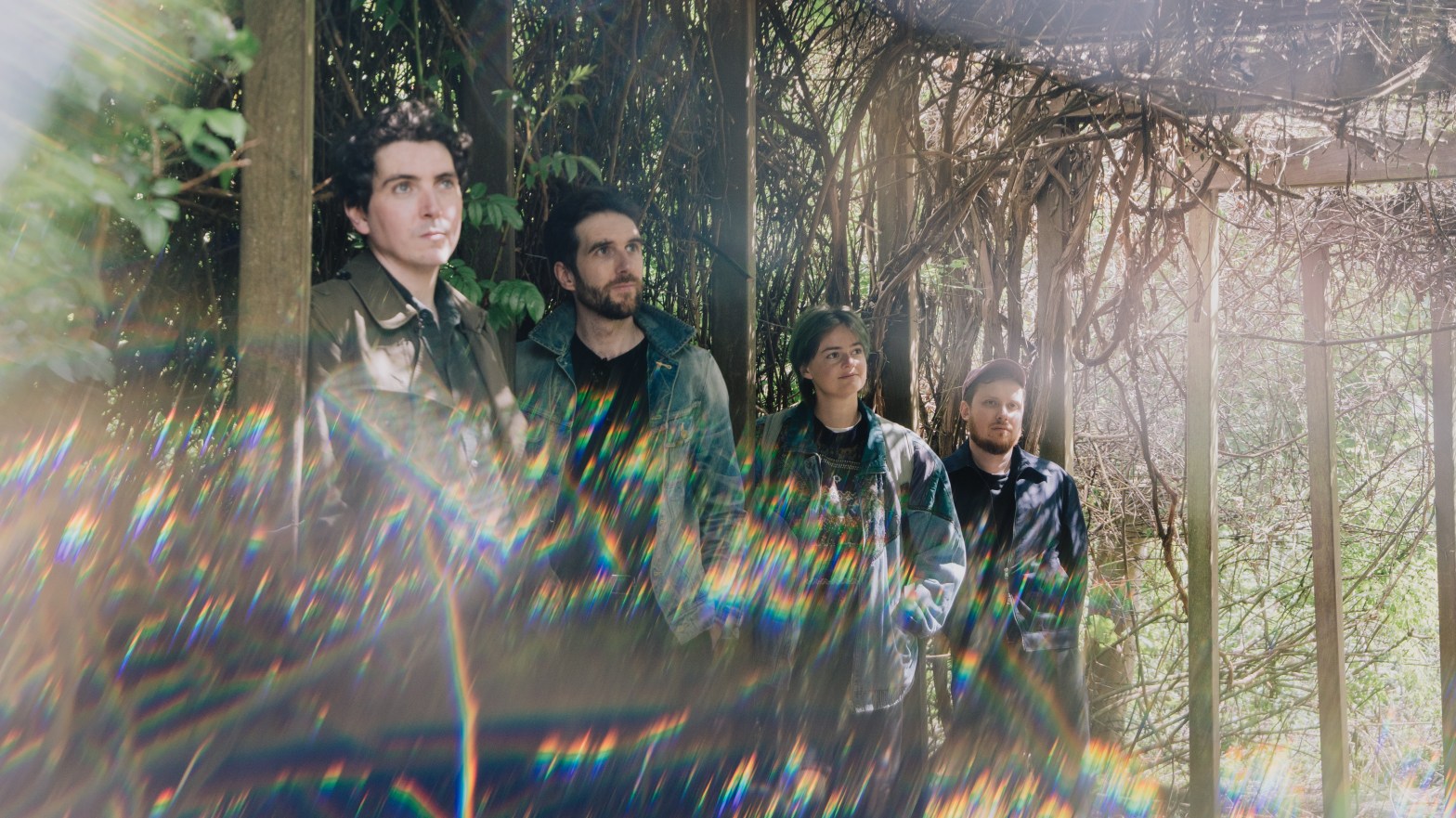
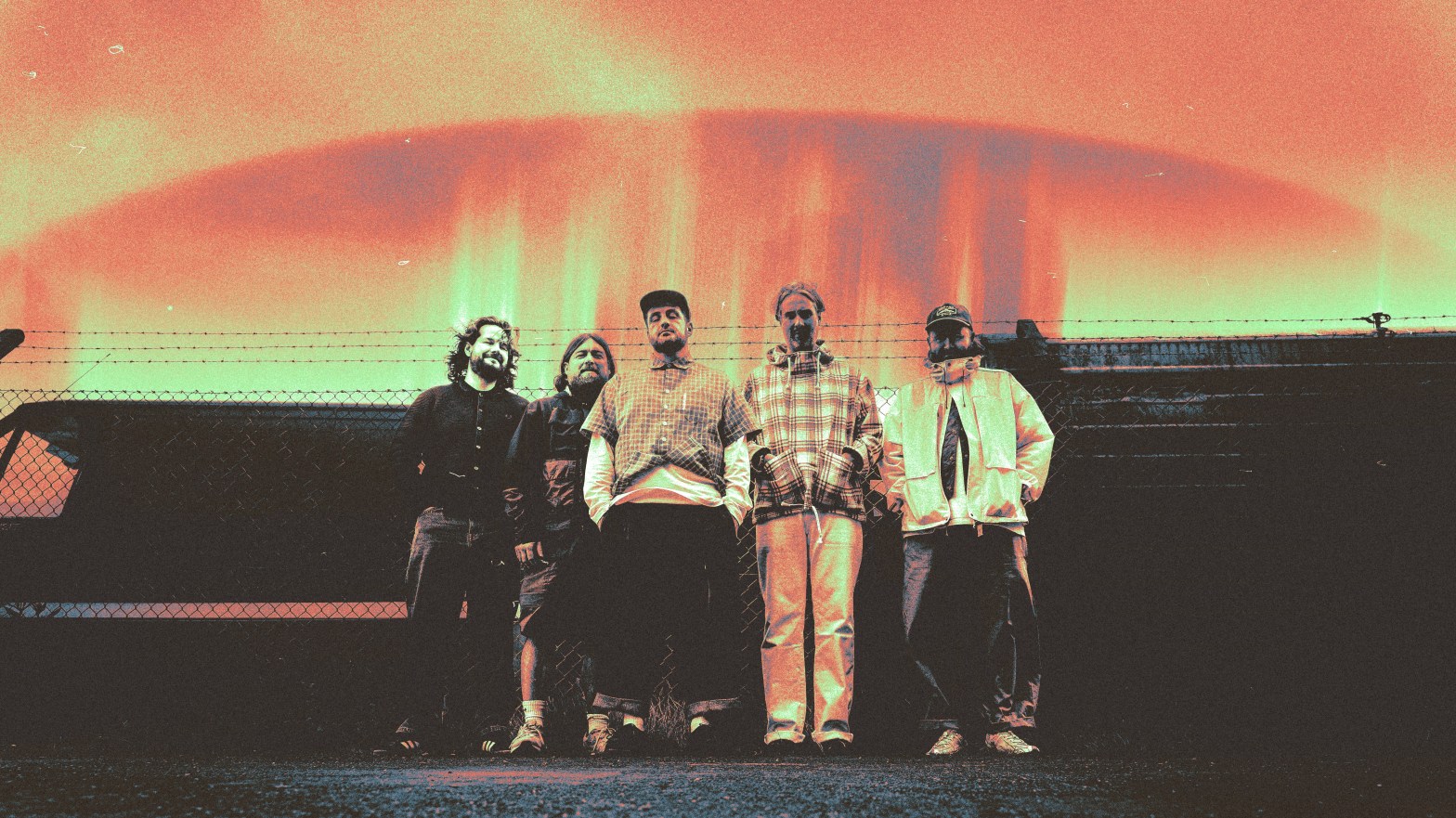
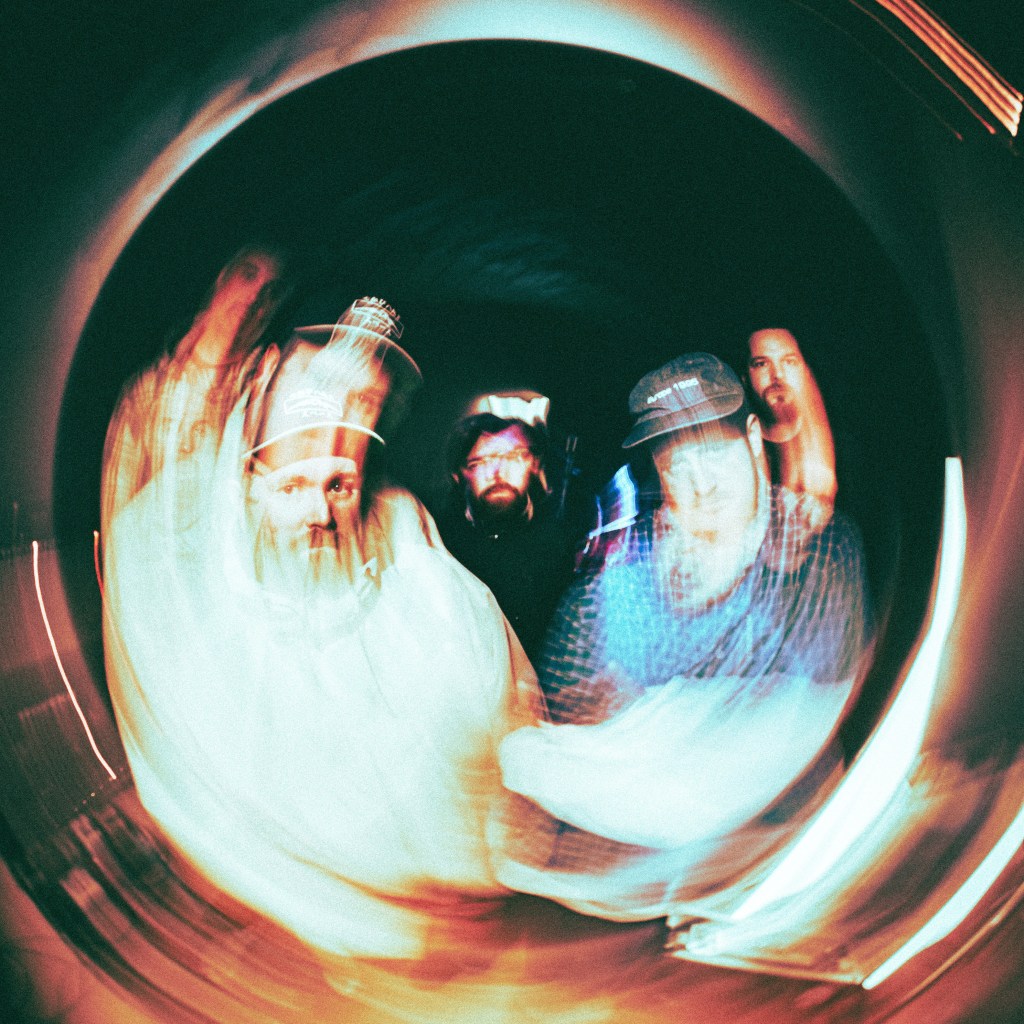
When Peplo released ‘For His Better Three Quarters’ earlier this summer, it gave us our first taste of their long-awaited debut album, We’re Not Getting Out of Here. That song carried glossy guitars, melodic warmth and the personality that first drew me towards the Glasgow quartet when I saw them supporting at the 13th Note. Second single ‘Stay’ finds them working on a grander scale. Peplo call it their take on a power ballad, and they commit to that idea with every piano note, guitar chord and towering vocal.
Peplo are Mark Hinds on drums, Daniel Young on bass, Cit Lennox on vocals and Iain O’Donnell on guitar. Lennox and O’Donnell form the songwriting partnership at the centre of the group and the four of them have spent several years working on We’re Not Getting Out of Here, recording at Chem19 Studios and preparing the album through their own resources. You can hear that time being put to good use across these first two singles. Each song presents its own musical character, with ‘Stay’ revealing a much heavier side of the band.
A muted piano begins the track with Lennox’s voice placed close to your ear. The vocal treatment gives those opening lines a private, enclosed quality. There is a real vulnerability in the delivery. When the guitars arrive, they tear through the restraint of the introduction. O’Donnell uses a rougher tone than we heard on ‘For His Better Three Quarters’, giving the track a force that suits its emotional escalation. The piano remains an important presence, providing a thread back to the intimacy of the opening. That move from a small beginning into a broad wall of guitar gives Peplo their power ballad moment, complete with enough grit to stop the song becoming overly polished.
Lennox anchors the whole performance. As the filtering around the opening vocal recedes, their voice rises into a fierce pop punk register. Their Scots accent gives the words identity and immediacy, while the higher notes carry the fear that sits behind the narrator’s request. You hear someone trying to sound certain as their emotions begin to overtake them. The vocal grows alongside the instruments, reaching for reassurance with increasing urgency. Hinds and Young bring a new level of force to the rhythm section. The changes in timing keep the song restless, shifting the ground beneath the vocal whenever it begins to find comfort. Peplo allow the instrumental passages plenty of room, using each change to increase the tension before Lennox returns to the centre.
The distance between these first two singles makes We’re Not Getting Out of Here increasingly difficult to predict. ‘For His Better Three Quarters’ offered bright melody and dreamy guitar tones. ‘Stay’ places piano, heavier rhythms and a huge vocal performance at the front. What kind of album will contain both sides of Peplo? That question has made me even more curious about the record they have spent so long preparing.
‘Stay’ gives Peplo room to sound bigger, heavier and more emotionally uneasy. It takes the familiar language of the power ballad and fills it with insecurity, blurred intentions and the fear of abandonment. Lennox delivers one of their strongest vocal performances so far, while O’Donnell, Young and Hinds surround it with an arrangement that keeps changing size and intensity. The debut album now feels full of possibilities, and after hearing this, I am more than happy to stay with Peplo until it arrives.
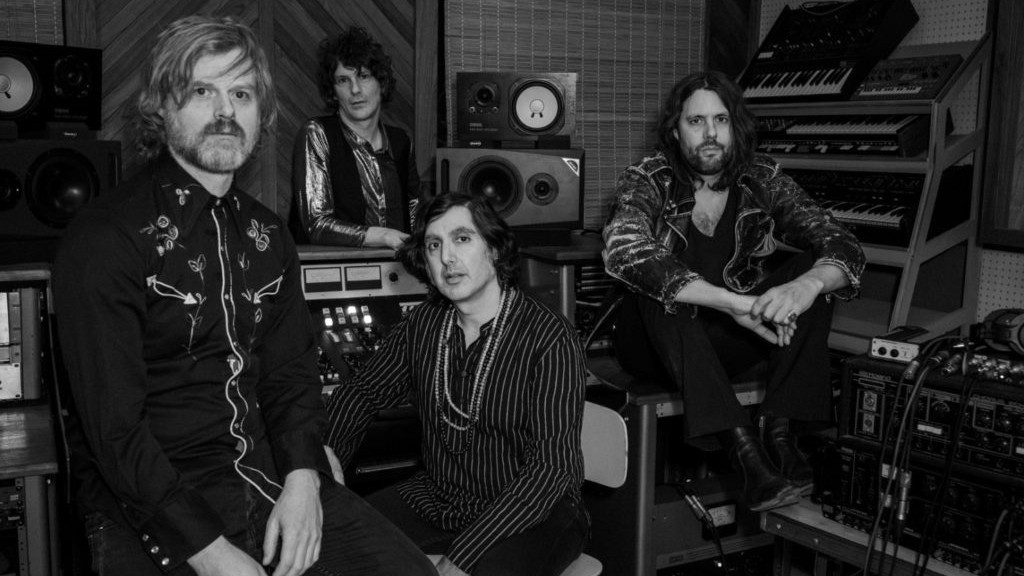
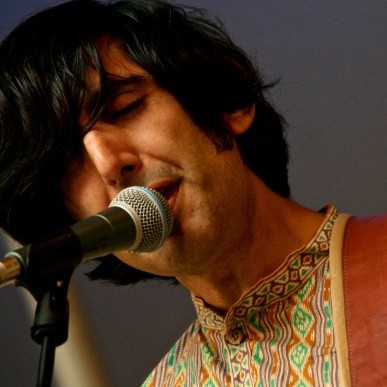
Elephant Stone have spent twenty years finding fresh routes between Indian classical music, psychedelic pop and guitar music with a heavier pulse. The Montreal group began in 2006 as Rishi Dhir searched for a new sense of purpose following his years with The Datsons, later known as The High Dials. Each Elephant Stone release since has carried a certain willingness forward and along the way, Dhir has performed with Beck and The Brian Jonestown Massacre, joined the psych group MIEN and gradually assumed responsibility for production, engineering and mixing at Now he’s back with his tenth full length release ASHA and it finds Dhir working alongside drummer Miles Dupire Gagnon, guitarists Robbie MacArthur and Jason Kent, with Kent also contributing keyboards and backing vocals. Dhir handles bass, dilruba, guitar, keyboards, percussion, sitar, tabla and vocals, while Amy Millan of Stars and Broken Social Scene joins the band on the closing song. Two decades into their life, Elephant Stone sound ready to address grief, political fear and the search for sanctuary with striking directness.
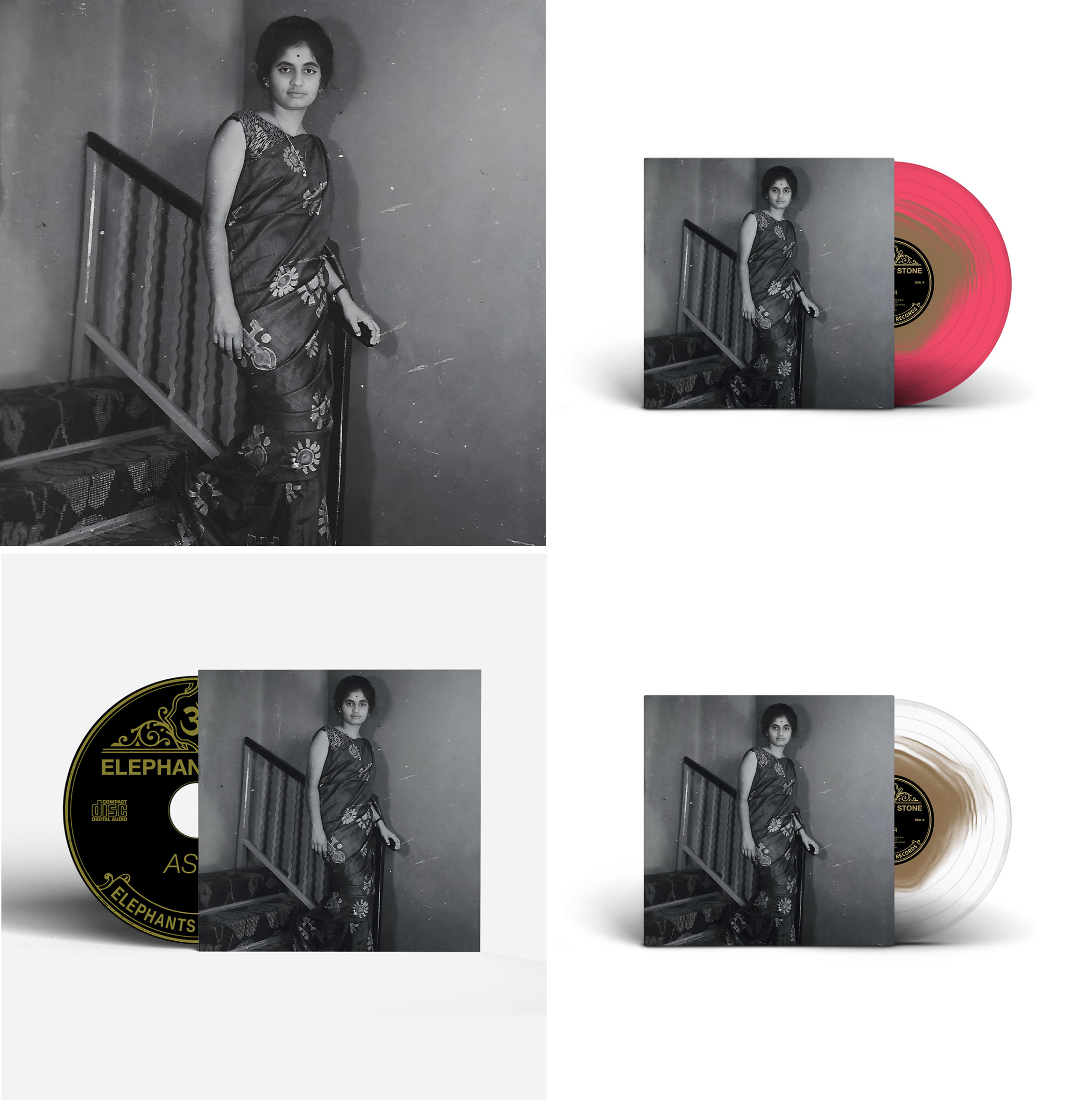
The record takes its name from Dhir’s mother, who died during its writing and recording. Asha also means hope in Sanskrit, giving that title a deeply personal dual meaning. Sorrow sits at the centre of these songs, joined by anger at a society repeating some of history’s ugliest behaviour. Dhir explains the limits and intentions of his writing with characteristic honesty.
“I only write about what I know and think I understand, as long as there’s Rishi, there’s going to be Elephant Stone.”
Can’t wait to drop the needle on this one and dive in.
‘Here Comes The Rising Sun’ begins with a softly pulsing bassline and a steady drum pattern that has an earthy, communal feel. Dhir allows the rhythm section to establish the mood before electronic details begin appearing around it. These little flickers give the arrangement a sense of morning gradually coming into focus. The lyrics speak openly about grief and pain, yet the music keeps looking towards the day ahead. The rising sun becomes a daily reminder that time continues and another chance has arrived. The closing section expands into a psychedelic wig out, with the earlier calm giving way to a rush of sound. That ending feels like the sun has reached full strength and burned through the remaining cloud. It is a lovely opening statement, gentle in its first steps and full of life by the time it reaches the other side.
Fuzzy proto punk guitars introduce ‘Everything Evil’, the lead single and burst of frustration. Dhir’s soft vocal delivery provides a clever foil for the guitars, which race forward with very little interest in stopping for breath. Man, this fair licks along. The rhythm keeps pressing ahead as one accusation follows another, giving the song the feel of a list that has grown too long to ignore. Dhir turns his attention towards ruling figures who sell freedom while keeping control firmly in their own hands. Every line strikes quickly, with the short running time making each one feel more urgent. That gentle voice makes the anger even more effective. Dhir sounds weary with the repetition of it all, as though he has watched the same performance from those in charge too many times.
The second single, ‘Fascists Killed Yer Rock ‘N’ Roll’, immediately reduces the pace. That sequencing works beautifully after the breathless attack of ‘Everything Evil’. Sitar textures return to the foreground and the rhythm settles into a heavier step. The guitar begins with a direct rhythmic purpose before sending eerie cries through the darker corners of the arrangement. Dhir writes about the methods fascism uses to gain power. Fear becomes currency, outsiders become targets and hardship becomes an opportunity for people with ambitions of control. Dhir explains his thinking with real clarity:
“You’d have to be living under a rock to ignore what’s happening. I don’t claim to have the answers; this song is about giving the threat a name. It’s a reminder that we’ve seen this script before… and we’ve overcome it before.”
The bridge addresses those figures directly, reminding them that their game is already known and their song has already been heard. Rock and roll becomes a symbol of expression, community and refusal. The band respond to political darkness by making enough noise to disturb it.
My album highlight arrives with ‘I Got A Pill’. A pulsing groove takes over and gives the record one of its most immediately physical moments. Your foot starts tapping almost at once. There is something wonderfully cheeky about Elephant Stone wrapping a song about control inside music this funky. The bass moves with a relaxed confidence; the drums keep the groove locked and small tabla and sitar details add identity. The lyric adopts the language of someone offering an easy solution. Take the pill, feel better and leave your thoughts behind. Comfort becomes a means of obedience, and personal responsibility becomes another part of the sales pitch. Its lighter vocal touches make the underlying idea more unsettling. Repeated syllables and friendly assurances give the song the air of an advert designed to make submission sound appealing. You can hear how manipulation works through simple phrases, easy answers and a rhythm people can follow without pausing to think. This sinister little dance is one of Elephant Stone’s finest grooves.
‘Broken Arrow’ brings us straight back to the classic Elephant Stone sound. A killer melody sits at the heart of the track, carrying a direct lyric about identity and the desire to become a fuller version of yourself. Dhir imagines himself as an arrow that has lost its direction. Shoegaze toned guitars run underneath the melody, filling the background with a soft haze. Elephant Stone have always had a fine instinct for melody, and ‘Broken Arrow’ provides another example of how naturally Dhir can place an introspective thought inside a song you remember after one play. Loss can disturb your sense of self as much as your relationship with the person who has gone. ‘Broken Arrow’ considers the moment when old certainties disappear and a new direction has yet to reveal itself. Its melody provides the reassurance that the lyrics are still seeking.
Piano takes the lead on ‘A Beautiful Fate’, easing the album into a dreamlike ballad. Guitar and synthesiser details appear around it, adding little points of light without disturbing the stillness. The arrangement has the appearance of stars reflected across calm water, every note bright against the darkness surrounding it. It is one of the record’s prettiest pieces, and that beauty gives the lyric’s emotional chill even greater depth. The words feel like thoughts appearing after a period of shock, when you begin looking backwards and reassessing the life you have lived. There is loneliness in those admissions, joined by a growing sense of gratitude. Fate contains pain, and the narrator still finds reason to call it beautiful. That response feels central to ASHA. Dhir allows grief to exist within the same song as thankfulness. The piano holds those feelings together, playing with a delicate clarity as the surrounding instruments provide atmosphere and gentle accents.
A gloriously squelchy bassline gives ‘Parallel And Contrary Motion’ its spine. It bounces beneath the song with real warmth, keeping the music buoyant as Dhir writes directly about the death of his mother. Synth lines add an almost Baroque European character, curling around the rhythm with an ornate grace. I love the way the arrangement once again couches sorrow through such an upbeat musical setting. The title describes two lives moving together and apart at the same time. Those memories remain vivid, even as the passing seasons make her physical absence impossible to escape. Dreams allow her to return, though she appears differently each time. The bright melody feels connected to the happiness she gave him. Dhir honours that relationship by placing its joy alongside his grief. The bass keeps moving, the synthesiser lines retain their elegance and the song refuses to reduce a whole life to its ending.
‘Sleepwalking In Prague’ enters Dhir’s dream world as the record begins its final descent. The song moves in waltz time, giving his walk through the city a circular motion. Each turn seems to bring him back towards the same streets, the same clock and the same crowd. He tries to speak, yet his words sound unfamiliar. The city is alive around him but his body appears detached from it. Prague may hold memories of someone he has lost, and the lyric allow you to imagine what those streets mean to him. The astronomical clock becomes a meeting point between time, death and dream. The guitars deserve a big shout out here. Their clear, singing tone brings George Harrison to mind, with each phrase carrying melodic purpose. They sound sublime against the waltz rhythm and give the song a tender glow. That familiar warmth fits the dream setting beautifully. Dhir may be lost within Prague, yet the guitars seem to recognise the route.
‘Spirit, Take Me Away’ offers a final goodbye. Dhir accepts that the person he loved has gone and understands that the world will continue around him. His own spirit remains unsettled, searching for somewhere to belong after that loss. Dreamy guitar surrounds the vocal and lets the emotional weight settle gently. The playing has a soft, spacious quality that suits the subject, giving Dhir room to express love, absence and exhaustion. Amy Millan brings light into the song with her gorgeous voice. I am a huge Stars fan, so you can take my enthusiasm with the appropriate degree of cheerful bias. Her presence feels exactly right. Dhir and Millan sound connected by the emotion of the song, and her vocal gives the final goodbye an added tenderness. It feels like another person has entered the room and sat beside him for the last few minutes.
After a short silence, an old recording of Dhir’s son Krish appears. Three years old at the time, he repeats his invented phrase “macca chacha singsing” while his father encourages him to say it again. It is a small family moment preserved by chance, full of play and affection. Following an album concerned with death, political fear and the pain of absence, a child’s voice reminds us that life continues through the memories we keep and the love still around us.
ASHA feels like an important Elephant Stone album. Twenty years into the band’s life, Dhir has made a record that speaks directly about his mother while also looking outwards at the forces making the wider world feel darker. The music retains everything I love about this band. Sitar and tabla sit naturally beside fuzzy guitars, electronic details, piano, thick basslines and melodies that lodge themselves in your memory. Each arrangement serves the emotional idea at its centre. The album begins beneath a rising sun and ends with a spirit searching for its place. Between those points, Dhir finds anger, uncertainty, gratitude, memory and even a seriously funky song about systems of control. Hope survives throughout because it has been tested by experience. Asha gave Dhir her love and her name. With ASHA, he has given both a lasting home.
So, have I been looking forward to hearing Selkie’s debut EP? Absolutely. I feel as though she has been slowly revealing inWaves to us one beautiful song at a time. ‘Hours’ was first, and I remember being fascinated by the restless beats moving beneath a voice that seemed to exist in several places at once. ‘Heartspeak’ followed with a softer, more intimate side to her music, then ‘Gold’ arrived carrying that wonderful promise that “we begin again.” Each single gave us another piece of the story and left plenty tucked away for the EP itself.
Then came the chance to see Selkie perform at The Old Hairdressers in Glasgow alongside Marina Yozora. That was a spellbinding night, and hearing these songs live was exhilarating. Selkie gave every loop, breath and vocal layer the space it needed. It was fascinating watching her take a room full of people and having them transfixed on every note. By the end of her set, I was even more curious about where these songs would lead when heard together.
So yes, I have been looking forward to this one. inWaves is Selkie’s debut EP, though it arrives after a long gestation period. These six songs have travelled through Glasgow, Berlin and Japan, growing around public pianos, bedroom studios, a portable recording setup and live performances where unfinished ideas were allowed to keep changing. They remained with Selkie through poor health, uncertain periods and several changes of home. You can hear all of that history in the finished record, especially in the care she gives her most important instrument, her voice.
“The EP is about trying to stay open inside uncertainty, noticing beauty while you’re still in it, and allowing things to arrive, disappear and come back without forcing them into shape. Some of these songs disappeared for months or years before I understood what they were, and many only found their form through being performed live.”
Let’s hit play and see what appears.
The EP opens with ‘Dream Wheels’. A recording of waves lapping against the shore places you beside the water as glimmering electronics slowly gather around it. Her voice takes its time arriving, and when it does, there are no words to guide your thoughts. I love that choice. You are free to follow the sound of each note, hear one vocal loop call towards another and notice how the human voice gradually becomes part of the environment. Each loop seems to suggest the next movement, and every new layer appears as a response to what came before. It feels like awareness returning a little at a time. Like waking up. As an opening, ‘Dream Wheels’ asks very little of you beyond settling in, taking a breath and allowing Selkie’s world to come into focus.
‘Swimming’ carries us away from the shore and into the first full song. Selkie’s voice moves closer, eerily doubled at times with a baritone version, while retaining the textural quality established in ‘Dream Wheels’. The arrangement leaves generous spaces between its electronic details, and that room makes you conscious of every breath. Swimming depends upon breath, rhythm and trust in your body, all ideas that sit at the centre of Selkie’s return to music. Her delivery feels measured and close, with each phrase placed carefully inside the arrangement. This is where the EP title starts making emotional sense. Progress arrives in repeated movements, with every return carrying you off somewhere new. ‘Swimming’ feels calm on the surface, and the strength beneath it comes from hearing Selkie trust the next breath enough to take it.
I have lived with ‘Hours’ for a while now, and hearing it within the EP has made me appreciate it all over again. The song began in 2019 as Selkie considered the hope and ache of maintaining a relationship across continents. Its meaning grew as distance became part of daily life for people everywhere, giving those original feelings a much wider reach. The music holds several impressions of time at once. Frantic beats suggest the clock racing ahead, then a steadier pulse returns to keep everything connected. Selkie layers her vocals across that rhythmic activity, and you begin to feel as though Glasgow, Berlin and Japan are all present in the same moment. There is plenty happening in the production, with small electronic details flashing around the vocal, yet every sound earns its place. Coming after ‘Swimming’, it also continues the EP’s reliance on rhythm as a way of moving through uncertainty. You keep breathing, you keep reaching out and you keep finding the other person whenever you can.
Then we arrive at ‘Gold’, the song that first made the full emotional intention of inWaves clear to me. Inspired by kintsugi, the Japanese practice of repairing broken objects with precious metal, it carries the idea that every visible mark can become part of what comes next. Fine electric guitar lines move through the arrangement as flickering electronics appear around Selkie’s lead vocal. The whole thing has a fragile beauty, then the layered voices arrive and give the refrain a wonderful sense of shared strength. “We begin again” already felt special when I reviewed the single. Here, after songs about returning to language, trusting the body and keeping love alive across distance, it lands with even more feeling. ‘Gold’ sits at the centre of the EP as its clearest statement of renewal, and those three words stay with you long after the final harmony fades.
‘Heartspeak’ takes that renewed openness and turns it towards another person. Bell toned synthesisers surround Selkie’s close vocal, with reverb and altered voices making certain phrases feel like thoughts passing between two people before either has found the language to explain them. The song carries memories of swimming at night among bioluminescent plankton, and you can hear something of those brief flashes in the arrangement. Individual sounds glow, disappear and return elsewhere, giving the music a gentle sense of wonder. Selkie sings with such tenderness here. It also feels like a lovely companion to ‘Hours’. One song considers the effort required to maintain closeness across distance, and the other explores the instinctive understanding that makes the effort worthwhile. I loved ‘Heartspeak’ as a single. Hearing it here makes it feel even closer.
After all that patience, memory and careful rebuilding, ‘Lick the Sun’ closes the EP with a wee spark in its step. Selkie wrote the song while emerging from a long Scottish winter, and you can hear the energy beginning to return. Treated guitar, beats and spectral vocal layers give the track a physical presence that suits its appetite for movement. The rhythm encourages your body to respond, the guitar brings warmth into the arrangement and Selkie’s voice reaches further outward with every new layer. The title makes me grin. It brings sunlight close enough to taste and turns the simple act of noticing the world into a celebration. Selkie described the song as carrying “a little fire growing in your belly,” and that fire spreads through the closing minutes. Curiosity returns. Desire returns. The urge to move, feel and take part in life returns. The voice that first appeared without words beside the water in ‘Dream Wheels’ now sounds ready to greet whatever waits beyond the final note. That gives inWaves a beautiful emotional arc, beginning with someone carefully finding her way back to herself and ending with her face turned towards the light.
What stays with me after inWaves is the trust Selkie places in gradual change. These songs took years to reach their final forms, and you can hear that history in every pause, repeated phrase and returning sound. Her voice, guitar, electronics and environmental recordings share the space with an intimacy that rewards close attention. Having followed three of these tracks as singles and then seen Selkie perform, I thought I had a fair idea of what her debut might hold. Hearing all six together reveals how closely they have always been speaking to one another. Fragility gives way to trust; distance encourages new forms of connection and the first quiet signs of recovery grow into a renewed appetite for life. Selkie has allowed this music to arrive in its own time, and inWaves carries you forward with every return.
inWaves is released independently on 28 August 2026. You can check it out over on the Selkie Bandcamp page.
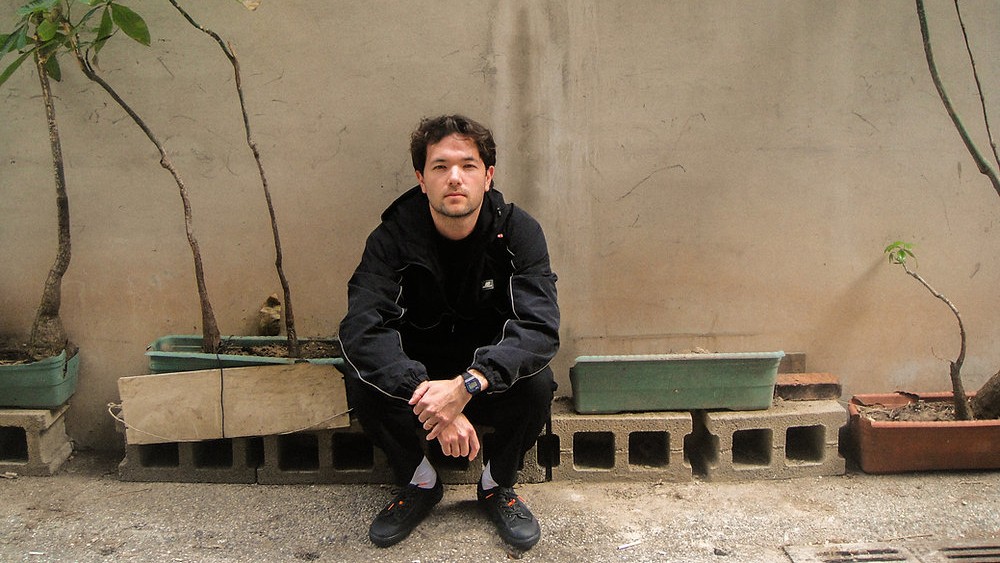
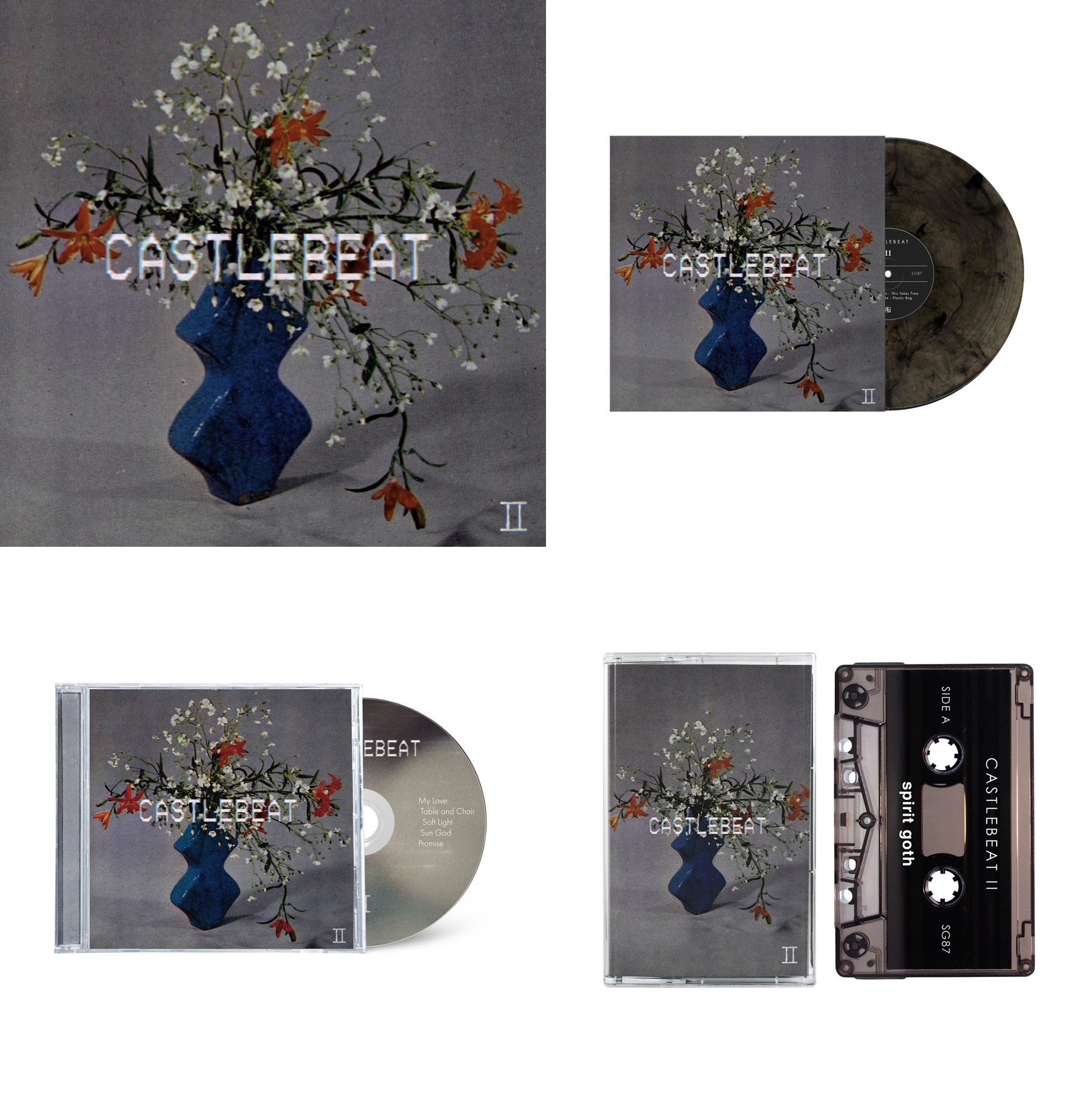
Ten years is a long time in the world of music. So can someone explain to me why it feels like only yesterday I was dropping the needle of Castlebeat’s self-titled debut album for the first time. I have been really looking forward to hearing Josh Hwang revisit the spirit of Castlebeat’s 2016 debut because he has always had a particular way of making amazing jangling bedroom pop. He led the way with his melancholy vocals and bright melodic hooks and gave it an identity of its own.
He’s spent a decade releasing records and running Spirit Goth Records with his wife Sonia which has only strengthened Hwang’s ear for tone and melody. CASTLEBEAT II finds him returning to unfinished ideas and self-imposed limitations from those early days, carrying all the experience gained since into the room with him.
Hwang wrote, recorded and produced the album himself, maintaining the personal approach at the heart of Castlebeat. This time, Brian Fisher took responsibility for mixing and mastering, requiring Hwang to release some of the control he has traditionally held over every stage of his music. You can hear the benefits throughout the record. The intimate character of Castlebeat remains intact, while the bass, drums, guitars and synths have greater definition. Hwang has described the album as “a 10-year anniversary ode to my 2016 debut,” with some songs originating in ideas left unfinished during that period. Others were written more recently using the sounds and choices he would have reached for back then. That distinction becomes less important once you hear how naturally these different points in his life sit beside one another.
Let’s drop the needle and dive in.
‘Awake’ provides an immediate reminder of why Castlebeat’s guitar tone has stayed so recognisable. Its clear, ringing notes carry the melodic language Hwang established on his debut, while the production reveals how much has changed during the intervening decade. The bass has a rich presence and every drum strike arrives with purpose, giving the track a firm rhythmic frame. Hwang’s voice remains the point of familiarity, soft around the edges and emotionally contained, with that slightly distant delivery he understood from the beginning. When he sings, “I’m moving slow / Faster you know / And I’m on my way home,” you get it immediately. He is heading back towards an earlier version of Castlebeat while bringing ten years of life with him.
A single guitar line leads ‘Garden’, repeating with enough melodic character to function as the chorus. Hwang lets that shiny motif do much of the talking, building the rest of the arrangement around its simple appeal. The bass and drums keep the song moving while his vocal sits comfortably inside the rhythm. The central guitar phrase returns often enough to become fixed in your head, yet each appearance gains something. Castlebeat has always understood how a modest idea can carry a whole song when its tone feels right. The final solo extends that thought with a glossier finish, adding a brief flash of colour before the track slips away.
Then ‘This Takes Time’ turns the nostalgia dial all the way up. This is my album highlight, a hyperballad filled with glowing synth tones, warm guitar and the emotional pull of an old photograph whose details remain clear. The music carries a distinctly 2016 atmosphere, recalling an era when dream pop and bedroom recorded indie shared a fascination with chorus-soaked guitars and washed-out vocals. Hwang understands those sounds from the inside because he helped define them. The arrangement gradually fills the space around his voice, letting the rhythm and melody settle into a slow emotional current. There is a sweetness here that avoids becoming overly sentimental.
‘Stay With Me’ brings the heart straight to the surface. Hwang describes it as being about “wanting someone to stick around when you can feel things starting to slip,” and that fear gives the upbeat arrangement a real foil. The bassline carries a clear Peter Hook influence, picking out its own melody while the guitars ring around it. Synths widen the arrangement and the drums move at full speed, creating one of the album’s most detailed constructions. Hwang’s vocal stays wistful and controlled, which makes the plea within the song feel genuine. He sounds like someone trying to remain composed while sensing a relationship moving beyond his reach. The hook arrives quickly and stays with you, supported by jangling guitar lines that keep the music bright.
The scale grows again on ‘Plastic Bag’, where Castlebeat steps beyond the familiar dimensions of bedroom pop. The guitars rise above the rhythm section and give the track a cinematic sweep, while Hwang keeps enough detail in the mix to preserve its closeness. A minor chord change caught my ear immediately. It alters the emotional direction of the song in a matter of seconds, adding a shade of uncertainty to music that appears ready to leave the ground. Hwang has spent the first half of *CASTLEBEAT II* looking back through rooms, relationships and old ideas. Here, the walls seem to disappear. ‘Plastic Bag’ shows how far the Castlebeat sound can travel while remaining recognisable from its first guitar note.
There is an unashamed eighties character running through ‘My Love’. Its synth tones and electronic glow would have fitted neatly into Stranger Things, though my own mind went somewhere more specific. I could see a video arcade at night, rows of illuminated machines throwing coloured light across the floor while the song plays somewhere above them. Maybe it’s from the combination of Hwang’s hazy vocal and the artificial warmth of the keyboards. The rhythm gives the track a steady forward motion, while the guitar adds a human texture alongside the electronics. Hwang understands how memory often attaches itself to places, colours and small sensory details. ‘My Love’ works through that same process, suggesting a complete scene without describing every part of it. You bring your own memories into the spaces he leaves open.
Hwang strips the construction back for ‘Table and Chair’, taking two chords and turning them into a miniature opus. The simplicity allows you to concentrate on the rhythmic detail, and the drums become one of the track’s defining features. Their electronic character brought The Postal Service to mind, particularly in the way each programmed beat contributes to the melody as well as the pulse. ‘Table and Chair’ holds its form with confidence, proving that complexity can emerge from the way sounds relate to one another rather than from the number of ideas competing for space.
The pace falls for ‘Soft Light’, and the album enters its most tender stretch. Hwang returns to romance with a song that takes you back to the exciting uncertainty of those early dates. The slower tempo suits that recollection, giving his vocal more room and allowing the melody to gather around it. Guitars and synths appear with restraint, keeping the focus on the emotional storytelling of the song. Its gentler approach gives the album a needed pause before the final two songs widen the emotional frame once more.
‘Sun God’ removes the drums and places Hwang’s voice over a thumping grand piano with only minimal percussion for company. The reduced arrangement makes his vocal sound enormous. Each phrase rises into the open space, carrying a weight that a busier production might have softened. The piano supplies pure physical force, striking firm chords beneath a performance that feels close to devotional. He sounds assured here, trusting the melody and the tone of his delivery to hold the song together. ‘Sun God’ becomes one of the album’s boldest moments through the deliberate absence of its usual rhythmic machinery.
‘Promise’ closes the record by turning towards whatever Castlebeat becomes next. The synths have a different character from those heard across the previous nine songs, carrying a more futuristic tone that suggests the act of reflection has reached its natural end. Hwang’s echoed voice sits beside them as though the past and future have briefly occupied the same space. Make no mistake though, the song still belongs within the Castlebeat lexicon, while its details point beyond the anniversary idea that has guided the album. There is something satisfying about hearing Hwang finish a record concerned with memory by opening a new possibility. The closing moments feel deliberately unresolved, giving you the sense that this is a pause between chapters rather than a final statement. If the debut supplied the source material and CASTLEBEAT II provided the opportunity to reconsider it, ‘Promise’ sounds ready to step outside that conversation and begin another one.
Across these ten tracks, Josh Hwang revisits the instincts behind Castlebeat’s debut with affection, discipline and a decade of greater technical understanding. The familiar guitars and wistful vocals are still present, joined by stronger bass, carefully placed drums and synth arrangements that give each song its own setting. Nostalgia provides the record’s subject rather than its destination. Hwang looks closely at the music he made, the person he was and the audience who stayed curious during the years between these albums. You finish the record thinking about your own decade, the songs that followed you through it and the unfinished ideas you may still want to revisit. CASTLEBEAT II looks back with clear eyes, then leaves its final door open. The second chapter has arrived, and ‘Promise’ suggests the next one is already being written.
CASTLEBEAT II is out now via Spirit Goth Records. You can check it out over on the Spirit Goth Bandcamp page.
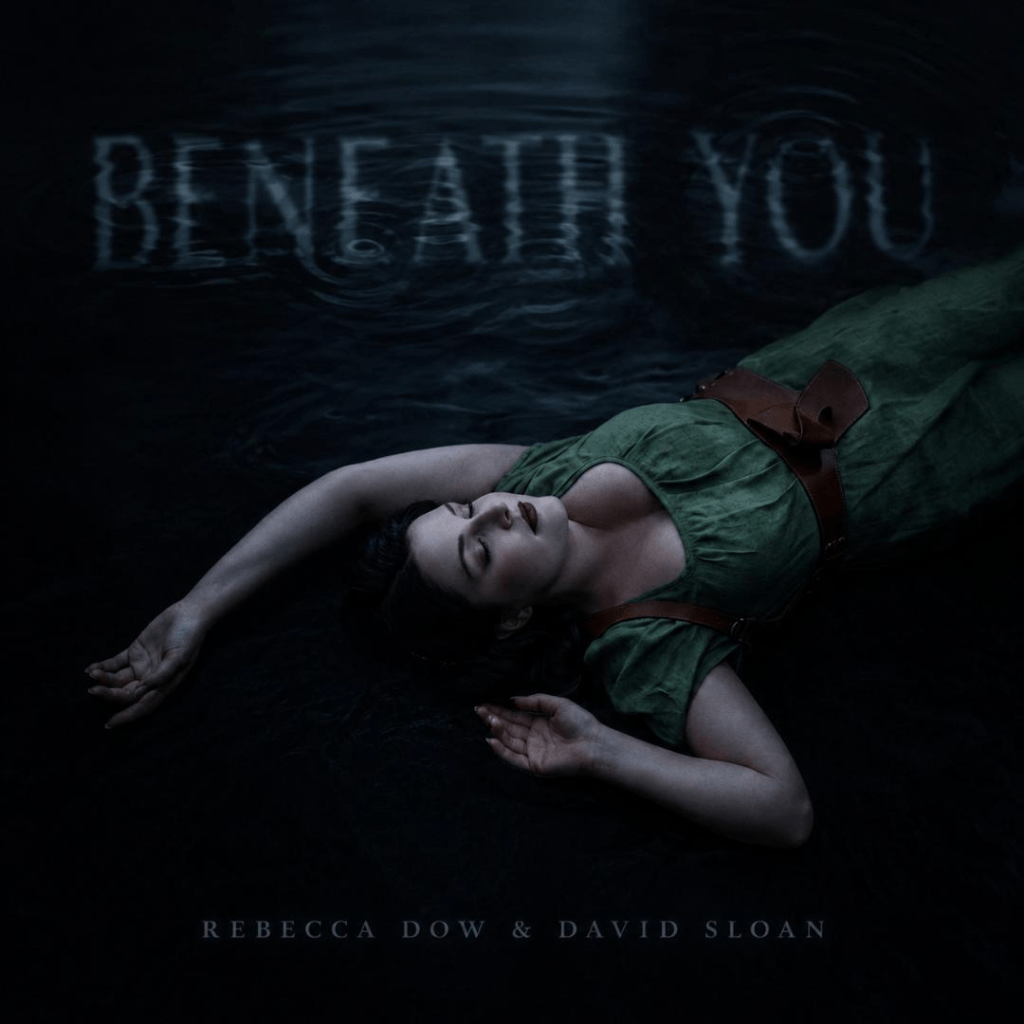
Rebecca Dow has spent much of 2026 moving at a remarkable speed. The conclusion of Virgins brought one chapter of her musical life to a close, while the months since have opened several fresh routes for her songwriting. Regular Static Sounds Club readers will already know how much I value her voice, both for its range and for the feeling she places inside every phrase. Her work with the alternative rock project Orchids extended that story, as did her recent collaborative project The Mountain which you can read about here.
On ‘Beneath You’, she joins forces with fellow Belfast multi-instrumentalist and former Virgins guitarist David Sloan. Their shared history gives the single an immediate sense of trust, while its darker tone suggests that both musicians are ready to carry their partnership somewhere new. Rebecca explains that this period of activity has arrived with a renewed appetite for working alongside other artists.
“Honestly, the creative floodgates have completely opened lately, the music is flowing way faster than I ever anticipated! I’m currently writing and recording across five different projects, and I can’t wait to roll a lot of it out over the coming months.”
“At its core, music isn’t a race or a competition, it’s about connecting and creating alongside incredible souls who are on their own paths. That collaborative energy is the absolute essence of life, and I’m so excited to share this early taste of what’s to come!”
Let’s hit play and see where we go.
‘Beneath You’ begins from a place of intimacy, with Rebecca’s vocal performance sitting close enough for every breath and change in tone to register. Her quieter delivery carries an exposed quality, as though the words are being considered at the same instant they are sung. Reverb surrounds her voice without blurring its emotional detail. That space gives the song a nocturnal character and leaves room for each phrase to linger before Sloan’s guitar begins to gather around it. Sloan brings a strong understanding of how Rebecca uses her voice. His guitar work provides light, shade and weight at carefully chosen points, allowing the arrangement to grow alongside the vocal rather than crowding it. Finer guitar textures gleam at the edges while heavier layers gradually deepen the song’s mood. Their years together in Virgins remain audible in the instinctive way these elements meet. As the song develops, Rebecca moves through the full range that made her previous work so memorable. The restrained passages carry vulnerability, while the larger vocal moments arrive with the force of feelings held back for too long. She brings emotional scale without losing control of the story.
‘Beneath You’ places Rebecca Dow and David Sloan at the beginning of a promising period beyond Virgins. Their musical connection remains clear, yet the single carries the freedom of two artists choosing how that connection develops from here. Rebecca sounds open, assured and ready to follow the ideas arriving across her many current projects. Sloan provides a setting that respects her softer delivery while giving her louder moments room to expand. Whatever comes next, ‘Beneath You’ suggests plenty is already moving beneath the surface.
My first proper encounter with Sunstinger came through ‘Bonnies Kaleidoscope’ in the summer of 2021. Its mix of atmosphere, weight and melody gave me every reason to champion this Scottish five piece on my DKFM show. I finally put that relationship into words recently when ‘Spare Me the Rapture’ arrived as the first single from their eponymous third EP. That song introduced a faster and heavier version of Sunstinger, although hearing it within the full six track sequence reveals how much further the band have travelled. Following Beyond the Frame and Worthless,Spare Me the Rapture feels like the next act in a continuing story. Taylor Wright, David McCulloch, Scott Gourlay and Bill Anderson are joined by drummer Colm Boyle, who entered the band at the beginning of 2026. His arrival has given Sunstinger a fresh rhythmic force, while the writing now carries a stronger sense of purpose across the entire record.
The band’s surroundings remain central to their music. Sunstinger come from areas of Scotland marked by industrial decline, where empty sites sit alongside the natural growth gradually taking their place. Those locations feed into an EP concerned with endurance, memory and the strange comfort people can find within unhappy circumstances. That idea guided Wright’s writing over an extended period.
“I find that I’m able to explore things much deeper lyrically when I have a concept that expands over a few months. It gives me the chance to really dig out my soul.”
You can hear the benefit of that approach in the way these six songs connect. The EP has been conceived as a complete piece, with its own beginning, middle and end. Each track occupies a different point within that emotional movement, while recurring guitar treatments, vocal details and rhythmic decisions hold everything together.
‘Zerosum’ begins in a gathering mass of noise. Chiming guitar chords soon emerge and offer a brief sense of openness before the full band closes in. The arrangement works through sharp changes in pressure, with the early clarity giving way to quicker guitar strikes and a huge covering of fuzz. Sunstinger’s three guitarists create density while preserving movement inside the mix. Individual lines appear behind the main chords, then recede before you can fully locate them. Wright sings from within, giving voice to the numb repetition of days that appear to lead nowhere.‘Zerosum’ begins the EP with the feeling of being trapped inside a cycle whose total always returns to the same figure.
Having already written about ‘Spare Me the Rapture’ as a single, I wondered whether its impact would change once placed inside the record. Its position immediately after ‘Zerosum’ makes its directness even more effective. Guitar phrases answer each other through the opening section while Bill Anderson’s bass gives the three guitar parts a firm centre. Boyle’s rapid snare announces the chorus and Wright’s “But I don’t care, so take me there” becomes the EP’s largest vocal hook. The guitars carry fuzz, reverse reverb and modulated tones, yet the melody remains easy to follow. Glasgow’s industrial character informs the lyrics, viewed through the eyes of someone trying to understand where they belong.
‘Deathdrive’ keeps the momentum moving through drums that carry a strong punk energy. Boyle drives the introduction forward before the verse changes the atmosphere completely. The guitars become hazier and more fluid around Wright’s vocal, while the rhythm continues underneath with an uneasy persistence. Later, the tempo begins to slow and the guitar parts lose their clean outlines, breaking into strange fragments that suggest perception starting to fail. Sunstinger use the arrangement to place you inside that state rather than describing it from a safe distance.
Droning loops open ‘I Half Remember’ and reset the pace. Acoustic guitar supplies the percussion, giving the song a more exposed foundation than anything preceding it. Electric guitar tones overlap beneath the vocal until their separate edges become difficult to identify. The softer arrangement gives Wright’s voice more room, while the surrounding effects keep the song suspended between recollection and invention. Certain images seem familiar, then their meaning changes as another line arrives beside them. Yes you can make parallels to My Bloody Valentine in the way the guitars blur pitch and texture, but Sunstinger use that technique very much in service of their own central idea.
‘Barely Here’ grew through the full band, beginning with Wright’s demo before each member added to it during rehearsals and recording. That shared development can be heard in the slow burn of its opening. Textural sounds enter first, followed by a solitary kick drum that quietly prepares you for the increase in weight. When the guitars arrive, they sound broad and physical, with enough space around them for Anderson’s coarse bass tone to register fully. His connection with Boyle’s kick gives the track its muscle. Around the midpoint, the band reduces the pressure and holds the song in check for a moment. The release comes through every instrument at once, followed by the chorus returning with a sense of release.
An eerie drum sound announces ‘Always Green’, with reversed treatments adding an unnatural edge to Boyle’s playing. The production suits lyrics rooted in Wright’s experiences of sleep paralysis, where awareness returns before the body follows. Sunstinger translate that state through sounds that appear recognisable while behaving in unfamiliar ways. Drums seem to move backwards into themselves and guitars occupy the uncertain space between waking thought and lingering dream. The track closes the EP by returning to the relationship between people and their environment, although the surroundings here feel internal.
Across these six songs, Sunstinger find new possibilities within the sound they have developed since Beyond the Frame. The EP examines the ways people make a home inside sadness, painting their walls and learning the contours of an environment they cannot easily leave. Spare Me the Rapture presents a band choosing to remain fully present in the difficult moment, and that choice gives this third chapter its lasting strength. Salvation can wait. Sunstinger have found their rapture.
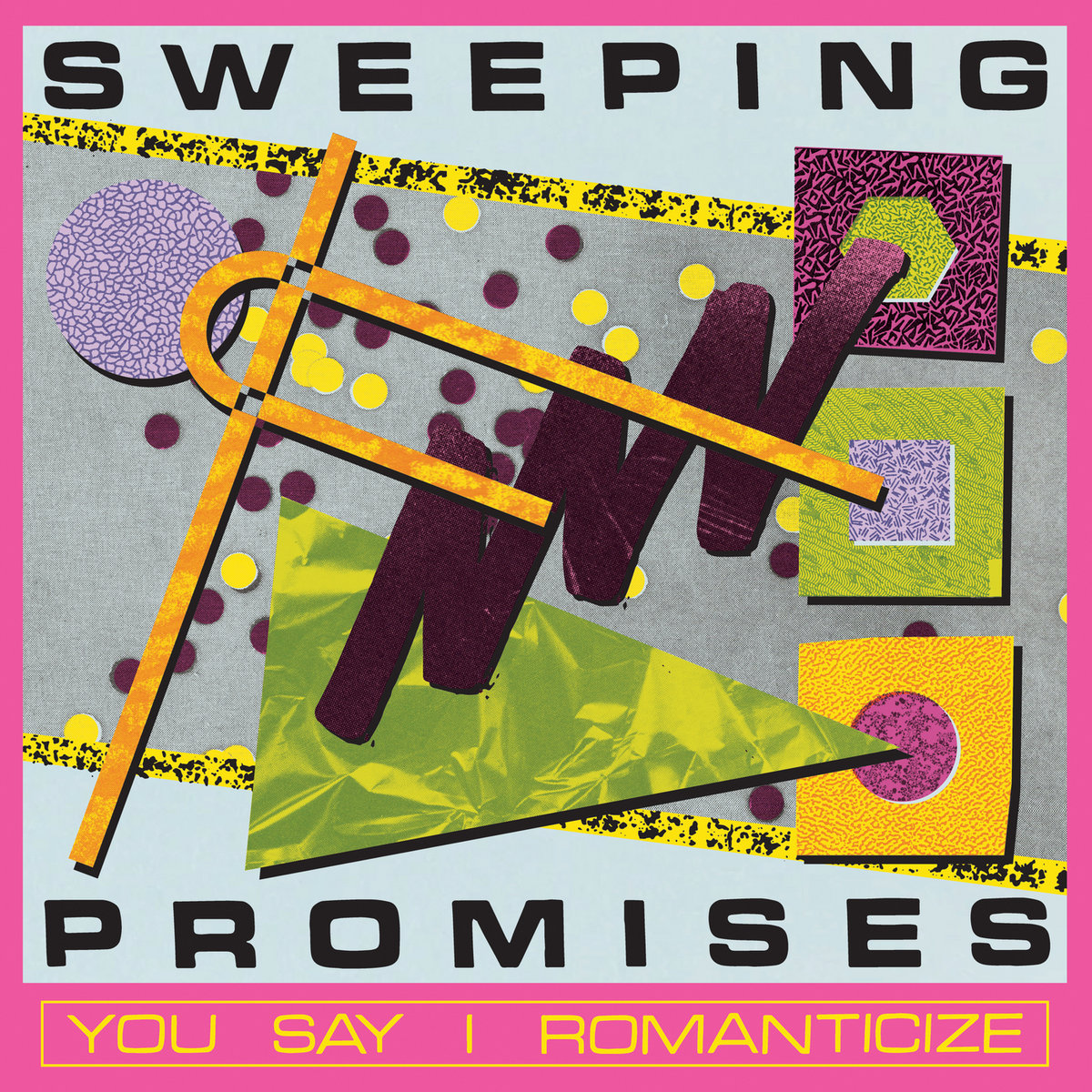
The last time Sweeping Promises appeared on these pages, I was writing about Good Living Is Coming for You and thinking back to the afternoon in 2020 when Hunger for a Way Out first appeared in my Bandcamp feed. That debut had the feel of a punk record assembled with whatever space and equipment Lira Mondal and Caufield Schnug could find, and its thin guitars, forceful bass and direct vocals stayed with me. Their second album expanded that vocabulary through synths, stranger arrangements and flashes of saxophone, while the pair kept every part lean and purposeful. Three years later, You Say I Romanticize finds them rooted in their Kansas home and studio, a place where they record other bands, host touring musicians and continue developing their own songs. The new album took form across eighteen months, with touring drummer Spenser Gralla joining Mondal and Schnug to play the material with the physical force of their live set.
That longer recording period has produced their most immediate album yet. The ten songs move through writers, loners and obsessive figures whose private fixations have placed them at an angle to the people around them. Mary Shelley’s dystopian novel The Last Man feeds into one song, while the life and visions of Julian of Norwich inform another. Those ideas could have resulted in a dense record. Not so here.
Sweeping Promises keep everything moving through blunt bass lines, clipped guitar figures and choruses that arrive before you have fully caught your breath. Mondal responds with the widest vocal performance of the band’s career, moving between murmured phrases, melodic calls, guttural cries and notes that seem to stretch beyond the limits of the room.
Let’s drop the needle and dive in.
Sweeping Promises have developed a habit of opening their albums with a certified banger, and ‘Shooting Shadows’ keeps that run intact. Schnug’s guitar cuts into the song in short, pointed bursts while the rhythm section drives forward with barely a pause. Mondal sounds fully committed from the first line. Her voice carries urgency and force, rising above.You can hear the wall of sound method they developed for the album, yet the individual parts remain easy to follow. The bass presses straight ahead, the drums keep the pressure high and the guitar strikes at the edges. It is a fierce opening that makes its intentions clear within seconds.
The title ‘My Friend’s An Entomologist’ brings a little humour after that opening assault. An entomologist studies insects, which saves you the same Google search I had to consider, though the music carries a darker mood than the title suggests. The tempo remains high while the song slowly extends its reach through winding guitar solos and a drum pattern that refuses to loosen its grip. Schnug’s playing feels restless here, curling around the central rhythm and adding small disturbances rather than settling into a repeated riff. Mondal keeps her vocal measured during the early passages, allowing the unease to build through repetition. The closing section changes the emotional temperature as harmony voices gather around her. Those voices add warmth without clearing away the tension that came before.
A low bass rumble announces ‘Last Man’ and immediately gives the track a heavier centre. Mondal lets her phrases lengthen across the sparse guitar, taking more time over each word while the band holds back around her. The choruses break that restraint with a sudden increase in volume, and the guitar turns from a few bare marks into a rough block of sound. Midway through, the song stops with startling precision. A simple bass figure then begins the final section, giving Mondal a foundation for a repeated vocal line that gradually becomes mantra like.
‘Rapture, Or…’ brings the band back to the stripped vocabulary that first made them so easy to recognise. Bass and drums provide the body of the song while Schnug uses a short guitar motif to cut through the spaces between Mondal’s lines. That figure has a biting tone and enough melody to stay in your head after one play. The verses lower the intensity and leave Mondal exposed, then the fuller sections arrive with the rhythm section pressing harder beneath her. Sweeping Promises understand how little material a song sometimes needs. The title leaves the thought hanging, and the arrangement behaves in much the same way, pausing on the edge of release before the whole band presses forward again.
Ghostly guitar notes answer the opening bass riff on ‘Abduction On Camera’, giving the song a strange gleam from its first few bars. Mondal adopts a half-spoken delivery in the verses, sounding as though she is reporting events while trying to make sense of them at the same time. The choruses allow her voice to rise into a broad melody, and that change gives the track one of the album’s strongest transitions. Schnug keeps the guitar slightly removed from the main pulse, letting it shimmer around the bass rather than doubling it. Then a compact keyboard phrase appears and briefly alters the colour of the whole song. It caught me completely unprepared on my first play. The moment is brief, catchy and placed with real care, another example of the duo knowing exactly when a new sound will have the greatest effect.
‘My Anchoress’ bounces through the speakers with a rhythm that immediately separates it from the songs around it. Bass and drums work together in a springy pattern, giving the track a playful movement even as its subject reaches back to Julian of Norwich and her accounts of religious visions. Mondal meets that rhythm with a vocal line that has the repetition and directness of a nursery rhyme. Her phrasing makes the song easy to follow, then an occasional raw cry breaks through and changes the mood for a second. Those eruptions suggest the intensity beneath the historical reference, where devotion, isolation and authorship become inseparable. Schnug gives the vocal plenty of room, adding small guitar marks around the beat rather than filling every space. The result is a song that carries serious ideas through one of the album’s most instantly enjoyable arrangements. What a choon!
The pace eases only a little for ‘Cocoon’, allowing the tension to gather in a different way. The guitar has the clipped, economical attack of early Pixies, with brief phrases that leave as much silence as sound. Each note carries weight because Schnug refuses to crowd the arrangement. Mondal’s bass keeps everything fixed in place, repeating with a calm authority while her voice explores a broader range above it. She moves from lower, controlled passages into harsher peaks, making the track feel as though it is tightening around her. The title suggests enclosure, and the music follows that idea through repetition and restricted space. You begin to notice every small change, from a harder drum strike to the point where Mondal allows a note to fray at its edge. Her performance here contains anger, patience and exhaustion within the same few minutes.
A syncopated bass line gives ‘Accent’ its stride, with two guitar chords strummed across the top and very little else required. The song carries the wiry snap of early eighties new wave punk, and I kept hearing a trace of Blondie with Wilko Johnson drafted in on guitar. Mondal works inside the gaps, adjusting the stress and timing of her words so that the voice becomes another rhythmic instrument. The arrangement leaves nowhere for a weak idea to hide, and every part earns its place. A slight shift in the bass or a sharper vocal attack becomes a major event because the song has been reduced to its strongest components. Sweeping Promises have always understood this kind of economy, and ‘Accent’ turns it into pure pop pleasure.
The humour continues in ‘Does He Want To Be The Weatherman?’, a title that invites a story before the first note has arrived. The band answer with another lean, angular song where each instrument supplies exactly what the arrangement requires. The bass establishes the route; the drums keep the movement taut and the guitar adds clipped interruptions that stop the song becoming too comfortable. Mondal’s vocal gives the character at its centre a mixture of curiosity and exasperation.There is real discipline in the way Sweeping Promises refuse to decorate the track beyond its needs. Small changes in emphasis keep the repetition alive, while the brevity of each guitar phrase gives the rhythm extra room. It is economical writing with a sharp sense of personality, funny in its premise and exact in its execution.
By the time ‘Write Lightly’ arrives, the album has spent nine songs examining people who write, obsess, withdraw and seek meaning through their private fixations. The closing track turns that attention toward self-expression itself, considering how a writer’s voice can be rubbed away by professional expectations. Sweeping Promises set that idea against three chords and build upward from the simplest possible frame. Mondal saves one of her finest melodies for this final stretch. Her voice rises higher with each return, carrying anger and resolve in equal measure, while Schnug and Gralla increase the pressure beneath her. The arrangement never loses sight of its basic structure, which makes the scale of the ending even more impressive. Those final vocals tower over the band and leave a physical aftereffect once the instruments stop. The album closes with a voice refusing to reduce itself for anyone else.
You Say I Romanticize takes the qualities that first made Sweeping Promises special and places them inside fuller arrangements. The bass remains the anchor, Schnug’s guitar still speaks through short and pointed phrases, and Mondal continues to turn direct melodies into performances filled with character. The change comes through the strength of the ensemble playing, the wider range of her voice and the way each arrangement serves the people inside these songs. Their outcasts may live through isolation, obsession and misunderstanding, yet the music gives them presence and momentum. Across ten tracks, the band make intellectual references feel physical. The title accuses Sweeping Promises of romanticizing these figures, and the album answers by giving them the space to speak in their own difficult, unruly voices.
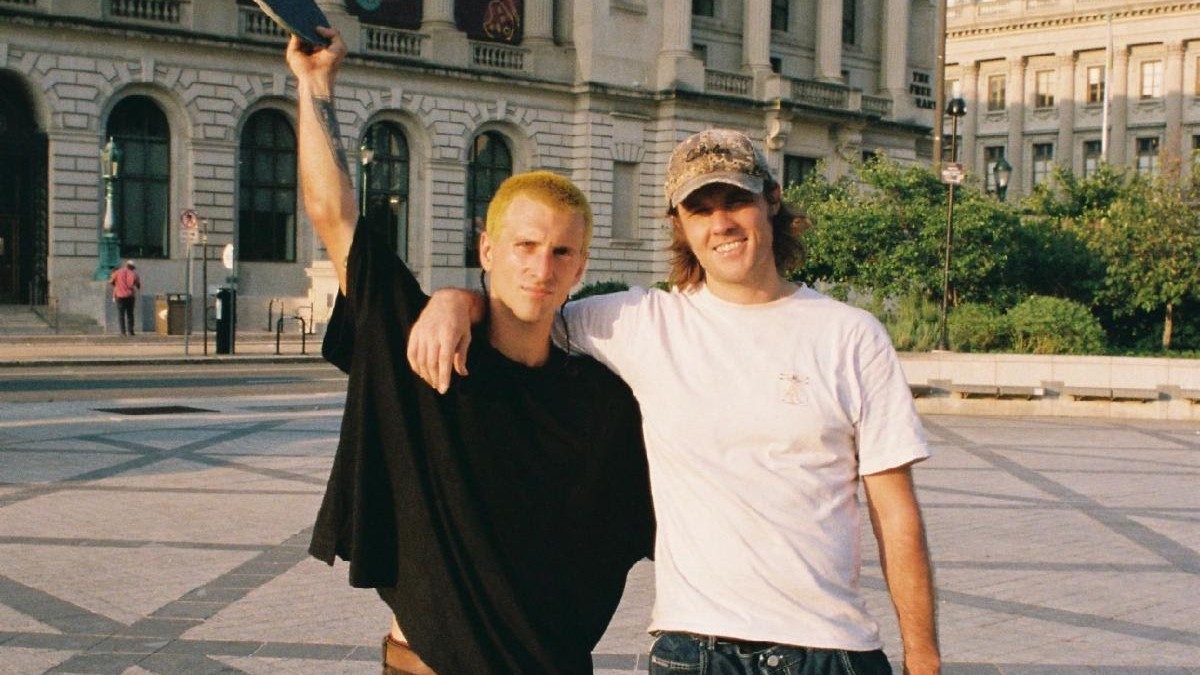
I knew God of War through the people involved before I had properly spent time with the project itself. Douglas Dulgarian’s work in They Are Gutting A Body of Water has made him one of the most recognisable figures in Philadelphia’s current guitar music community, while Scott Turner and Sam Silbert bring their own history through Hooky, with Silbert also playing in circle of fire. Put those three names together and you could reasonably expect a record full of warped guitars and strange production choices. God of War go much further.
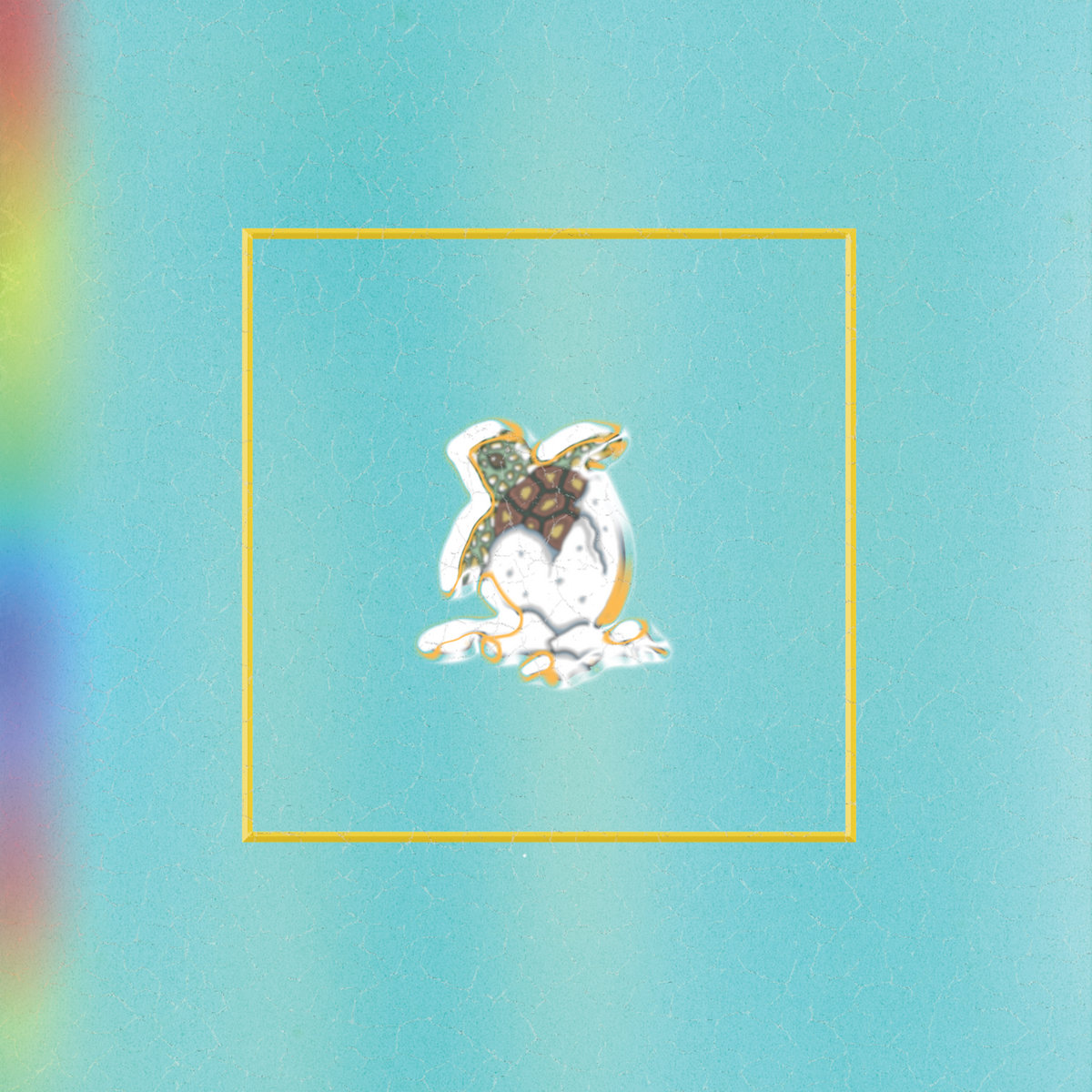
The trio first appeared in 2023 with serotonin, an album that introduced their fondness for metallic textures, twisted riffs, console sounds and melancholy pop writing. Molly Picture continues that approach while opening the music up to more colour and surprise. You can hear the album’s roots in half remembered video game soundtracks, skate videos and hours spent watching somebody else master a level you could barely survive. Those memories give the record its tactile electronic atmosphere. God of War use them to build songs that feel familiar for a few seconds before a synth bends out of proportion, a guitar erupts through the mix, or a vocal slips behind another electronic disguise.
Let’s drop the needle and see where the album takes us.
A few seconds into ‘some Prank’, an acoustic guitar sets the record in motion with an earnest strum. The simplicity of that opening gives the electric guitar plenty of room to make its presence felt through short, sharp stabs that jolt the flow. Then those synthesised pan pipe sounds appear. That choice is playful and feels completely at home here. They lend the track a bright, slightly artificial glow, as though a forgotten menu screen has started leaking into an indie rock recording. The vocal sits comfortably among these details, keeping the song grounded while the arrangement keeps flicking small ideas into your ear. As an opener, it introduces the album’s character in a direct way.
The mood drops lower on ‘defeater’, where a winding bassline gives the track its centre of gravity. It moves with a slow, serpentine quality, curling beneath the verses while the rest of the instrumentation leaves space around it. The vocals use a call and response pattern that gives the song the feeling of an internal conversation, with one voice offering a line and another returning from somewhere deeper in the mix. When the chorus arrives, language gives way to mysterious ‘oohs’ and ‘aahs’. That move makes the song feel uncertain and emotionally exposed. The melody remains clear as the meaning becomes harder to pin down. I like how they allow the bass to guide the track, leaving the guitars and synths room to breathe. It creates a heavy, downcast atmosphere which makes the chorus feel wider when those voices finally spread out.
I had already spent time with ‘mickey don’t pose’ before hearing the album, having played it on my DKFM show as one of those songs that catches my ear. Within Molly Picture, it feels even sharper. Glitchy details constantly peck at the melody while a vocoder vocal floats above several synth lines moving in different directions. Some carry their own tune, while others seem built from vocal samples cut into new forms. A strong pop melody keeps the song playful and easy to follow amid everything happening around it. It keeps moving as though another prize is always waiting just beyond the next screen.
‘Lindas’ turns the volume up and lets the record bare its teeth. Fuzzed guitars collide with distorted synths until the mix starts to feel physically crowded, every frequency pressing against the next. The first heavy passage has a blunt force that immediately changes the album’s temperature. They then reduce everything to vocals and synth, creating a quieter section that feels strangely exposed after the impact that came before it. That return to space lasts just long enough to reset your ears before the track begins thickening again. Toward the end, the guitars become harsher and the rhythm grows more punishing, edging close to death metal while retaining the electronic language established earlier. It’s a bold piece of sequencing too, arriving straight after one of the album’s most melodic moments and tearing a hole through the middle of the record.
The title ‘raphael Bad as shit’ gives you a fair warning that God of War are operating according to their own private rules. A melodic synth riff leads the way, carrying a clean line that gradually morphs. As the track develops, that same melodic idea begins to resemble a floating glide guitar part, with the boundary between electronic tone and processed string becoming difficult to locate. God of War keep adding layers. A new texture slips behind the melody, another tone expands the upper frequencies, and the whole piece grows until you are staring at a wall of noise built from beautiful individual parts. The pleasure comes from hearing that wall being assembled in front of you. Each new layer alters the weight or colour of what came before, allowing the track to grow naturally from a simple synth phrase into one of the album’s fullest moments.
‘Gorgeouses apartment’ walks into the room with its hips already moving. The introduction has a proper dancefloor feel, with the rhythm carrying a loose boogie that gives the album another sudden change of posture. The guitar becomes the main source of mischief during the breaks. It coils across the beat with loose movement and precise timing, bending through the stereo field and warping the space around it. That guitar part gets me every time. It seems to move independently of the track before meeting the beat at exactly the right point. The electronic elements keep the groove firm underneath, allowing the guitar to behave as strangely as it likes.
A wobbling mass of sound introduces ‘new deal’, rising and receding in repeated pulses that make the track feel as though it is arriving in waves. The synth tones bend as they pass, creating a queasy movement that gives the music a physical presence. Above them, the vocal repeats with a mantra-like quality. I keep trying to work out what is being said, and each listen seems to offer a different answer. That uncertainty becomes part of the song’s charm. Your ear starts treating the voice as another instrument, following its rhythm and form as the words merge with the surrounding electronics. The arrangement remains spacious enough for each swell to register, and the repetition gradually changes your sense of time. By the midpoint, the track feels suspended inside its own loop. Small shifts in tone and volume keep it moving while the central phrase continues to circle.
‘No Junior’s’ builds itself around a circular guitar figure that seems content to repeat while the rest of the track assembles piece by piece. The short running time gives every entrance extra weight. Booming drums arrive and widen the room, followed by jangling guitar, sampled synth voices and a deep vocal that sits low in the mix. God of War introduce each element slowly enough for you to hear how it changes the pattern already in place. The circular guitar remains the anchor as its meaning shifts with every new arrival. What began as a simple repeated phrase starts to sound tense once the drums hit, then stranger again when the sampled voices appear. Everything gathers towards a sudden crescendo.
‘mischief night’ begins by encouraging the idea that God of War might give you a mellow synth piece. The opening settles into a softer electronic atmosphere and leaves plenty of air around the central tones. Then the distorted guitars arrive with a huge thump, changing the scale of the track in an instant. God of War respond by finding another unexpected sound to place inside the frame. Steel drums enter and add a bright, percussive tone against the heavier guitars, a combination that feels bizarre until you hear how naturally the parts speak to each other. The steel drums cut through the distortion with clean, rounded notes, while the guitar supplies the rough edge around them. Every new sound alters the track’s mood, and the band trust these unusual elements to establish their own connection.
The final track begins with the acoustic guitars of ‘Recital’ sounding close, rough and almost unfinished, as though somebody has pressed record during a first run through. That apparent simplicity gives the closer a personal quality after the layered electronics and distortion that dominate so much of the album. The song gradually expands into a fully realised arrangement. Electric guitar enters with a cleaner tone, the bass moves smoothly underneath, and the vocal grows into a hook that immediately feels built for the closing credits. After an album full of abrupt turns, processed voices and overloaded textures, ‘Recital’ closes with direct songwriting at its centre. The production carries plenty of detail and the melody holds your attention all the way through. It is a stunning finish, and one that makes you want to return to the beginning to hear how far the record has travelled.
Molly Picture sounds like three musicians testing how much personality they can fit into ten songs while protecting the hooks that hold everything together. Beneath those details sits a melancholy that gives the production choices real emotional weight. Even at its funniest and most playful, a softer feeling remains close to the surface. That thread gives the noise and electronic colour something to gather around. God of War have made an album for repeated listens, the kind where a sampled voice or hidden guitar line suddenly becomes your favourite part several plays later. By the end, the pixels have settled and the Molly Picture has come fully into view.
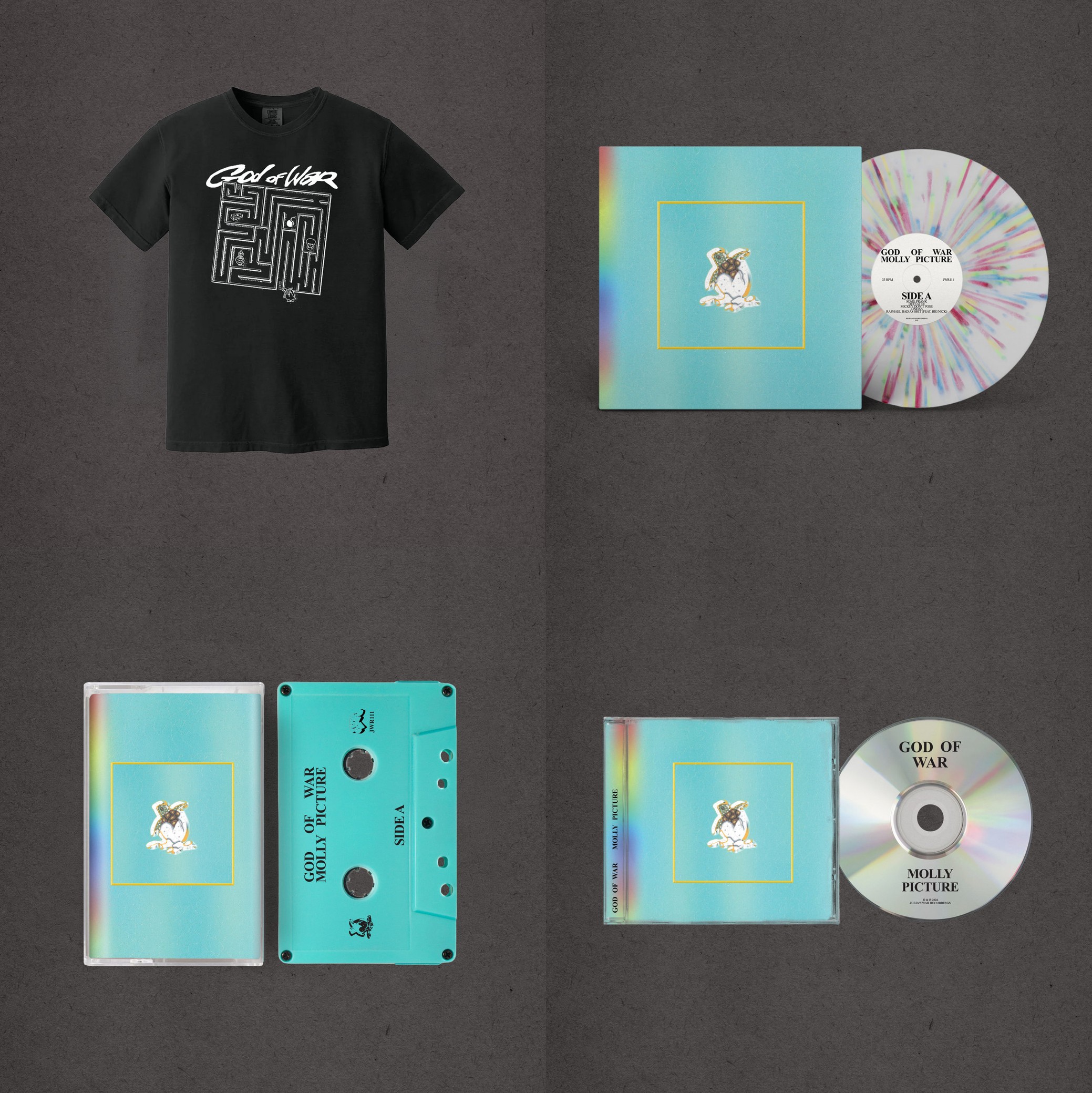
Molly Picture is released on 7 August 2026 via Julia’s War Recordings. You can check it out over on the God of War Bandcamp page.
I was buzzing when Rebecca Dow reached out to tell me about her new project. Static Sounds Club readers will know her through Virgins, a band I have written about with real affection over the years. The Mountain begins a new chapter for Dow, joining her with Northern Irish producer and musician Darren Speers. Dow has described her studio partnership with Speers as “pure spiritual synchronicity”, a phrase that provides a useful way into the track. ‘Objects’ sounds guided by shared instinct, with the performance and production moving together from the opening moments. Speers understands the value of Dow’s voice and places it firmly at the emotional centre. Every production choice seems designed to support the mood around her. The arrangement is stunning, letting each section settle before the next part appears creating the sense of two musicians listening closely to one another and allowing the song to find its own voice.
As ‘Objects’ develops, you can understand why its early radio plays inspired comparisons with the opening of a film. The song establishes its emotional temperature before revealing where it intends to go. Speers gives the production a wide sense of space, using piano and strings. The atmosphere feels almost visual, encouraging your mind to place scenes alongside the music. Dow’s vocal presence provides the point your attention keeps returning to. Listeners familiar with Virgins will recognise the emotional conviction in her performance, though The Mountain gives her voice a whole new spacious musical setting. Speers responds by keeping the surrounding arrangement focused on tone and movement. The music grows around the vocal rather than competing with it, and the closeness of Dow’s delivery remains intact even as the song suggests a much larger setting. That balance gives ‘Objects’ intimacy and scale at the same time.
For a debut, ‘Objects’ feels settled in its intentions. The song feels born from genuine connection rather than a partnership assembled for convenience. Speers provides a setting where Dow can explore another side of her voice, while her performance gives his production a human centre. The Mountain is the very definition of collaboration, with both members contributing to the identity taking form around them.
‘Objects’ gives The Mountain a thoughtful beginning and leaves you curious about the possibilities ahead. This debut feels like the opening scene of a much larger story, and I am keen to hear where the pair take it from here. That connection gives ‘Objects’ a weight of its own, and it already feels worth holding onto.
‘Objects’ is out now. You can check it out on Spotify and YouTube.
I‘ve just come back from having a very strong word with myself. After looking back through the Static Sounds Club archives, it turns out I’ve never written about Sunstinger before. Let’s rectify that immediately.
Sunstinger are a Scottish five piece who have already released two amazing EP’s in Beyond the Frame and Worthless, not to mention a steady run of singles. The band are Taylor Wright, David McCulloch, Scott Gourlay and Bill Anderson now with brand new drummer Colm Boyle who joined at the start of 2026. My introduction to the band was their atmospheric single ‘Bonnies Kaleidoscope’ from their Beyond The Frame EP back in the summer of 2021. It had that heavy sound I want from my gaze and this was a band from Scotland too so I had to champion them on my DKFM Radio show,
They return to us now with a new single ‘Spare Me the Rapture’ which introduces this version of Sunstinger with a faster pulse and, dare I say it, an even heavier sound. It also opens the door to their forthcoming six track EP of the same name, the third chapter in a body of work that keeps growing more potent and more assured.
Things are noticeably different from the off. Sunstinger have really turned up the fuzz on this one. The first hook comes from the guitars. Short phrases answer one another across the mix, creating an immediate sense of movement before the rhythm section tightens its grip. Sunstinger have three guitarists, and that could easily crowd a song, yet each part earns its space. One line supplies the melodic thread, another thickens the edges with fuzz, while a third folds backwards through sheer atmosphere. You can follow those separate paths with each listen, then hear them lock together when the arrangement begins to expand. Wright meets the rising volume with one of his most direct vocal performances. It climbs through the guitars rather than disappearing beneath them. It gives the chorus a human focus and turns the song’s scale into something personal. The production keeps revealing small details around that central hook. Through headphones, you can hear the care given to separation. Through speakers, the full band launches at you as one large body of sound. Both approaches work because the song has a clear melodic core beneath the effects.
As the first glimpse of the forthcoming EP, ‘Spare Me the Rapture’ suggests Sunstinger are entering a period where scale and songwriting can rise together. When salvation feels distant, they turn up the volume and make a home in the rapture they already have.
‘Spare Me the Rapture’ is released on July 23. You can check it out over on the Sunstinger Bandcamp page. You can pre order the EP now over on the Sunstinger Big Cartel Page. If you’re quick you might be able to grab an exclusive bundle.