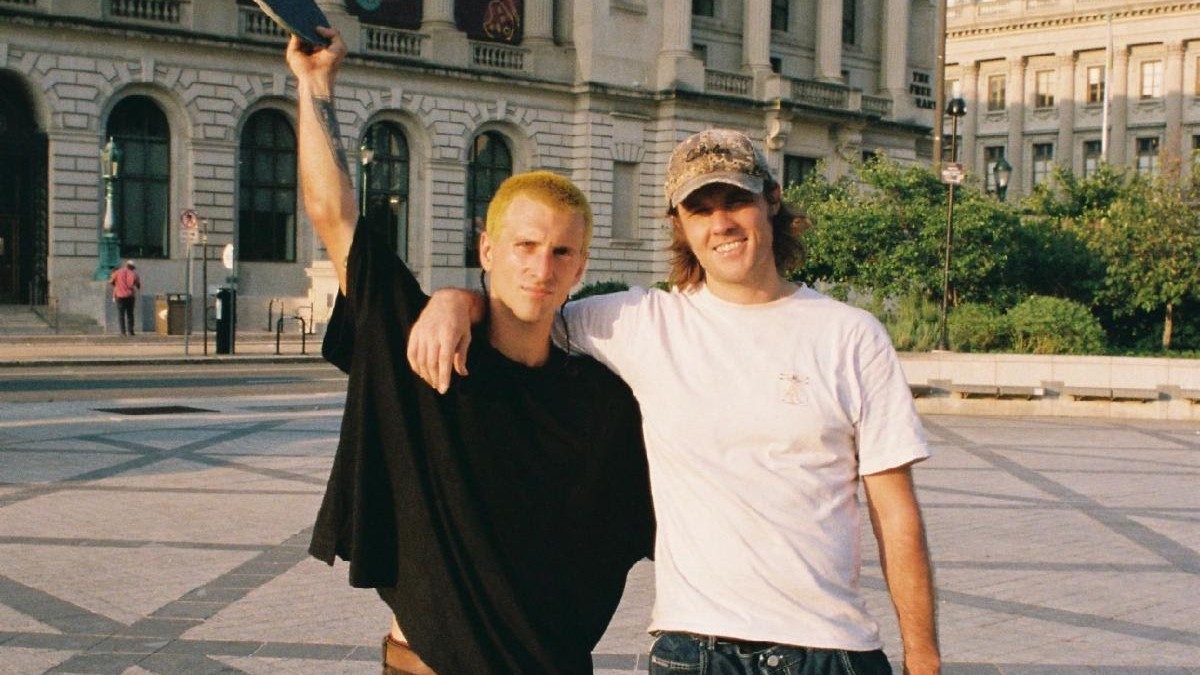
I knew God of War through the people involved before I had properly spent time with the project itself. Douglas Dulgarian’s work in They Are Gutting A Body of Water has made him one of the most recognisable figures in Philadelphia’s current guitar music community, while Scott Turner and Sam Silbert bring their own history through Hooky, with Silbert also playing in circle of fire. Put those three names together and you could reasonably expect a record full of warped guitars and strange production choices. God of War go much further.
The trio first appeared in 2023 with serotonin, an album that introduced their fondness for metallic textures, twisted riffs, console sounds and melancholy pop writing. Molly Picture continues that approach while opening the music up to more colour and surprise. You can hear the album’s roots in half remembered video game soundtracks, skate videos and hours spent watching somebody else master a level you could barely survive. Those memories give the record its tactile electronic atmosphere. God of War use them to build songs that feel familiar for a few seconds before a synth bends out of proportion, a guitar erupts through the mix, or a vocal slips behind another electronic disguise.
Let’s drop the needle and see where the album takes us.
A few seconds into ‘some Prank’, an acoustic guitar sets the record in motion with an earnest strum. The simplicity of that opening gives the electric guitar plenty of room to make its presence felt through short, sharp stabs that jolt the flow. Then those synthesised pan pipe sounds appear. That choice is playful and feels completely at home here. They lend the track a bright, slightly artificial glow, as though a forgotten menu screen has started leaking into an indie rock recording. The vocal sits comfortably among these details, keeping the song grounded while the arrangement keeps flicking small ideas into your ear. As an opener, it introduces the album’s character in a direct way.
The mood drops lower on ‘defeater’, where a winding bassline gives the track its centre of gravity. It moves with a slow, serpentine quality, curling beneath the verses while the rest of the instrumentation leaves space around it. The vocals use a call and response pattern that gives the song the feeling of an internal conversation, with one voice offering a line and another returning from somewhere deeper in the mix. When the chorus arrives, language gives way to mysterious ‘oohs’ and ‘aahs’. That move makes the song feel uncertain and emotionally exposed. The melody remains clear as the meaning becomes harder to pin down. I like how they allow the bass to guide the track, leaving the guitars and synths room to breathe. It creates a heavy, downcast atmosphere which makes the chorus feel wider when those voices finally spread out.
I had already spent time with ‘mickey don’t pose’ before hearing the album, having played it on my DKFM show as one of those songs that catches my ear. Within Molly Picture, it feels even sharper. Glitchy details constantly peck at the melody while a vocoder vocal floats above several synth lines moving in different directions. Some carry their own tune, while others seem built from vocal samples cut into new forms. A strong pop melody keeps the song playful and easy to follow amid everything happening around it. It keeps moving as though another prize is always waiting just beyond the next screen.
‘Lindas’ turns the volume up and lets the record bare its teeth. Fuzzed guitars collide with distorted synths until the mix starts to feel physically crowded, every frequency pressing against the next. The first heavy passage has a blunt force that immediately changes the album’s temperature. They then reduce everything to vocals and synth, creating a quieter section that feels strangely exposed after the impact that came before it. That return to space lasts just long enough to reset your ears before the track begins thickening again. Toward the end, the guitars become harsher and the rhythm grows more punishing, edging close to death metal while retaining the electronic language established earlier. It’s a bold piece of sequencing too, arriving straight after one of the album’s most melodic moments and tearing a hole through the middle of the record.
The title ‘raphael Bad as shit’ gives you a fair warning that God of War are operating according to their own private rules. A melodic synth riff leads the way, carrying a clean line that gradually morphs. As the track develops, that same melodic idea begins to resemble a floating glide guitar part, with the boundary between electronic tone and processed string becoming difficult to locate. God of War keep adding layers. A new texture slips behind the melody, another tone expands the upper frequencies, and the whole piece grows until you are staring at a wall of noise built from beautiful individual parts. The pleasure comes from hearing that wall being assembled in front of you. Each new layer alters the weight or colour of what came before, allowing the track to grow naturally from a simple synth phrase into one of the album’s fullest moments.
‘Gorgeouses apartment’ walks into the room with its hips already moving. The introduction has a proper dancefloor feel, with the rhythm carrying a loose boogie that gives the album another sudden change of posture. The guitar becomes the main source of mischief during the breaks. It coils across the beat with loose movement and precise timing, bending through the stereo field and warping the space around it. That guitar part gets me every time. It seems to move independently of the track before meeting the beat at exactly the right point. The electronic elements keep the groove firm underneath, allowing the guitar to behave as strangely as it likes.
A wobbling mass of sound introduces ‘new deal’, rising and receding in repeated pulses that make the track feel as though it is arriving in waves. The synth tones bend as they pass, creating a queasy movement that gives the music a physical presence. Above them, the vocal repeats with a mantra-like quality. I keep trying to work out what is being said, and each listen seems to offer a different answer. That uncertainty becomes part of the song’s charm. Your ear starts treating the voice as another instrument, following its rhythm and form as the words merge with the surrounding electronics. The arrangement remains spacious enough for each swell to register, and the repetition gradually changes your sense of time. By the midpoint, the track feels suspended inside its own loop. Small shifts in tone and volume keep it moving while the central phrase continues to circle.
‘No Junior’s’ builds itself around a circular guitar figure that seems content to repeat while the rest of the track assembles piece by piece. The short running time gives every entrance extra weight. Booming drums arrive and widen the room, followed by jangling guitar, sampled synth voices and a deep vocal that sits low in the mix. God of War introduce each element slowly enough for you to hear how it changes the pattern already in place. The circular guitar remains the anchor as its meaning shifts with every new arrival. What began as a simple repeated phrase starts to sound tense once the drums hit, then stranger again when the sampled voices appear. Everything gathers towards a sudden crescendo.
‘mischief night’ begins by encouraging the idea that God of War might give you a mellow synth piece. The opening settles into a softer electronic atmosphere and leaves plenty of air around the central tones. Then the distorted guitars arrive with a huge thump, changing the scale of the track in an instant. God of War respond by finding another unexpected sound to place inside the frame. Steel drums enter and add a bright, percussive tone against the heavier guitars, a combination that feels bizarre until you hear how naturally the parts speak to each other. The steel drums cut through the distortion with clean, rounded notes, while the guitar supplies the rough edge around them. Every new sound alters the track’s mood, and the band trust these unusual elements to establish their own connection.
The final track begins with the acoustic guitars of ‘Recital’ sounding close, rough and almost unfinished, as though somebody has pressed record during a first run through. That apparent simplicity gives the closer a personal quality after the layered electronics and distortion that dominate so much of the album. The song gradually expands into a fully realised arrangement. Electric guitar enters with a cleaner tone, the bass moves smoothly underneath, and the vocal grows into a hook that immediately feels built for the closing credits. After an album full of abrupt turns, processed voices and overloaded textures, ‘Recital’ closes with direct songwriting at its centre. The production carries plenty of detail and the melody holds your attention all the way through. It is a stunning finish, and one that makes you want to return to the beginning to hear how far the record has travelled.
Molly Picture sounds like three musicians testing how much personality they can fit into ten songs while protecting the hooks that hold everything together. Beneath those details sits a melancholy that gives the production choices real emotional weight. Even at its funniest and most playful, a softer feeling remains close to the surface. That thread gives the noise and electronic colour something to gather around. God of War have made an album for repeated listens, the kind where a sampled voice or hidden guitar line suddenly becomes your favourite part several plays later. By the end, the pixels have settled and the Molly Picture has come fully into view.
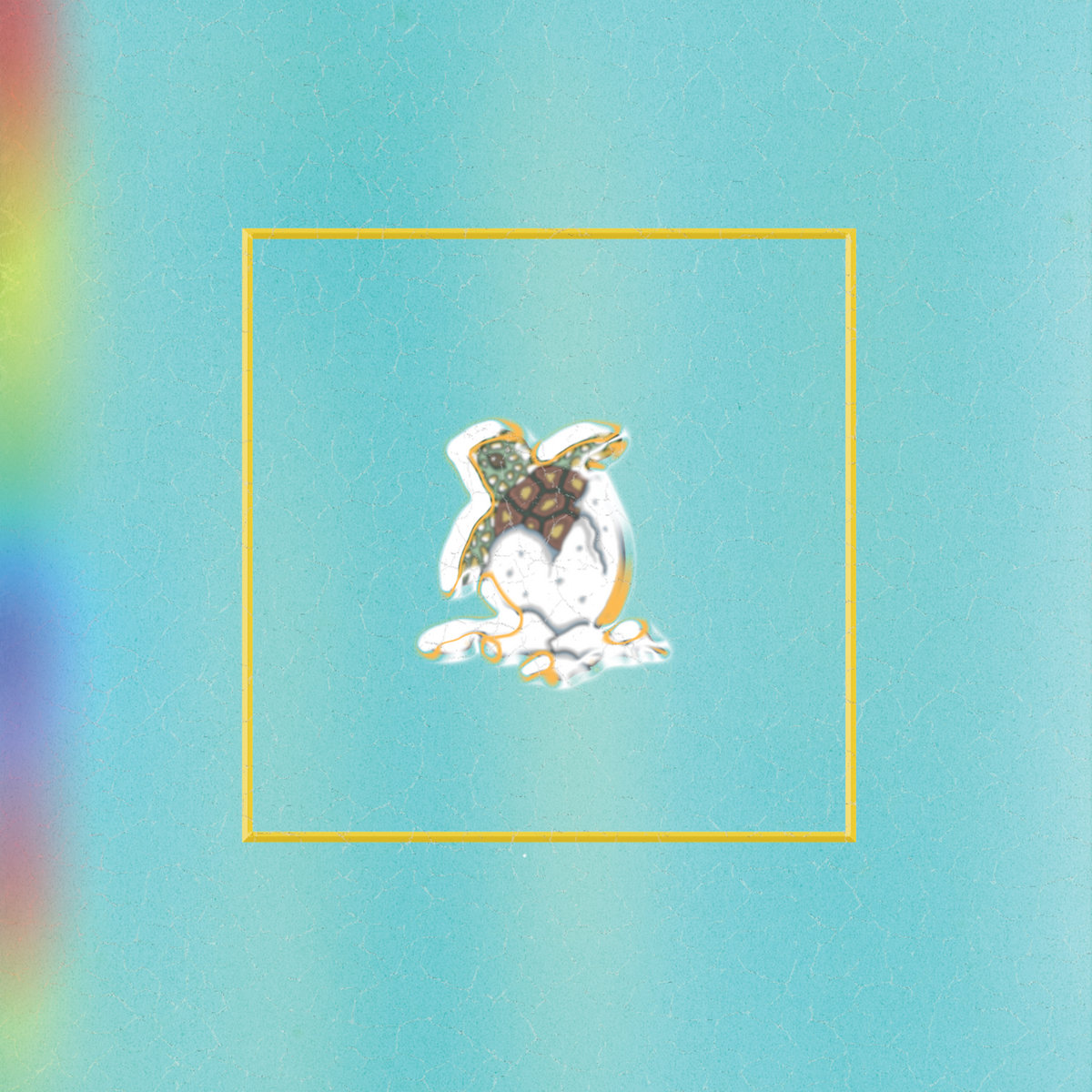
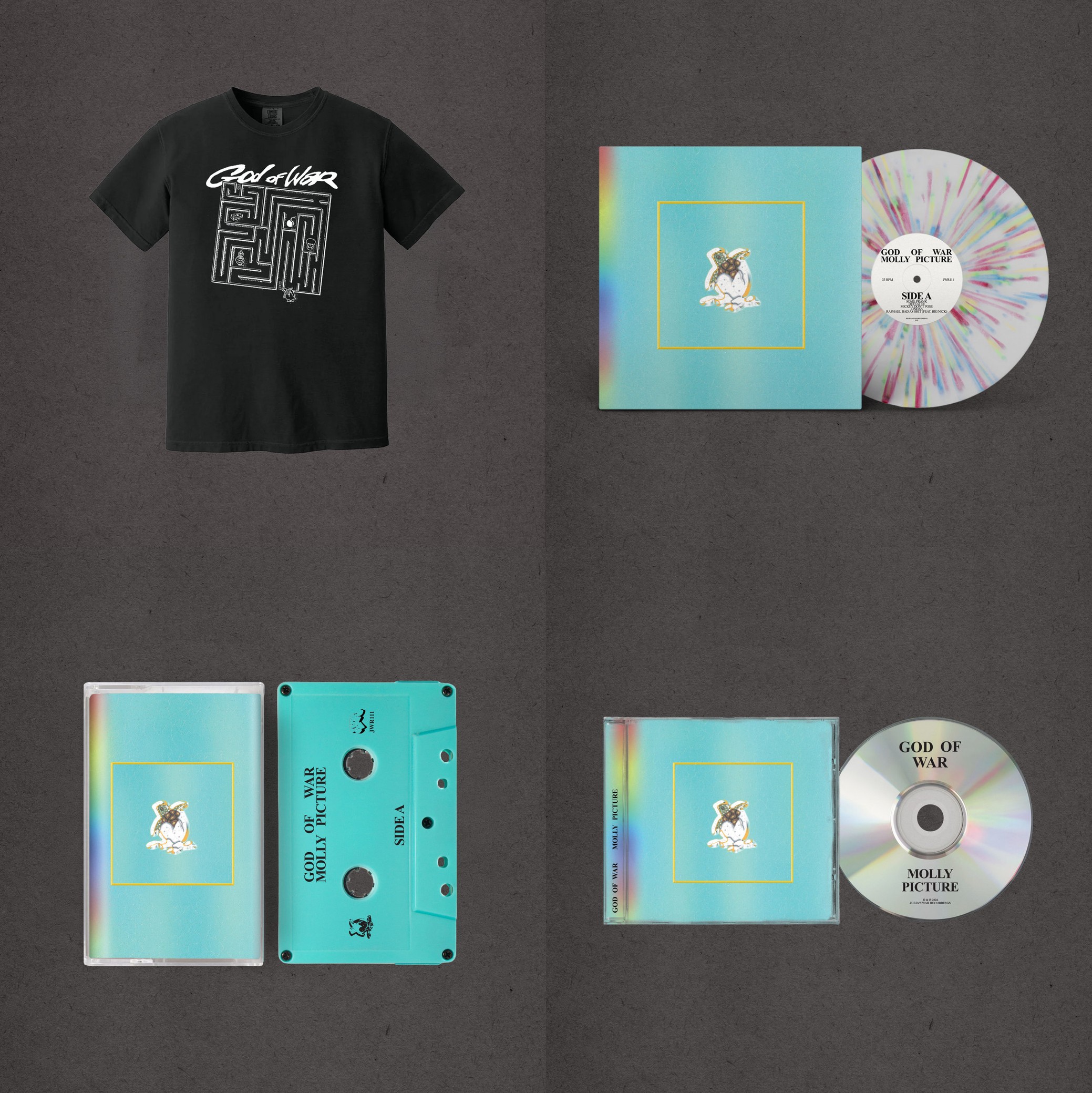
Molly Picture is released on 7 August 2026 via Julia’s War Recordings. You can check it out over on the God of War Bandcamp page.
Discover more from Static Sounds Club
Subscribe to get the latest posts sent to your email.

