
The last time Sweeping Promises appeared on these pages, I was writing about Good Living Is Coming for You and thinking back to the afternoon in 2020 when Hunger for a Way Out first appeared in my Bandcamp feed. That debut had the feel of a punk record assembled with whatever space and equipment Lira Mondal and Caufield Schnug could find, and its thin guitars, forceful bass and direct vocals stayed with me. Their second album expanded that vocabulary through synths, stranger arrangements and flashes of saxophone, while the pair kept every part lean and purposeful. Three years later, You Say I Romanticize finds them rooted in their Kansas home and studio, a place where they record other bands, host touring musicians and continue developing their own songs. The new album took form across eighteen months, with touring drummer Spenser Gralla joining Mondal and Schnug to play the material with the physical force of their live set.
That longer recording period has produced their most immediate album yet. The ten songs move through writers, loners and obsessive figures whose private fixations have placed them at an angle to the people around them. Mary Shelley’s dystopian novel The Last Man feeds into one song, while the life and visions of Julian of Norwich inform another. Those ideas could have resulted in a dense record. Not so here.
Sweeping Promises keep everything moving through blunt bass lines, clipped guitar figures and choruses that arrive before you have fully caught your breath. Mondal responds with the widest vocal performance of the band’s career, moving between murmured phrases, melodic calls, guttural cries and notes that seem to stretch beyond the limits of the room.
Let’s drop the needle and dive in.
Sweeping Promises have developed a habit of opening their albums with a certified banger, and ‘Shooting Shadows’ keeps that run intact. Schnug’s guitar cuts into the song in short, pointed bursts while the rhythm section drives forward with barely a pause. Mondal sounds fully committed from the first line. Her voice carries urgency and force, rising above.You can hear the wall of sound method they developed for the album, yet the individual parts remain easy to follow. The bass presses straight ahead, the drums keep the pressure high and the guitar strikes at the edges. It is a fierce opening that makes its intentions clear within seconds.
The title ‘My Friend’s An Entomologist’ brings a little humour after that opening assault. An entomologist studies insects, which saves you the same Google search I had to consider, though the music carries a darker mood than the title suggests. The tempo remains high while the song slowly extends its reach through winding guitar solos and a drum pattern that refuses to loosen its grip. Schnug’s playing feels restless here, curling around the central rhythm and adding small disturbances rather than settling into a repeated riff. Mondal keeps her vocal measured during the early passages, allowing the unease to build through repetition. The closing section changes the emotional temperature as harmony voices gather around her. Those voices add warmth without clearing away the tension that came before.
A low bass rumble announces ‘Last Man’ and immediately gives the track a heavier centre. Mondal lets her phrases lengthen across the sparse guitar, taking more time over each word while the band holds back around her. The choruses break that restraint with a sudden increase in volume, and the guitar turns from a few bare marks into a rough block of sound. Midway through, the song stops with startling precision. A simple bass figure then begins the final section, giving Mondal a foundation for a repeated vocal line that gradually becomes mantra like.
‘Rapture, Or…’ brings the band back to the stripped vocabulary that first made them so easy to recognise. Bass and drums provide the body of the song while Schnug uses a short guitar motif to cut through the spaces between Mondal’s lines. That figure has a biting tone and enough melody to stay in your head after one play. The verses lower the intensity and leave Mondal exposed, then the fuller sections arrive with the rhythm section pressing harder beneath her. Sweeping Promises understand how little material a song sometimes needs. The title leaves the thought hanging, and the arrangement behaves in much the same way, pausing on the edge of release before the whole band presses forward again.
Ghostly guitar notes answer the opening bass riff on ‘Abduction On Camera’, giving the song a strange gleam from its first few bars. Mondal adopts a half-spoken delivery in the verses, sounding as though she is reporting events while trying to make sense of them at the same time. The choruses allow her voice to rise into a broad melody, and that change gives the track one of the album’s strongest transitions. Schnug keeps the guitar slightly removed from the main pulse, letting it shimmer around the bass rather than doubling it. Then a compact keyboard phrase appears and briefly alters the colour of the whole song. It caught me completely unprepared on my first play. The moment is brief, catchy and placed with real care, another example of the duo knowing exactly when a new sound will have the greatest effect.
‘My Anchoress’ bounces through the speakers with a rhythm that immediately separates it from the songs around it. Bass and drums work together in a springy pattern, giving the track a playful movement even as its subject reaches back to Julian of Norwich and her accounts of religious visions. Mondal meets that rhythm with a vocal line that has the repetition and directness of a nursery rhyme. Her phrasing makes the song easy to follow, then an occasional raw cry breaks through and changes the mood for a second. Those eruptions suggest the intensity beneath the historical reference, where devotion, isolation and authorship become inseparable. Schnug gives the vocal plenty of room, adding small guitar marks around the beat rather than filling every space. The result is a song that carries serious ideas through one of the album’s most instantly enjoyable arrangements. What a choon!
The pace eases only a little for ‘Cocoon’, allowing the tension to gather in a different way. The guitar has the clipped, economical attack of early Pixies, with brief phrases that leave as much silence as sound. Each note carries weight because Schnug refuses to crowd the arrangement. Mondal’s bass keeps everything fixed in place, repeating with a calm authority while her voice explores a broader range above it. She moves from lower, controlled passages into harsher peaks, making the track feel as though it is tightening around her. The title suggests enclosure, and the music follows that idea through repetition and restricted space. You begin to notice every small change, from a harder drum strike to the point where Mondal allows a note to fray at its edge. Her performance here contains anger, patience and exhaustion within the same few minutes.
A syncopated bass line gives ‘Accent’ its stride, with two guitar chords strummed across the top and very little else required. The song carries the wiry snap of early eighties new wave punk, and I kept hearing a trace of Blondie with Wilko Johnson drafted in on guitar. Mondal works inside the gaps, adjusting the stress and timing of her words so that the voice becomes another rhythmic instrument. The arrangement leaves nowhere for a weak idea to hide, and every part earns its place. A slight shift in the bass or a sharper vocal attack becomes a major event because the song has been reduced to its strongest components. Sweeping Promises have always understood this kind of economy, and ‘Accent’ turns it into pure pop pleasure.
The humour continues in ‘Does He Want To Be The Weatherman?’, a title that invites a story before the first note has arrived. The band answer with another lean, angular song where each instrument supplies exactly what the arrangement requires. The bass establishes the route; the drums keep the movement taut and the guitar adds clipped interruptions that stop the song becoming too comfortable. Mondal’s vocal gives the character at its centre a mixture of curiosity and exasperation.There is real discipline in the way Sweeping Promises refuse to decorate the track beyond its needs. Small changes in emphasis keep the repetition alive, while the brevity of each guitar phrase gives the rhythm extra room. It is economical writing with a sharp sense of personality, funny in its premise and exact in its execution.
By the time ‘Write Lightly’ arrives, the album has spent nine songs examining people who write, obsess, withdraw and seek meaning through their private fixations. The closing track turns that attention toward self-expression itself, considering how a writer’s voice can be rubbed away by professional expectations. Sweeping Promises set that idea against three chords and build upward from the simplest possible frame. Mondal saves one of her finest melodies for this final stretch. Her voice rises higher with each return, carrying anger and resolve in equal measure, while Schnug and Gralla increase the pressure beneath her. The arrangement never loses sight of its basic structure, which makes the scale of the ending even more impressive. Those final vocals tower over the band and leave a physical aftereffect once the instruments stop. The album closes with a voice refusing to reduce itself for anyone else.
You Say I Romanticize takes the qualities that first made Sweeping Promises special and places them inside fuller arrangements. The bass remains the anchor, Schnug’s guitar still speaks through short and pointed phrases, and Mondal continues to turn direct melodies into performances filled with character. The change comes through the strength of the ensemble playing, the wider range of her voice and the way each arrangement serves the people inside these songs. Their outcasts may live through isolation, obsession and misunderstanding, yet the music gives them presence and momentum. Across ten tracks, the band make intellectual references feel physical. The title accuses Sweeping Promises of romanticizing these figures, and the album answers by giving them the space to speak in their own difficult, unruly voices.
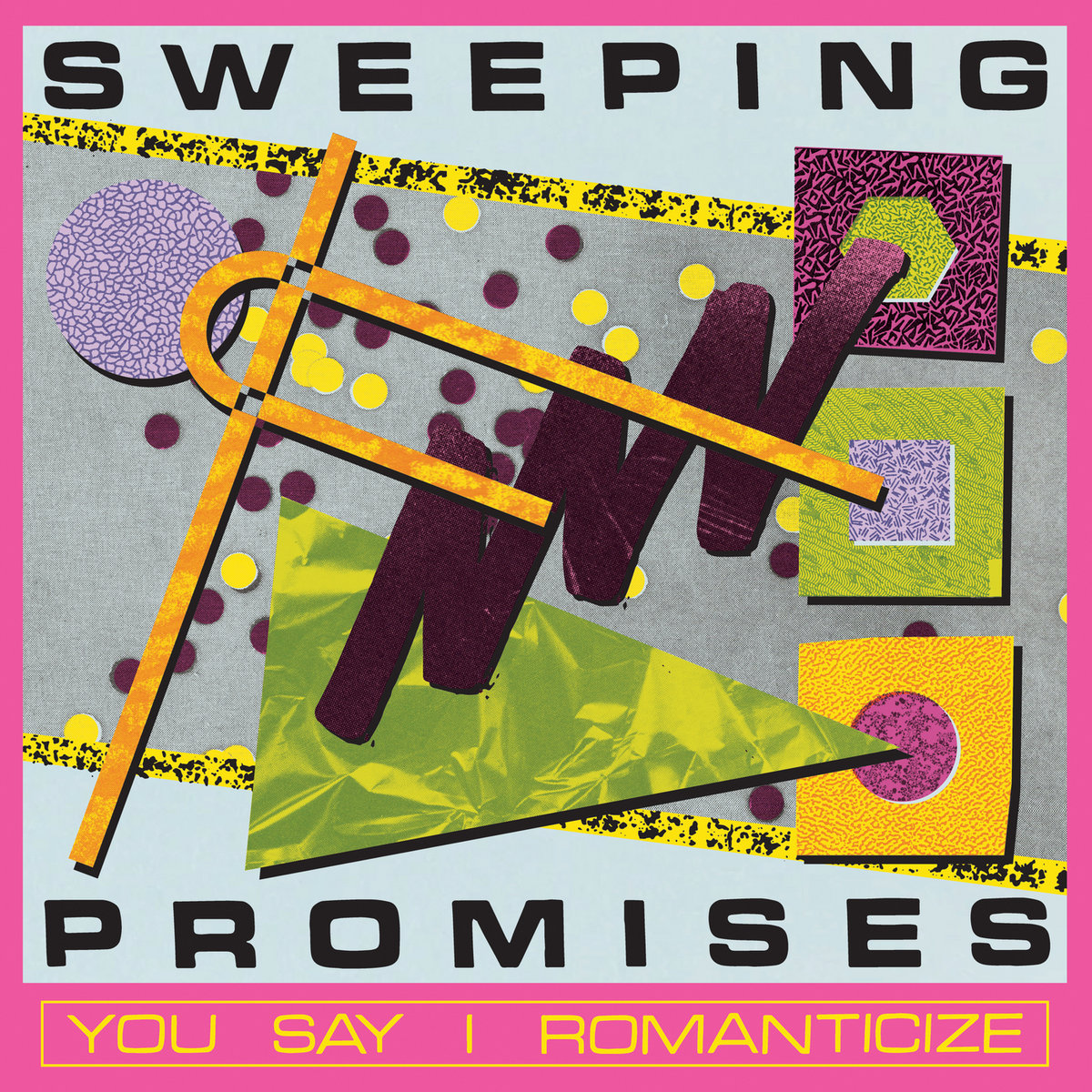
You Say I Romanticize is out August 14 via Sub Pop. You can check it out over on the Sweeping Promises Bandcamp page.

You can follow Sweeping Promises on social media here…
Discover more from Static Sounds Club
Subscribe to get the latest posts sent to your email.

